
Private Aviation Compliance: Key Regulations and Standards You Need to Know


Introduction
Private aviation is a highly regulated industry where compliance is not optional—it’s essential for safe and legal operations. For air charter brokers and operators, understanding and adhering to these regulations is critical to ensuring passenger safety, maintaining operational efficiency, and avoiding costly penalties.
Regulations govern everything from aircraft maintenance and pilot certification to flight operations and data security. Staying compliant with evolving standards set by authorities like the FAA, EASA, and ICAO is a constant challenge, but it’s key to maintaining a reputable and successful aviation business.
In this article, we’ll explore the history of private aviation regulations, the most widely followed standards today, different categories of regulations, and the challenges private jet brokers and operators face in keeping up with compliance.

The Evolution of Private Aviation Regulations
Building on the foundations set by early aviation laws, private aviation regulations have continuously evolved to address new challenges and advancements in technology. Today’s regulatory landscape is shaped by decades of policy refinements aimed at improving safety, operational efficiency, and international standardization.
The Rise of Modern Aviation Standards
As private aviation grew beyond luxury travel into an essential business tool, authorities expanded oversight to ensure uniform compliance. The Federal Aviation Administration (FAA) in the U.S. and the International Civil Aviation Organization (ICAO) globally played key roles in refining air safety protocols, licensing requirements, and operational guidelines.
The Influence of the Jet Age
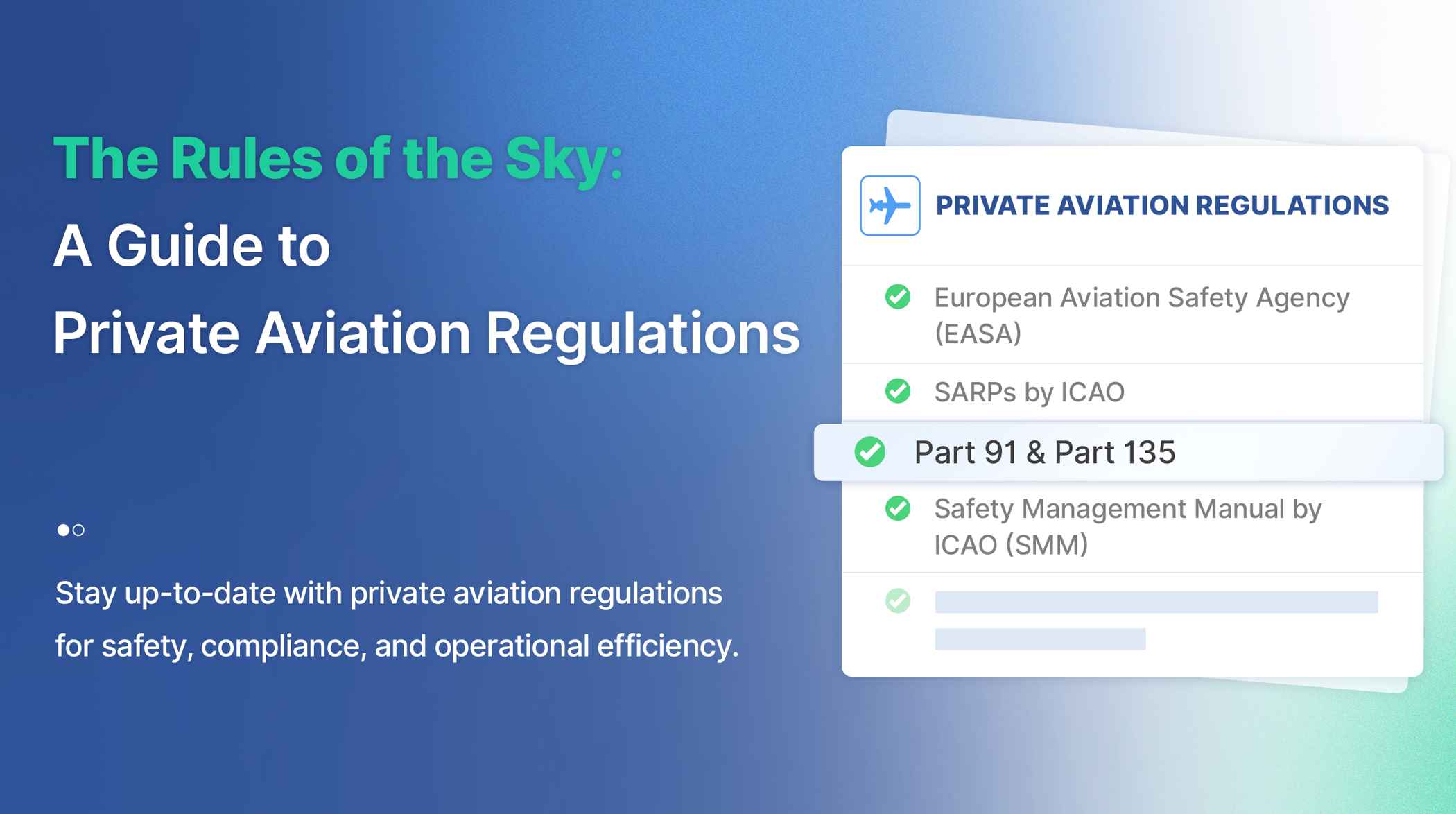
The introduction of private jets in the mid-20th century brought a need for updated regulations, leading to stricter maintenance protocols, pilot training enhancements, and more precise air traffic control systems. The development of Part 91 and Part 135 regulations in the U.S. helped distinguish between private (non-commercial) and chartered (commercial) operations, setting the groundwork for compliance frameworks that still apply today.
Adapting to a Data-Driven Industry
In recent decades, aviation regulations have expanded beyond flight operations to include data security, surveillance, and digital compliance. With the rise of real-time flight tracking, automated safety systems, and digital record-keeping, governing bodies have implemented stricter standards on how aviation data is managed and shared across borders.
These evolving regulations ensure that private aviation remains a safe, efficient, and globally coordinated industry. The next section will break down the most widely followed regulations today and their impact on private operators and charter brokers.
Current Most-Used Regulations in Private Aviation
Private aviation operates within a complex framework of national and international regulations, each designed to ensure safety, compliance, and efficient operations. Key regulatory bodies like the FAA, ICAO, and the EASA have established standards that are widely adopted in the industry. Here's an overview of the most influential regulations today:
FAA Regulations in the U.S.
The Federal Aviation Administration (FAA) is the primary regulatory authority for private aviation in the U.S. Its rules are outlined in Title 14 of the Code of Federal Regulations (CFR), which governs both commercial and general aviation operations. Some of the key parts of these regulations include:
- Part 91: Governs general aviation operations, including private flights, non-commercial use, and owner-operators. This part allows for a wide range of flight activities but places a high emphasis on safety protocols, maintenance, and pilot qualifications.
- Part 135: Addresses commercial operations, including air charter services, on-demand flights, and air taxis. It is more restrictive than Part 91, with stricter standards for maintenance, pilot qualifications, and operational limits.
- Part 145: Covers the certification of repair stations, ensuring that private aviation operators meet standards for aircraft maintenance and repairs. This is crucial for safety, as properly maintained aircraft are a core element of aviation safety standards.
These regulations ensure that operators comply with the necessary safety requirements, operational guidelines, and maintenance standards, making them integral to the private aviation industry in the U.S..
ICAO Standards
The International Civil Aviation Organization (ICAO), a specialized agency of the United Nations, establishes global standards and regulations for aviation safety, efficiency, and environmental protection. These standards guide the operational aspects of private aviation, particularly for international flights. Some of ICAO's key initiatives include:
- Global Aviation Safety Plan (GASP): This framework sets international safety priorities and goals, aiming to reduce risks and enhance safety measures across the aviation industry. Private aviation operators, especially those flying internationally, must adhere to these guidelines to ensure global safety consistency.
- Annexes to the Chicago Convention: ICAO's Annexes contain the detailed standards and recommended practices that cover everything from flight operations to air traffic management and safety systems. Annex 6, for instance, provides international regulations for the operation of aircraft, including requirements for private operators engaged in commercial services.
ICAO standards are vital for private aviation operators conducting international flights, ensuring that all parties follow standardized safety procedures and protocols.
International and Regional Differences
While international aviation regulations set by bodies like ICAO provide a global framework, different regions and countries often impose specific standards based on local needs, airspace control, and safety priorities. Key differences include:
- U.S. vs. Europe: The U.S. aviation system, governed by the FAA, tends to offer more operational flexibility in comparison to Europe’s EASA regulations, particularly in the areas of crew duty hours and maintenance intervals. For example, Part 91 in the U.S. provides more lenient operational standards for private flights than the European regulations under Part-NCO.
- Regional Variations: Countries with fast-growing private aviation markets, such as China, the Middle East, and India, are developing their own regulatory frameworks, often influenced by both ICAO and regional priorities. The Middle East, for instance, has increasingly strict airworthiness and maintenance standards to accommodate the influx of private jet services.
Operators flying internationally must carefully navigate these regulatory differences, ensuring compliance with local regulations while maintaining safe and efficient operations across regions.
In the next section, we will explore how various categories of aviation regulations—such as operational, safety, and data regulations—impact private aviation operations and compliance.
Categories of Private Aviation Regulations and Standards
Private aviation operates within a multifaceted regulatory framework designed to ensure safety, efficiency, and compliance. These regulations can be broadly categorized into Operational Regulations, Safety Regulations, and Data Regulations. Each category encompasses specific standards and protocols that operators must adhere to.
Operational Regulations
- Flight Operations: These regulations define the operational standards for private aviation, including flight time limitations, crew qualifications, and flight planning requirements.
- Aircraft Maintenance: Standards in this category establish the requirements for regular inspections, servicing, and repairs to ensure the airworthiness of private aircraft.
Safety Regulations
- Safety Management Systems (SMS): Implementing SMS is crucial for private aviation operators to proactively identify and mitigate safety risks, fostering a culture of continuous safety improvement.
- Crew Training & Certification: Regulations ensure that pilots and crew undergo rigorous training and certification processes, including recurrent training, to uphold high safety standards.
- Emergency Procedures and Protocols: Established standards dictate the protocols to be followed during emergency situations, both in-flight and on the ground, ensuring effective and standardized actions during critical situations.
Data Regulations
- Flight Data Monitoring: The collection and analysis of flight data are essential for enhancing safety and operational efficiency, aiding in proactive safety measures and continuous improvement.
- Privacy and Data Security: Regulations govern the handling and storage of passenger and operational data, ensuring confidentiality and protection against unauthorized access.
- Data Exchange Between Authorities: Structured protocols among aviation bodies facilitate the sharing of safety information, ensuring compliance with international standards and enhancing global aviation safety.
Challenges in Private Aviation Regulations
- Adapting to New Technologies: Innovations like drones, advanced avionics, and supersonic jets outpace regulatory updates, making compliance difficult.
- Global Regulatory Differences: Countries enforce different rules (e.g., FAA vs. EASA), creating inefficiencies for international operators.
- High Compliance Costs: Maintaining certification, training, and equipment upgrades can be costly for smaller operators.
- Enforcement Difficulties: Private flights often operate from smaller airports with less oversight, making regulation harder to enforce.
- Security & Privacy Concerns: Data sharing and surveillance regulations can conflict with passenger and operator privacy rights.
Balancing safety, efficiency, and cost remains a key challenge in private aviation regulation.
Conclusion
Regulations and related standards are the backbone of private aviation, ensuring safety, security, and operational efficiency. From flight operations to data security, compliance with evolving standards is essential for maintaining high industry standards and preventing risks.
For private aviation brokers and operators, staying informed about regulatory changes is not just a legal obligation but a crucial step in sustaining safe and efficient operations. Adapting to new requirements, investing in compliance, and fostering a safety-first culture will help operators navigate industry challenges while ensuring long-term success.

Avi-Go Air Charter Marketplace: Unlock the Full Potential of Empty Legs


Fraud Prevention for Air Charter Brokers and Operators in Private Aviation

Private Jet Charter Cost Estimator and Airline Price Predictor
Ready to Supercharge
Your Business Aviation Tech Stack with AI and Data?
Sign up free and start using the tools available in your chosen plan.
Discover how our aviation technology helps you work more efficiently and grow with confidence.
Subscribe to the Avi-Go Newsletter
Business aviation data, insights, and trends — trusted by 10,000+ professionals worldwide.