
When AI Becomes the New Aviation Consultant


Business aviation is entering a quieter but more consequential shift. Not one driven by new aircraft announcements or new routes, but by how decisions are made behind the scenes.
For years, the industry has relied on experience, instinct, and fragmented information. That approach worked when markets were smaller and patterns were easier to read. Today, it is under pressure from rising costs, tighter airport infrastructure, more demanding clients, and growing scrutiny around efficiency and sustainability.
The next phase of business aviation is not about having more data. It is about turning real activity into intelligence that guides action.
From data access to decision intelligence
Most aviation professionals already know the frustration. Data exists everywhere, but rarely in one place, rarely in context, and rarely at the moment it is needed. Reports arrive after decisions are made. Dashboards explain what happened, not what to do next.
AI begins to matter only when it understands how aviation actually works. Business aviation is not a generic industry. It operates on seasonality, event-driven demand, operational constraints, and subtle differences between fleet presence and true utilization. Without that understanding, AI outputs may sound polished but lack operational credibility.
This is why the industry is starting to move toward a different model. AI is not a tool that answers isolated questions, but rather a system that reasons like an aviation consultant, connecting market behavior, operations, and strategy.
AI built on real flight activity
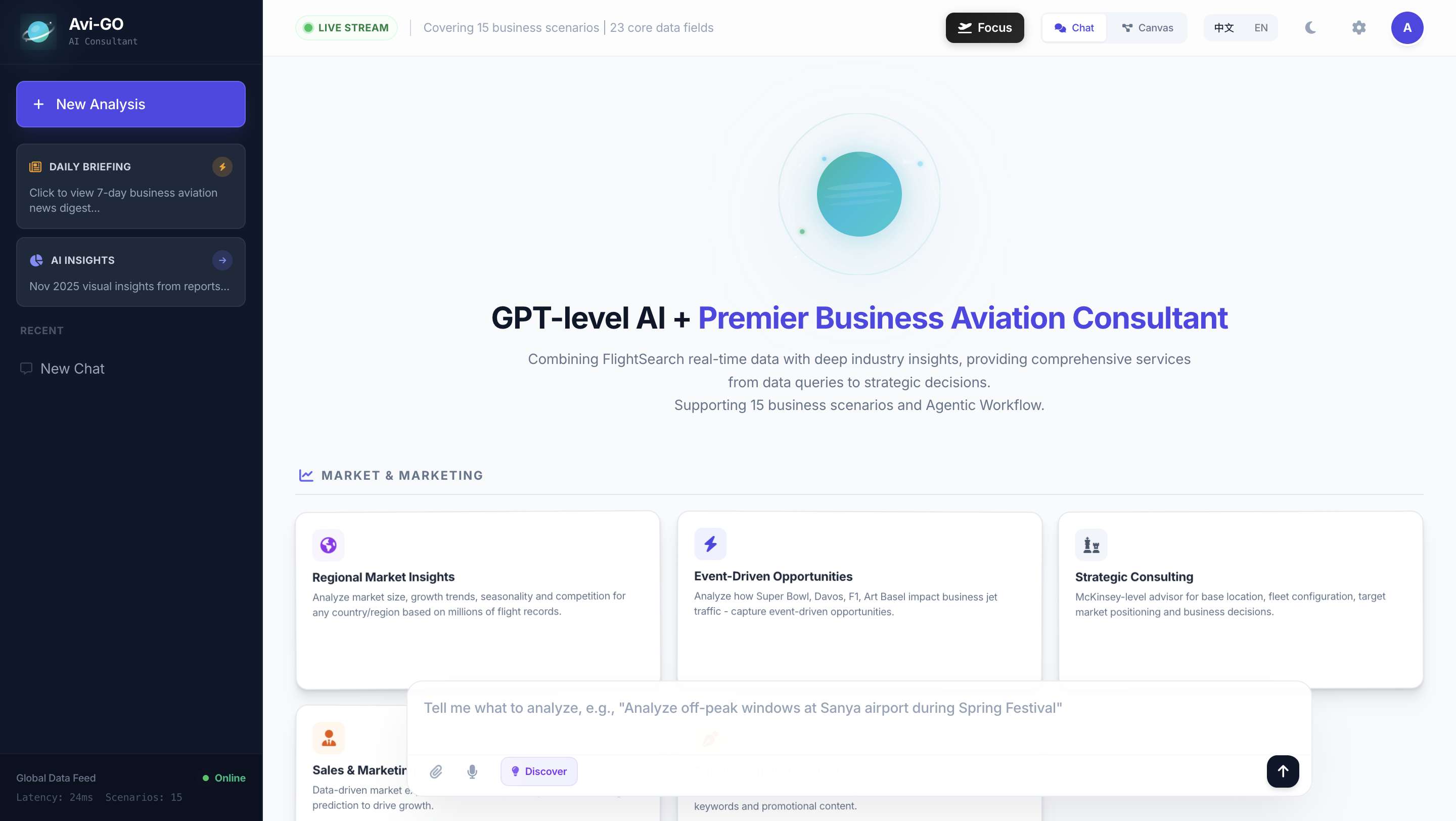
Image: Early UI mock-up of Avi-Go’s upcoming AI release
The AI being developed by Avi-Go is built around this idea. It is trained on tens of millions of global business jet flight records, combined with real-time market intelligence, to reflect how the market actually moves. Instead of relying on assumptions or static summaries, it analyzes real flight activity and places it into an operational and commercial context.
Users are not limited to asking how many flights passed through an airport. They can understand why traffic shifted, which operators gained or lost momentum, how demand builds ahead of major events, and where opportunities are emerging beneath the surface.
Why does this change how the industry operates?
This intelligence becomes most powerful when applied to real decisions. Operational questions around slot pressure, congestion, route viability, and aircraft utilization are no longer abstract. They are measurable, comparable, and explainable through actual flight behavior.
Fleet planning and base selection move from intuition to evidence. Market entry discussions shift from broad narratives to specific, data-backed scenarios. ESG conversations gain credibility when emissions and fuel reduction strategies are grounded in real operational profiles rather than estimates.
Sales and brokerage are evolving as well. Relationships remain essential, but clients increasingly expect speed, clarity, and rationale. When customer profiling, trip planning, and market positioning are informed by real market behavior, conversations change. Recommendations carry more weight because they are rooted in what aircraft are actually doing, not what the market claims to be doing.
What stands out in this approach is not a single feature, but the unification of intelligence. Analysis, visual insights, document review, and export-ready reports exist in one environment. Insights move directly from exploration to decision to client communication without losing accuracy along the way.
AI will not replace human expertise in business aviation. The industry is too complex and too relationship-driven for that. But expertise without intelligence no longer scales.
The next advantage in business aviation will belong to those who can see the market clearly and act with confidence. AI built on real flight data and shaped by industry logic is becoming the quiet consultant behind those decisions.
The AI consultant experience from Avi-Go is launching soon.
While it is being prepared for release, aviation professionals can still join Avi-Go to explore existing market intelligence, data insights, and operational tools.
Core features are available with no time limit, and you can upgrade anytime.
Sign up here.
Private Jet Charter Cost Estimator and Airline Price Predictor

Best Private Jet Charter Companies 2026

Private Jet Sustainability
Ready to Supercharge
Your Business Aviation Tech Stack with AI and Data?
Sign up free and start using the tools available in your chosen plan.
Discover how our aviation technology helps you work more efficiently and grow with confidence.
Subscribe to the Avi-Go Newsletter
Business aviation data, insights, and trends — trusted by 10,000+ professionals worldwide.