
What Are Aviation Business Brokers? Roles, Services and How to Choose One


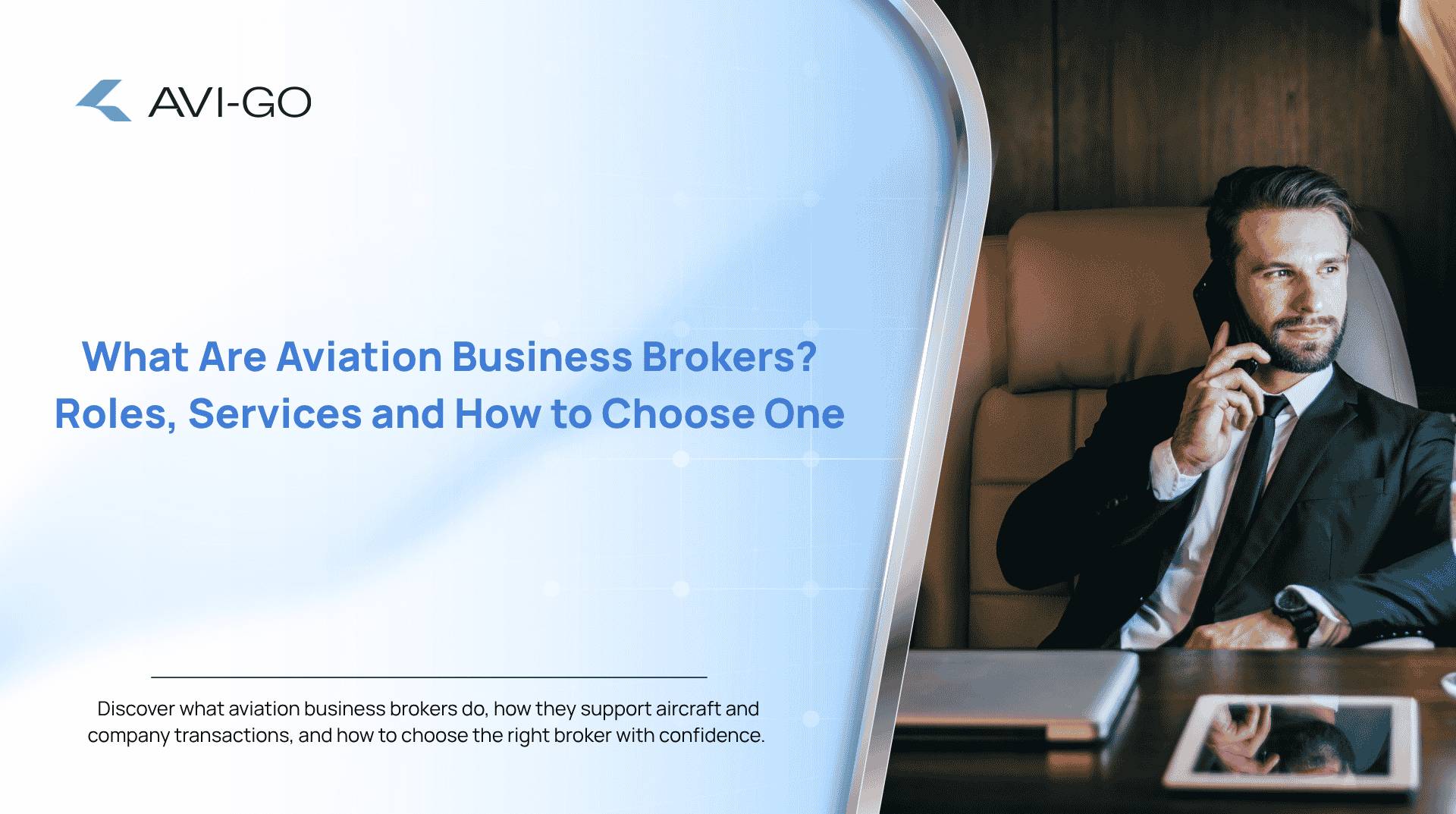
Buying an aircraft, arranging a charter or acquiring an aviation company can involve a complicated network of operators, owners, lenders, lawyers, maintenance facilities and regulatory authorities.
Aviation business brokers help clients navigate these markets by connecting the appropriate parties, supplying market knowledge and coordinating different stages of a transaction.
However, the term “aviation business broker” can describe several different roles. Some brokers arrange private charter flights. Others help clients buy or sell aircraft. A smaller group specialises in mergers and acquisitions involving aviation companies such as charter operators, flight schools, maintenance organisations and fixed-base operators.
Understanding these differences is important before selecting a broker or beginning an aviation transaction.
What Is an Aviation Business Broker?
An aviation business broker is an intermediary who helps buyers and sellers complete transactions involving aviation assets or services.
Depending on the broker’s specialisation, the transaction may involve:
- A private or business aircraft
- A charter flight
- An aircraft management contract
- A charter operator
- A maintenance, repair and overhaul business
- A flight school
- A fixed-base operator
- An airport-related service company
- Another aviation enterprise
The broker normally represents either the buyer, seller or charter client. Their role may include researching the market, identifying opportunities, introducing counterparties, supporting negotiations and coordinating the professionals involved in the transaction.
Professional aircraft brokers do considerably more than advertise an aircraft. The process can include pricing strategy, aircraft presentation, maintenance-record analysis, inspections, negotiations, documentation, escrow and financing coordination.
The Main Types of Aviation Business Brokers
Although these professionals operate within the same industry, their services can be very different.

Aircraft Sales Brokers
Aircraft sales brokers represent owners selling aircraft or clients seeking to acquire one.
For sellers, the broker may:
- Analyse comparable aircraft
- Recommend a listing price
- Prepare marketing materials
- Promote the aircraft to qualified prospects
- Manage inquiries
- Coordinate demonstrations and inspections
- Support negotiations and closing
For buyers, the broker may identify on-market and off-market opportunities, compare suitable aircraft, review specifications and coordinate the acquisition process.
Aircraft transactions can include regulatory, tax, financial and technical considerations. NBAA’s aircraft transaction resources therefore recommend a structured approach covering each of these areas.
Air Charter Brokers
An air charter broker helps a customer find an appropriate aircraft and operator for a particular flight or series of flights.
Unlike a charter operator, the broker generally does not operate the aircraft. Instead, the broker approaches certified operators, compares available options and helps the customer arrange the trip.
A charter broker may assist with:
- Aircraft sourcing
- Route planning
- Operator comparisons
- Pricing and quotation review
- Passenger requirements
- Ground transportation
- Catering
- Schedule changes
- Multi-leg travel programmes
Air charter brokering is different from aircraft sales brokerage. Its purpose is to arrange access to an aircraft for a trip rather than transfer ownership of the aircraft.
NBAA has published best-practice guidance explaining the role of air charter brokers and the standards applicable to their activities in the on-demand charter market.
Aviation M&A Brokers
Aviation mergers and acquisitions brokers help owners sell aviation companies or assist investors seeking to acquire them.
These transactions may involve companies such as:
- Charter operators
- Aircraft management companies
- FBOs
- Flight schools
- MRO facilities
- Hangar businesses
- Cargo operators
- Aviation technology providers
An aviation-company sale is not the same as selling one aircraft. The buyer must evaluate the organisation’s financial performance, approvals, contracts, assets, personnel, customer concentration and regulatory position.
For example, the value of a charter business may depend on its operating approvals, fleet relationships, customer base and management structure. A maintenance organisation may be evaluated according to its certifications, technical capabilities, facilities and long-term customer contracts.
Because these transactions combine aviation knowledge with corporate finance, the broker may work alongside accountants, aviation attorneys and technical consultants.
What Does an Aviation Broker Do?
The exact responsibilities depend on the transaction, but the broker usually performs five core functions.
1. Interpreting the Client’s Requirements
The broker begins by establishing what the client is trying to achieve.
An aircraft buyer may need a jet capable of carrying eight passengers between Singapore and Dubai. A company seeking a charter operator may instead be looking for an established business with regulatory approvals in a particular jurisdiction.
Clear requirements prevent the search from being driven only by the assets currently being advertised.
2. Researching the Market
Aviation markets are highly specialised. Two aircraft of the same model and year can have substantially different values depending on maintenance status, equipment, engine programmes, utilisation, ownership history and location.
A broker may assess:
- Comparable aircraft
- Current listings
- Recent transactions
- Aircraft utilisation
- Maintenance status
- Market availability
- Operating costs
- Regional demand
- Seller motivation
Reliable aviation data makes this stage more efficient. Instead of relying only on personal contacts or individual listings, market participants can compare aircraft, operators and activity across a broader dataset.
3. Connecting Buyers and Sellers
One of the broker’s most valuable resources is their professional network.
Some aircraft and aviation companies are sold privately rather than publicly advertised. Brokers may use existing relationships to identify potential sellers, locate qualified buyers or discover off-market opportunities.
A strong network is useful, but it should be supported by verifiable information. Buyers should still investigate the aircraft, company and transaction parties independently.
4. Coordinating Due Diligence
A broker may organise the process, but specialist professionals should complete the legal, financial and technical reviews.
Aircraft due diligence can include:
- Ownership and title checks
- Maintenance-record review
- Damage-history review
- Pre-purchase inspection
- Lien searches
- Regulatory verification
- Sanctions and counterparty screening
- Tax assessment
- Insurance review
The FAA explains that a clear aircraft title means there is no unreleased mortgage, security agreement, tax lien or similar recorded document against the aircraft.
NBAA also warns that inadequate due diligence in an aircraft sale can expose the parties to financial loss, legal liability or civil and criminal penalties.
5. Supporting Negotiations and Closing
Once a suitable opportunity has been identified, the broker may help negotiate:
- Purchase price
- Deposit
- Inspection conditions
- Delivery location
- Aircraft condition
- Included equipment
- Closing schedule
- Rectification responsibilities
- Confidentiality terms
The broker may then coordinate with the client’s lawyer, escrow provider, lender, technical adviser and registration specialist.
A broker should not replace these professionals. Their role is to keep the transaction organised while ensuring that the client receives specialist advice where required.
Aviation Broker vs Aviation Marketplace
A broker normally acts as an intermediary in a particular transaction. A digital aviation marketplace provides infrastructure through which multiple industry participants can discover, compare and communicate with one another.
The two models can complement each other.
Brokers can use digital platforms to:
- Find aircraft
- Publish listings
- identify operators
- Review market activity
- Receive charter requirements
- Compare opportunities
- Promote available inventory
Operators and aircraft owners can use the same platforms to improve their visibility and reach a larger professional audience.
This technology-supported model does not eliminate the need for experienced brokers. Instead, it gives them better access to data, inventory and potential counterparties.
How Aviation Data Supports Better Brokerage Decisions
Traditionally, aviation brokerage has depended heavily on personal networks and fragmented information. Relationships remain important, but data can make decisions faster and more transparently.
Useful information may include:
- Aircraft specifications
- Operator profiles
- Airport activity
- Live aircraft movement
- Historical utilisation
- Available aircraft listings
- Charter demand
- Empty-leg availability
- Regional market trends
For an aircraft broker, utilisation history may help reveal how actively an aircraft has been operated. For a charter broker, live movement and operator information can support aircraft sourcing. For an M&A adviser, regional flight activity can contribute to the assessment of a company’s addressable market.
Data does not replace commercial judgement or due diligence. It provides a stronger basis for deciding which opportunities deserve further investigation.
How to Choose an Aviation Business Broker
Clients should evaluate a broker carefully before signing a representation agreement.
Relevant Experience
Ask whether the broker has completed transactions involving the same asset type, aircraft category or aviation sector.
Experience selling a light jet does not automatically qualify someone to sell an international charter operator. Likewise, charter-booking experience does not necessarily provide the corporate-finance knowledge needed for an aviation-company acquisition.
Clear Representation
Establish which party the broker represents and how the broker is compensated.
Ethical transaction guidance stresses that buyers and sellers should understand who is participating in the transaction and whose interests each adviser represents.
Potential conflicts should be disclosed before negotiations begin.
Market Knowledge
A capable broker should be able to explain:
- How the asset was valued
- Which comparable opportunities were reviewed
- What may affect the transaction
- How long the process could take
- Which specialists will be required
Be cautious when recommendations are based only on unsupported claims or one advertised price.
Professional Network
The broker should have access to relevant buyers, sellers, operators, lawyers, inspectors, lenders and escrow providers.
However, the size of a contact list should not be the only deciding factor. The quality and relevance of those relationships matter more.
Transparency and Ethics
Ask how the broker handles:
- Confidential information
- Dual representation
- Fees and commissions
- Deposits
- Client funds
- Due diligence
- Regulatory compliance
Professional organisations such as IADA maintain standards concerning honesty, integrity, transparency and ethical conduct among participating aircraft dealers and brokers.
Questions to Ask Before Hiring a Broker
Before appointing an aviation business broker, consider asking:
- Which party will you represent?
- How will you be paid?
- Have you handled similar transactions?
- How will you determine market value?
- Which services are included?
- Will any work be delegated to another party?
- How will potential conflicts be disclosed?
- What due diligence do you recommend?
- Which legal and technical specialists will be involved?
- How will you protect confidential information?
The answers should be included in a clear written agreement.
How Avi-Go Supports Aviation Brokers
Avi-Go provides a digital business aviation ecosystem where industry professionals can discover aircraft, access aviation information and connect with market participants.
Through Avi Market, brokers and sellers can increase the visibility of aircraft opportunities and engage with a wider aviation network.
Through Avi Data, users can access aircraft, operator, airport and operational information through capabilities including:
Avi AI adds an intelligent research layer that helps users explore market questions, analyse aviation activity and identify potential opportunities more efficiently.
Rather than replacing professional brokers, these capabilities can support their work by bringing market access, operational data and digital tools into one connected environment.
Final Thoughts
Aviation business brokers can bring industry expertise, market access and transaction coordination to a highly specialised market.
The most suitable broker depends on the client’s objective. Arranging a charter flight, purchasing an aircraft and acquiring an aviation company require different knowledge and professional networks.
Modern aviation platforms are also changing how these transactions begin. Brokers, operators, owners and buyers can now use digital marketplaces and aviation data to discover opportunities before progressing to negotiation and due diligence.
By combining professional expertise with reliable market intelligence, aviation businesses can approach aircraft and company transactions with greater clarity and confidence.
Explore aircraft, operators and business aviation market intelligence through Avi-Go.

Business Aviation in Australia Shows Mid-Year Recovery After Strong Q1 2026

What Is the National Business Aviation Association and Why Does It Matter?
Platinum Business Aviation Centre FBO and Australia’s Business Aviation Network
Ready to Supercharge
Your Business Aviation Tech Stack with AI and Data?
Sign up free and start using the tools available in your chosen plan.
Discover how our aviation technology helps you work more efficiently and grow with confidence.
Subscribe to the Avi-Go Newsletter
Business aviation data, insights, and trends — trusted by 10,000+ professionals worldwide.