
How Business Aviation Keeps Moving During System Disruptions


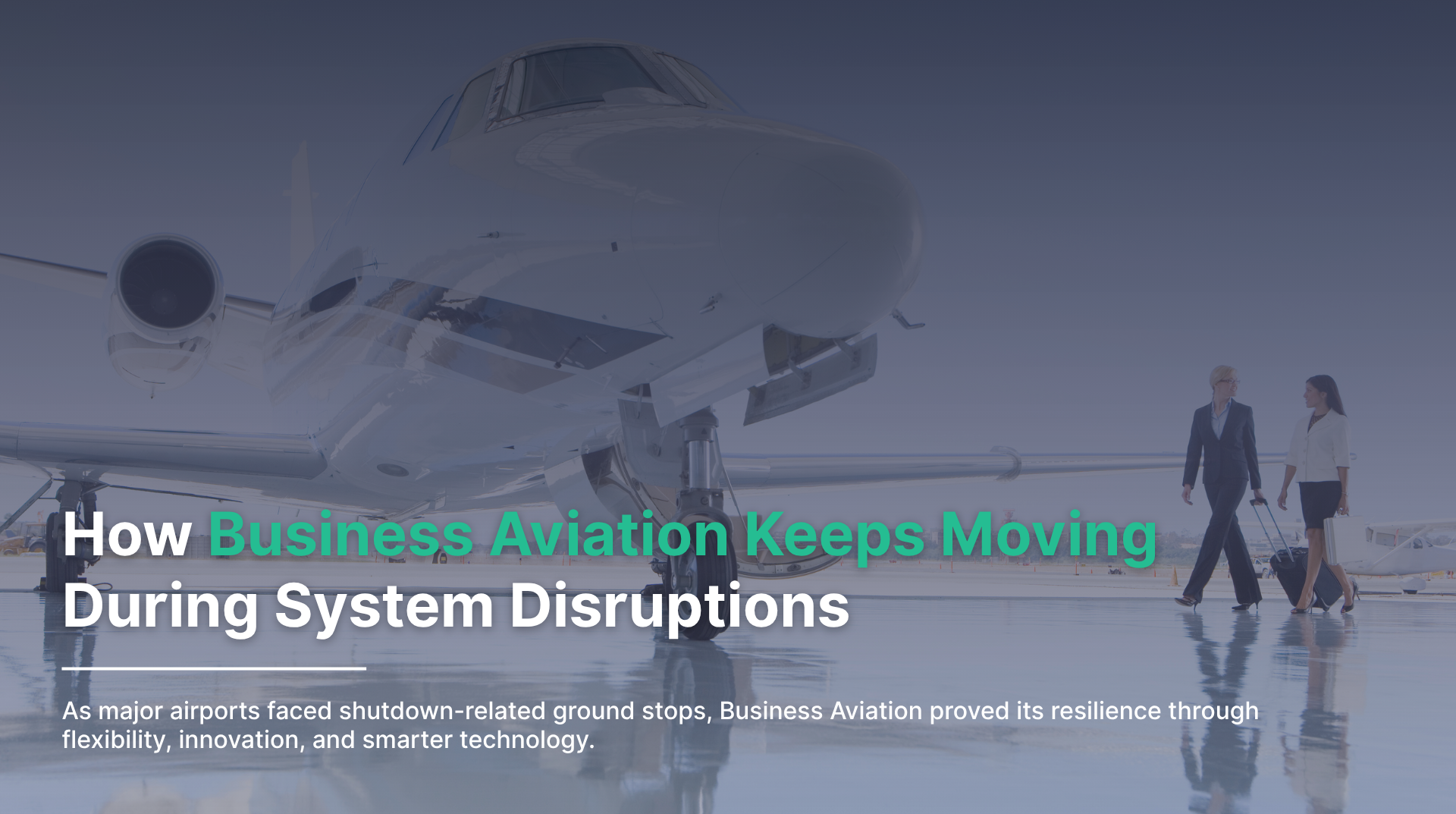
The U.S. aviation system faced a major test this year as the federal government shutdown triggered cascading disruptions across major airports. Ground stops at Newark Liberty, LaGuardia, and Reagan National exposed just how fragile commercial air travel becomes when air traffic controller staffing collapses. With thousands of flights delayed or cancelled, the episode reminded the industry how dependent national mobility is on a fully staffed federal infrastructure.
Transportation Secretary Sean Duffy called the shortage a “system-wide crisis,” emphasizing that the absence of controllers effectively grounded parts of the nation. Airlines scrambled to rework schedules, passengers faced hours-long delays, and the ripple effects stretched far beyond the affected hubs. What began as a political standoff quickly turned into a logistical breakdown.
Private Aviation as the System’s Safety Net
During these shutdowns, business aviation once again demonstrated its agility. While airlines rely heavily on major hubs, private jets can operate through smaller airports that are often less impacted by staffing gaps. For executives and critical operations, this flexibility means continuity when the commercial network falters.
Platforms like Avi-Go, the AI-powered global charter and data marketplace have become essential tools in these scenarios. Avi-Go’s AI aircraft search analyzes hundreds of operators in seconds, connecting travelers to available aircraft and live pricing the moment departures at major airports are halted. Instead of coordinating manually with multiple brokers, users gain instant visibility and real-time booking options through Avi-Go’s charter marketplace.
This speed has proven vital. When flight schedules collapse, travelers can pivot quickly using data-driven search and automated trip planning. The platform’s intelligent trip board also streamlines charter management, helping operators stay responsive and efficient even under extreme conditions. In times when flexibility defines success, technology becomes the strongest form of resilience.
The shutdowns arrived amid other operational pressures. LAX announced the closure and complete reconstruction of Terminal 5 as part of a $30 billion modernization ahead of the 2028 Olympics, temporarily affecting both commercial and private operations. Meanwhile, Delhi’s Indira Gandhi International Airport reopened its upgraded Terminal 2 with expanded facilities and higher capacity. While these projects enhance long-term efficiency, they also add congestion and complexity in the short term. For business aviation, which relies on dedicated terminal access and slot availability, the impact can be immediate.
Innovation and Sustainability Drive Recovery
Despite turbulence in the system, aviation technology continues to advance rapidly. Garmin unveiled next-generation D2 Aviator watches with improved flight tracking, while Honeywell introduced new navigation systems to counter signal interference. PHI became the first air-medical operator to adopt virtual reality training simulators, helping pilots prepare for emergencies without additional flight hours.
Artificial intelligence is now central to disruption management. Avi-Go leverages AI to optimize routes, automate trip coordination, and connect users across its multi-agent network. These tools shorten response times dramatically during shutdowns or large-scale disruptions, allowing business aviation to remain operational when the commercial sector slows.
Safety remains a key priority even as operations evolve. While business aviation accident rates rose 24% in early 2025, U.S. data actually showed year-over-year improvement, underscoring ongoing progress. Runway excursions still account for a third of incidents, an area where technology and training continue to make a difference.
Sustainability is gaining equal momentum across aviation. The EU’s SAF usage rose to 0.6% in 2024, and Ethiopia’s 23,000-hectare biofuel project aims to produce over 500 million liters annually by 2030. Private aviation operators, often early adopters of innovation, are already incorporating sustainable fuel options, setting an example for wider industry adoption.
The 2025 shutdown crisis ultimately became more than a temporary disruption; it was a defining stress test for aviation’s adaptability. It exposed the vulnerabilities of centralized systems, but also underscored the resilience of digital infrastructure and private aviation networks.
Today, technology-driven platforms like Avi-Go are connecting the ecosystem in real time, empowering operators and brokers with data-driven insights and seamless connectivity. As a result, business aviation is emerging more agile, more intelligent, and better equipped to keep moving—even when the rest of the system slows down.

Business Aviation Activity Slumps Across Parts of North America


Top 3 Countries Leading Business Aviation Departures in Africa

Private Jet Charter Cost Estimator and Airline Price Predictor
Ready to Supercharge
Your Business Aviation Tech Stack with AI and Data?
Sign up free and start using the tools available in your chosen plan.
Discover how our aviation technology helps you work more efficiently and grow with confidence.
Subscribe to the Avi-Go Newsletter
Business aviation data, insights, and trends — trusted by 10,000+ professionals worldwide.