
Business Aviation Services Explained


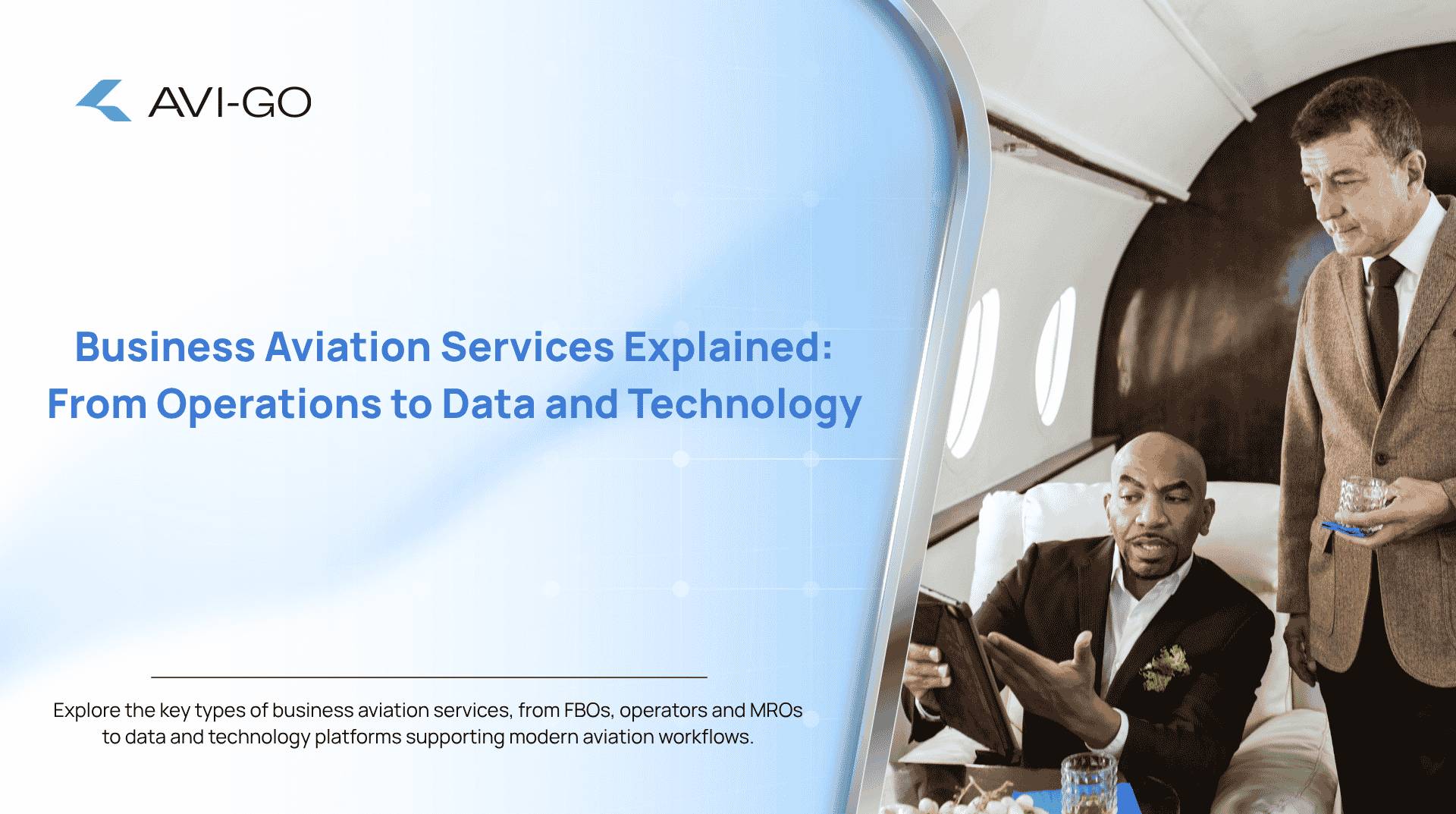
Business aviation depends on much more than aircraft and airports. Behind every flight is a network of specialised service providers supporting aircraft operations, maintenance, passenger handling, charter sales, compliance and decision-making.
These business aviation services work together across the operational lifecycle. Some providers manage the aircraft itself, while others support the journey, maintain airworthiness, facilitate charter transactions or provide the data and technology needed to coordinate workflows efficiently.
What Are Business Aviation Services?
Business aviation services refer to the specialised companies, platforms and professionals that support private and corporate aircraft operations.
The ecosystem includes several major service categories:
Fixed-Base Operators
Fixed-base operators, commonly known as FBOs, provide essential ground services at airports.
Their services can include:
- Aircraft parking and hangar facilities
- Fuel services
- Passenger lounges
- Ground transportation
- Catering coordination
- Ramp handling
- Crew facilities
- Customs support
FBOs often act as one of the main operational touchpoints when a business aircraft arrives at or departs from an airport.
Aircraft Operators
Aircraft operators are responsible for operating aircraft safely and in accordance with applicable aviation regulations.
Depending on the operation, they may manage:
- Aircraft scheduling
- Flight operations
- Crew
- Regulatory compliance
- Aircraft availability
- Charter operations
- Maintenance coordination
For charter flights, operators also work closely with brokers who are searching for suitable aircraft for their clients.
Charter Brokers
Charter brokers connect customers with aircraft operators.
Rather than operating aircraft directly, brokers search the market for suitable options based on factors such as:
- Route
- Passenger requirements
- Aircraft type
- Availability
- Pricing
- Operational limitations
Effective communication between brokers and operators is therefore an important part of the charter workflow, especially when availability, pricing or flight requirements change quickly.
Maintenance, Repair and Overhaul Providers
Maintenance, repair and overhaul providers, or MROs, help keep business aircraft safe, compliant and operational.
Their services may cover:
- Routine inspections
- Scheduled maintenance
- Unscheduled repairs
- Engine maintenance
- Component servicing
- Avionics upgrades
- Cabin refurbishment
Maintenance is not only important for airworthiness. Aircraft condition and maintenance history can also influence availability, operating costs and long-term asset value.
Aircraft Management Companies
Aircraft management companies support owners with the day-to-day responsibilities involved in operating an aircraft.
Services can include:
- Crew management
- Scheduling
- Maintenance oversight
- Insurance coordination
- Operational compliance
- Budget management
- Vendor coordination
- Charter management
For aircraft owners, these services can reduce the operational burden associated with managing a complex aviation asset.
Flight Support and Trip Planning
International business aviation operations often require coordination across multiple organisations.
Flight support providers may help with:
- Route planning
- Landing permits
- Overflight permits
- Airport slots
- Weather information
- NOTAMs
- Fuel arrangements
- Ground handling
- Customs requirements
A single flight can therefore involve multiple service providers before the aircraft even leaves the ground.
Data and Technology Services in Business Aviation
As business aviation becomes increasingly connected, data and technology services are becoming another important part of the industry ecosystem.
Operators, brokers and aviation professionals often need to work with information spread across different sources, including aircraft availability, flight activity, airport information, operational restrictions and market data.
Technology platforms can help bring these workflows together.
This is where Avi-Go is positioned within the broader business aviation services ecosystem.
Avi-Go provides business aviation data, intelligence and digital tools designed to support operational and commercial workflows across the industry.
For example, brokers can use digital tools to identify aircraft and market opportunities, while operators can make aircraft availability visible and respond to charter demand. Flight activity, airport information and aircraft intelligence can also support research, planning and operational decisions.
Instead of replacing FBOs, operators, brokers or MROs, data platforms help these different participants access information, communicate and make decisions more efficiently.
Connecting Brokers and Operators Through Technology
One area where technology can have a particularly direct impact is the charter workflow.
Traditionally, brokers may need to contact multiple operators individually to identify available aircraft, compare options and manage charter requests.
Digital platforms can help structure this process by allowing brokers and operators to interact through shared workflows.
Within Avi-Go, features such as aircraft search, Trip Board, charter orders and marketplace tools are designed to support this connection.
A broker can identify suitable aircraft or publish a trip requirement, while operators can discover relevant charter opportunities and respond based on their fleet availability.
This helps turn fragmented communication into a more connected workflow.
Supporting Better Operational Decisions With Aviation Data
Technology services also extend beyond charter transactions.
Business aviation professionals increasingly use data to understand:
- Aircraft movements
- Fleet utilisation
- Airport activity
- Aircraft specifications
- Operational trends
- Empty-leg opportunities
- Flight routes
- Market activity
Having this information accessible within one platform can help users move from searching for individual data points toward building a broader understanding of the market and operational environment.
For brokers, this can support aircraft sourcing.
For operators, it can help identify demand and market opportunities.
For analysts and aviation companies, historical and current flight activity can provide additional context for strategic decisions.
How the Business Aviation Services Ecosystem Works Together
Most business aviation flights involve several service providers working together.
A typical charter journey may involve:
Broker → Operator → Flight Support → FBO → Fuel Provider → Ground Handler → Crew → MRO → Data and Technology Platform
Each provider serves a different function, but the overall operation depends on coordination between them.
As more workflows become digital, data and technology are increasingly helping connect these different parts of the ecosystem.
The result is not the replacement of traditional aviation services, but a more connected environment where information can move more efficiently between the organisations involved.
The Growing Role of Technology in Business Aviation Services
Business aviation remains a relationship-driven industry, but those relationships are increasingly supported by digital infrastructure.
Aircraft availability, flight activity, airport data and market information can now be accessed more quickly, while digital platforms can help brokers and operators manage opportunities through shared systems.
For the industry, the value of technology is therefore not simply automation.
It is about creating better visibility across the operational workflow and helping aviation professionals make more informed decisions.
Avi-Go supports this part of the business aviation services ecosystem by combining aviation data, market intelligence and workflow tools within one platform.
Explore Avi-Go and access business aviation tools designed for brokers, operators and aviation professionals. Register and enjoy your free account.
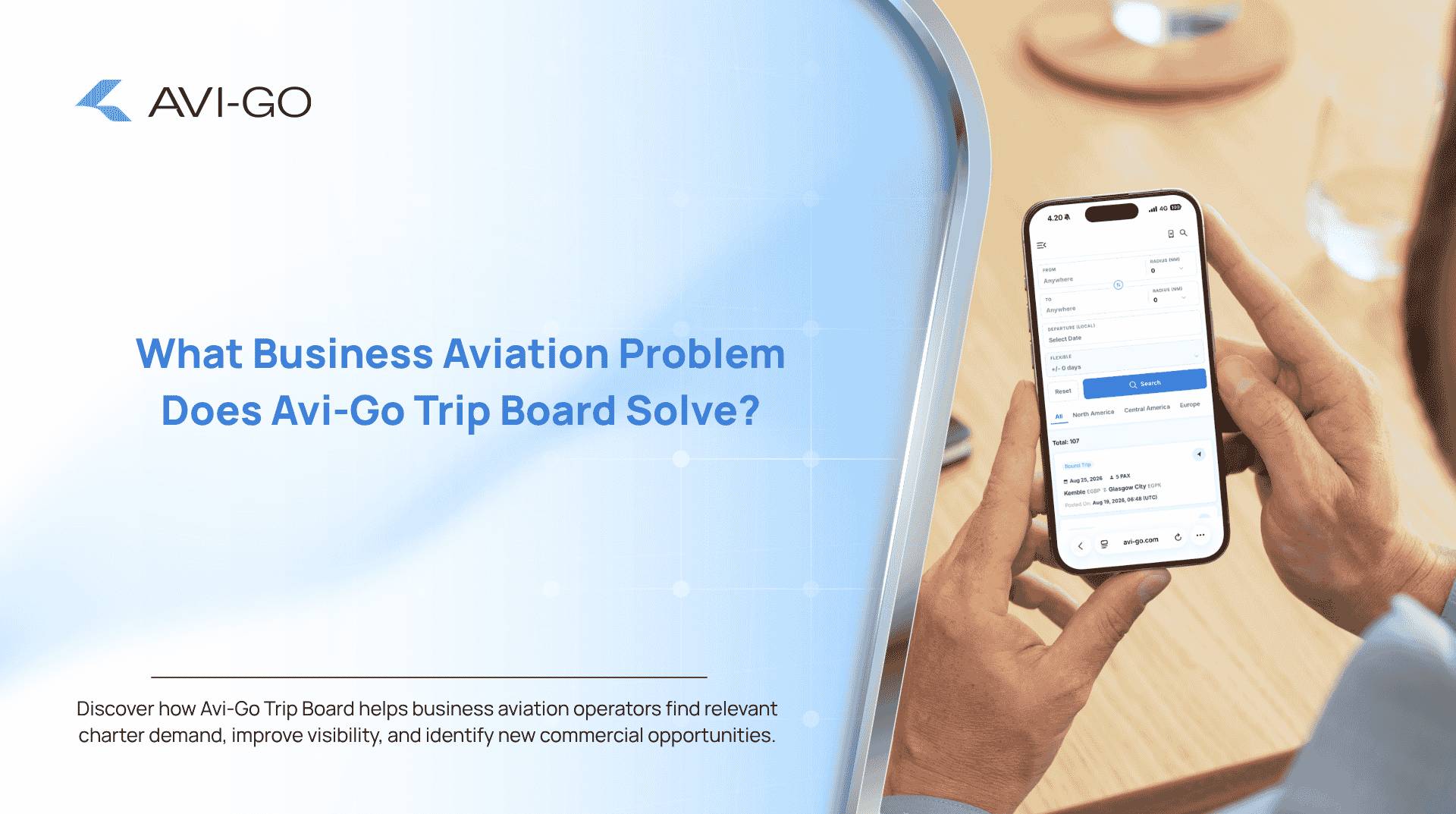
What Business Aviation Problem Does Avi-Go Trip Board Solve?

How to Find a Flight Number and Track a Flight in Business Aviation
NOTAM Meaning in Business Aviation and Why It Matters for Flight Operations
Ready to Supercharge
Your Business Aviation Tech Stack with AI and Data?
Sign up free and start using the tools available in your chosen plan.
Discover how our aviation technology helps you work more efficiently and grow with confidence.
Subscribe to the Avi-Go Newsletter
Business aviation data, insights, and trends — trusted by 10,000+ professionals worldwide.