
Choosing a Business Aviation Marketplace: Why Relevance Matters



When searching for where to find business aviation marketplaces, it is easy to assume that the largest platform must also be the most useful.
But in business aviation, scale does not always equal relevance.
A marketplace may contain thousands of aircraft, companies, listings, or users, yet only a small share may actually match what a professional needs. A broker may be sourcing a specific aircraft, an operator may be looking for demand, an FBO may want airport activity data, while a journalist or analyst may need market intelligence.
The better question is not: Which marketplace is the largest?
It's: Which marketplace helps me find the most relevant information and opportunities for my work?
Size and Relevance Are Different
Large marketplaces can offer broader reach and more opportunities, but a high volume of results can also create noise.
For example, a broker may see hundreds of aircraft, but only a few may realistically match a client’s route, aircraft category, timing, operator, and mission requirements.
Likewise, an operator may see many trip requests, but only some will fit its fleet position and commercial priorities.
A useful marketplace should therefore reduce the distance between: search → evaluate → find a relevant opportunity → act
That can matter more than the total number of listings.
The Right Marketplace Depends on the User
Different aviation professionals need different things from a marketplace.
Brokers
Brokers need to identify suitable aircraft quickly. Useful tools may include aircraft search, operator information, specifications, availability, and empty-leg opportunities.
Operators
Operators need visibility into demand. Trip requests, fleet exposure, broker demand, and empty-leg publishing can help them identify commercial opportunities that match their operations.
FBOs and Service Providers
FBOs may be more interested in airport activity, operator presence, aircraft movements, and regional traffic patterns to support business development and market research.
Journalists, Analysts, and Researchers
These users often need flight activity, fleet information, historical trends, airport data, and market intelligence rather than transactional listings.
This is why the largest marketplace is not automatically the right marketplace for every industry persona.
What Makes a Business Aviation Marketplace Useful?
Instead of focusing mainly on size, professionals can evaluate a platform based on a few practical criteria.
Relevance: Can it narrow results to what actually matters?
Data freshness: Is the information current enough for a fast-moving market?
Context: Can users understand the aircraft, operator, airport, route, or activity behind a result?
Supply and demand visibility: Can brokers and operators discover each other’s opportunities?
Workflow integration: How many other tools are still needed after finding an opportunity?
The strongest platforms do more than display listings. They help users understand what they are seeing and decide what to do next.
Marketplace Utility Matters More Than Volume
A better measure is marketplace utility: Relevant opportunities + reliable information + market context + efficient workflow
This is especially important in business aviation because professionals rarely work with one type of information alone.
A broker may need aircraft and operator information. An operator may need trip demand and aircraft positioning. An FBO may combine airport and traffic data. An analyst may study flights, fleets, and regional trends together.
The more connected these information layers are, the more useful the platform becomes.
Why Integrated Platforms Have an Advantage
Traditional aviation workflows often require several separate systems.
A professional may move between a directory, aircraft database, flight tracker, spreadsheet, inbox, and market report before making a decision.
Integrated platforms reduce that fragmentation by bringing marketplace activity, aviation data, and research tools into one environment.
The benefit is not that every user needs every feature. It is that different industry professionals can access the tools most relevant to their role without relying on completely disconnected sources.
Where Avi-Go Fits
Avi-Go follows this broader model.
For charter brokers and operators, its marketplace tools include Aircraft Search, Trip Board, and Empty Legs, helping users discover aircraft, identify charter demand, and improve visibility between supply and demand.
Beyond the marketplace, Avi-Go also brings together flight data, historical analysis, aircraft and operator information, airport and FBO data, market intelligence, AI-supported research, emissions tools, and aviation reports.
That makes the platform relevant to a wider range of industry professionals.
Brokers can use it for aircraft sourcing, operator research, trip opportunities, and empty legs.
Operators can increase fleet visibility, identify demand, and discover commercial opportunities.
FBOs and service providers can use airport, fleet, and flight activity data for market research and business development.
Journalists, analysts, and researchers can use aviation data and historical intelligence to study trends and support industry reporting.
For brokers and operators, Avi-Go provides the direct marketplace layer. For other industry personas, its value comes from the wider data and intelligence environment surrounding that marketplace.
Finding the Right Business Aviation Marketplace
The best marketplace is not necessarily the one with the most listings.
It is the one that helps users find relevant opportunities, understand the context behind them, and make decisions efficiently.
That is the broader role Avi-Go aims to play: an all-in-one business aviation marketplace and intelligence platform connecting charter opportunities, aviation data, and research tools for professionals across the industry.
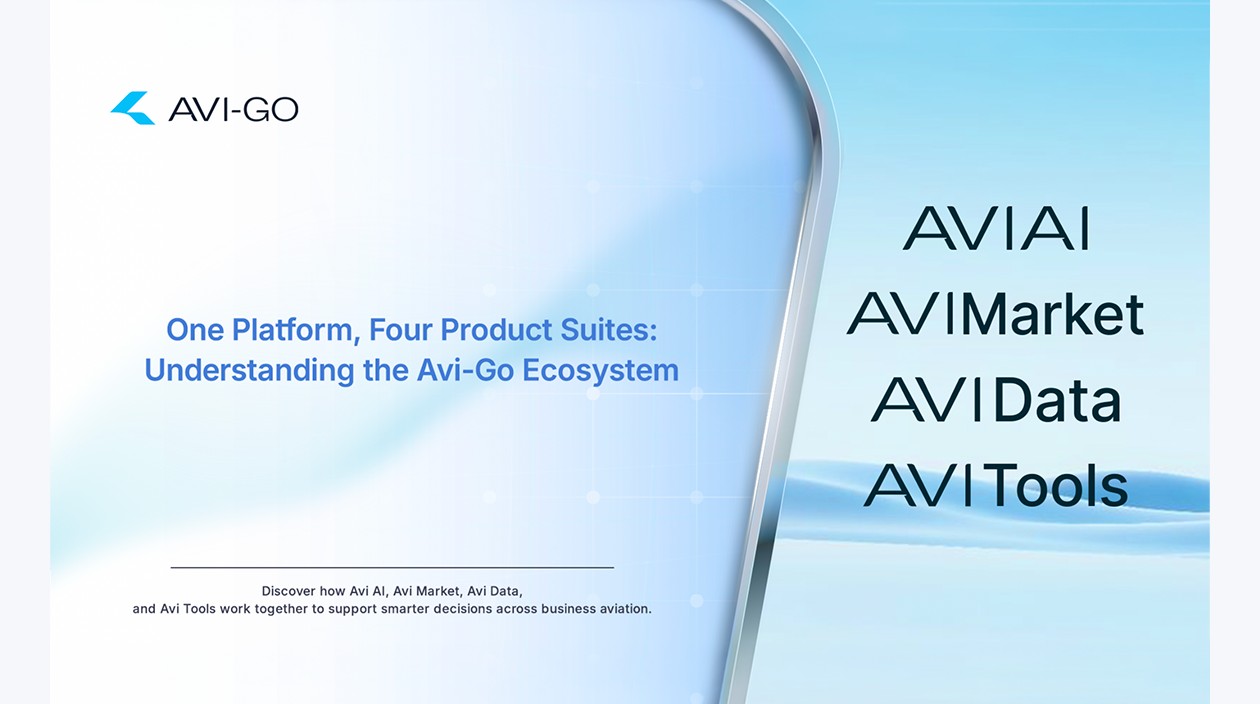
One Platform, Four Product Suites: Understanding the Avi-Go Ecosystem


What Business Aviation Transaction Reports Reveal About Buyer Behavior

USA Operator Growth: U.S. Business-Jet Activity Climbs 27%
Ready to Supercharge
Your Business Aviation Tech Stack with AI and Data?
Sign up free and start using the tools available in your chosen plan.
Discover how our aviation technology helps you work more efficiently and grow with confidence.
Subscribe to the Avi-Go Newsletter
Business aviation data, insights, and trends — trusted by 10,000+ professionals worldwide.