
Fractional vs Full Ownership Cost Comparison 2026


Every aircraft ownership conversation eventually arrives at the same question:
“Which option actually costs less?”
In 2026, that question matters more than ever. Operating costs remain elevated, supply chains are still tight, and charter demand continues to reshape fleet strategy. What used to be a simple comparison between fractional and full ownership has become a far more dynamic financial equation.
The truth is this:
There is no universally cheaper model.
There is only the model that best fits how an aircraft is truly used.
Utilization Is the Real Cost Engine
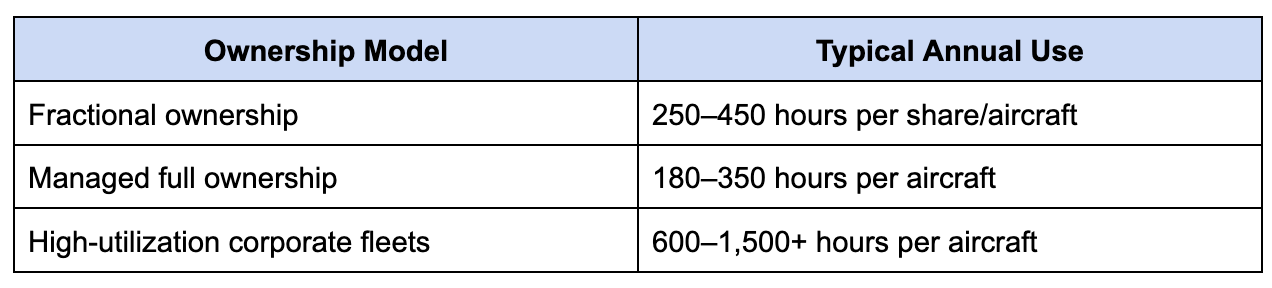
Ownership economics begin and end with one metric: annual flight hours.
Typical Utilization by Ownership Model
Global Typical Cost Ranges by Ownership and Utilization in 2025
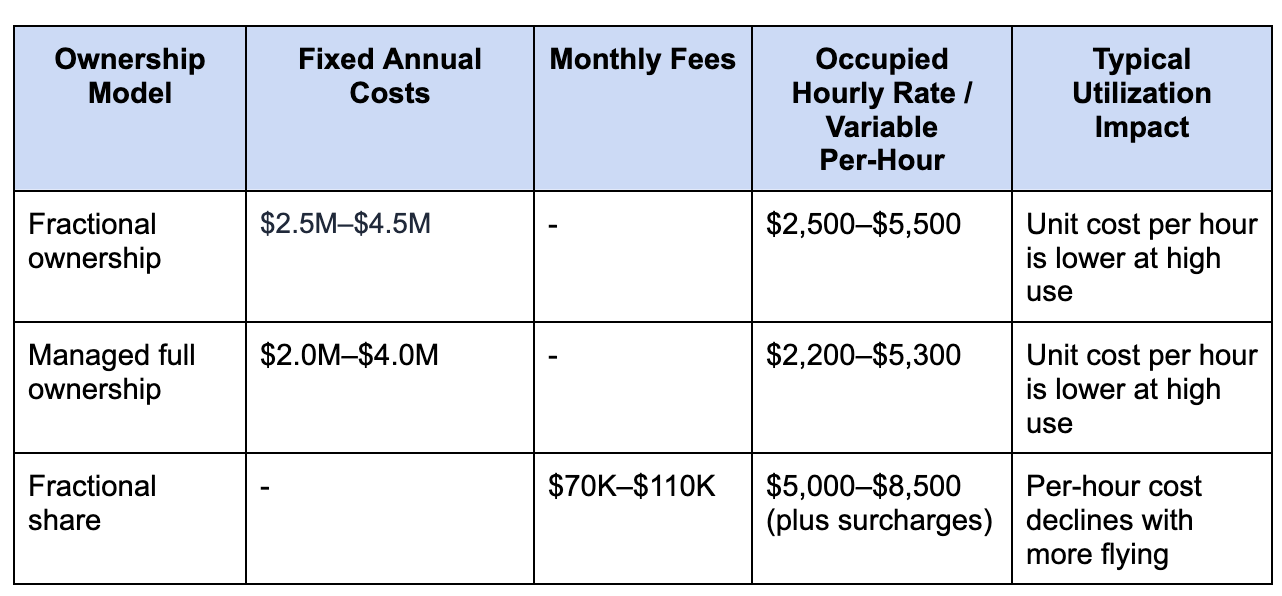
Sources: Avi-Go proprietary data 2025.
Predictability vs Efficiency: Two Very Different Advantages
Fractional ownership is specifically designed to promote budget predictability for business aircraft users. This structure relies on stable monthly management fees, pooled maintenance exposure among all participants, and reduced sensitivity to aircraft resale market swings. As a result, owners typically experience year-over-year cost variation in the range of ±3–6%, making fractional share arrangements highly attractive for organizations seeking consistent and forecastable expenses.
In contrast, full ownership remains a model focused on long-term operating efficiency. While it can expose owners to annual operating cost swings of around ±10–18%, this variability is the trade-off for potential scalability benefits. For owners able to maintain high annual utilization, full ownership consistently delivers approximately 25–40% lower cost per flight hour compared to a comparable fractional share program, rewarding those with the ability to keep the aircraft actively flying throughout the year.
How Ownership Models Shape Cost Stability and Financial Risk
In 2025, business aircraft ownership shows distinct cost behavior across models.
Fractional ownership continues to face operating cost volatility of ±8% to ±15% annually, driven by fuel price changes, interchange fees, peak-demand premiums, and international handling surcharges that often exceed initial estimates.
Full ownership encounters different pressures. Operators should expect $1.5–$3 million per year in unscheduled maintenance and engine events, plus $800,000–$2.5 million annually for scheduled major inspections. While these costs are part of long-term ownership, their timing and impact remain difficult to predict.
Owners who place their aircraft on the charter market for 60–150 hours annually can offset 20%–40% of fixed ownership costs, lowering effective operating cost per flight hour by $1,500–$3,000, savings rarely available in most fractional programs.
Looking to 2026, industry benchmarks indicate similar conditions: fractional cost volatility remains at ±8%–±15%, full ownership maintenance costs stay within 2025 ranges, and charter participation continues to provide comparable financial offsets.
Conclusion: Both ownership models retain value, but persistent volatility from surcharges, maintenance uncertainty, and charter dynamics makes dynamic budgeting and risk planning essential for business aircraft owners.

Private Jet Charter Cost Estimator and Airline Price Predictor

Best Private Jet Charter Companies 2026

Private Jet Sustainability
Ready to Supercharge
Your Business Aviation Tech Stack with AI and Data?
Sign up free and start using the tools available in your chosen plan.
Discover how our aviation technology helps you work more efficiently and grow with confidence.
Subscribe to the Avi-Go Newsletter
Business aviation data, insights, and trends — trusted by 10,000+ professionals worldwide.