
Choose the Right Private Jet with Aircraft Search by Avi-Go


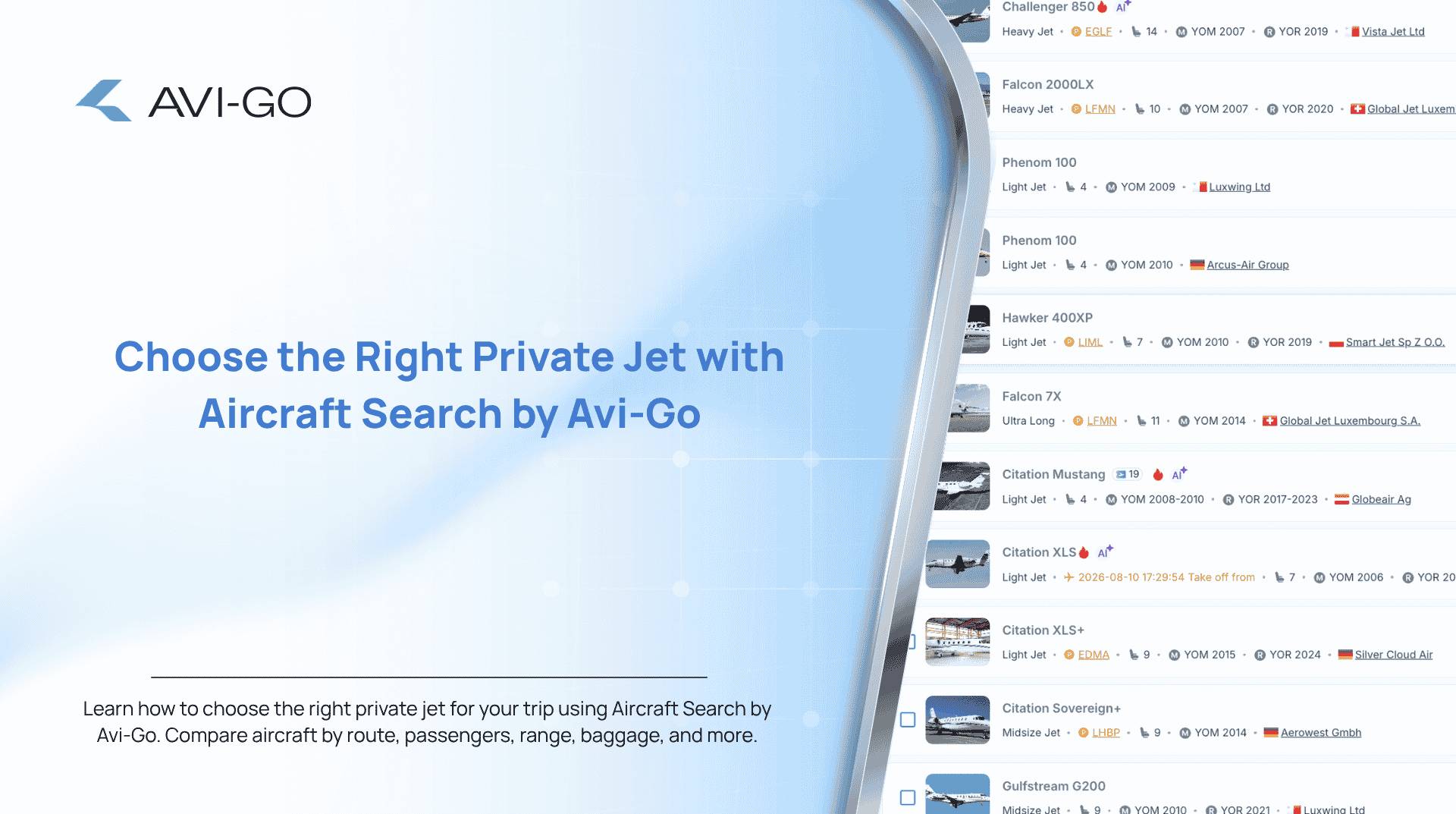
Choosing a private jet is not simply about finding an aircraft that can fly from one airport to another. The right aircraft should match the route, passenger count, baggage requirements, airport conditions, comfort expectations, and overall charter needs.
For brokers and charter professionals, a structured aircraft search can make this process much easier by narrowing a large number of potential aircraft into options that are more suitable for a specific trip.
Here are the main factors to consider when choosing an aircraft for a private jet charter.
1. Start With the Route
The first consideration is where the aircraft needs to fly.
Distance affects which aircraft categories and models are practical for the trip. A light jet may be suitable for a short regional flight, while longer journeys may require a midsize, super-midsize, or heavy jet with greater range.
It is also important to consider whether the aircraft can complete the flight nonstop or whether a fuel stop may be required.
An aircraft search based on the departure airport, destination, and travel date can help identify aircraft that are better suited to the planned route.
2. Consider the Number of Passengers
Passenger capacity is another important factor.
Aircraft within the same general category can have different cabin configurations and seating capacities. A jet that technically has enough seats may not always provide the most comfortable option for the group.
For example, a larger cabin may be preferable when passengers need more room to work, relax, or move around during a longer flight.
When searching for an aircraft, include the expected passenger count from the beginning so unsuitable options can be filtered out.
3. Check Baggage Requirements
Baggage capacity is easy to overlook when comparing private jets.
The amount of available storage varies considerably between aircraft models. Passenger numbers alone therefore do not determine whether an aircraft is suitable.
A group travelling with large suitcases, golf equipment, skis, business equipment, or other oversized items may need more baggage capacity than another group with the same number of passengers.
Aircraft specifications should always be reviewed before selecting the final option.
4. Compare Range and Aircraft Performance
Aircraft range provides a useful starting point, but it should not be viewed in isolation.
Actual operating capability can depend on factors such as passenger load, baggage, weather, airport elevation, runway length, and other operational conditions.
This is why comparing aircraft specifications is useful during the aircraft search process. Rather than selecting an aircraft only because it belongs to a certain category, brokers can review individual models and determine which options make more sense for the mission.
5. Think About the Airports
Private aviation provides access to many airports that scheduled airlines do not regularly serve, but not every aircraft is suitable for every airport.
Runway length, airport restrictions, operating hours, aircraft size, and local conditions can all influence aircraft selection.
In some cases, a smaller aircraft may provide access to an airport closer to the passenger's destination. In others, a larger aircraft may require the use of a different airport with more suitable facilities.
Airport suitability should therefore be considered together with aircraft capability.
6. Review Cabin Features and Amenities
Two aircraft capable of flying the same route can provide very different passenger experiences.
Depending on the trip, passengers may want to consider:
- Cabin height and width
- Seating configuration
- WiFi availability
- Lavatory facilities
- Baggage access
- Entertainment systems
- Sleeping arrangements
- Catering requirements
These factors become particularly important on longer flights, where cabin comfort can have a much greater impact on the overall experience.
7. Check Aircraft and Operator Availability
Finding the ideal aircraft model does not necessarily mean that aircraft will be available for the requested date and route.
Charter aircraft schedules can change quickly. Aircraft may already be booked, positioned in another location, or unavailable because of operational requirements.
This makes current fleet and operator information an important part of the aircraft search process.
A practical search should help users move from identifying suitable aircraft to reviewing available options and contacting relevant operators.
Aircraft Search Makes Comparison Easier

Choosing the right private jet usually requires balancing several factors rather than focusing on a single specification.
Route, passengers, baggage, aircraft range, airport compatibility, cabin requirements, availability, and price can all influence the final decision.
Avi-Go's Aircraft Search brings these considerations into one workflow. Users can search by route and passenger requirements, review aircraft specifications and operator information, apply filters, compare potential options, and send charter inquiries directly through the platform.
Find the Right Aircraft for Your Next Charter
Instead of searching across multiple sources, use Avi-Go Aircraft Search to explore aircraft that match your trip requirements and compare your options in one place.
Sign up for Avi-Go and try Aircraft Search for free to start finding the right aircraft for your next charter.
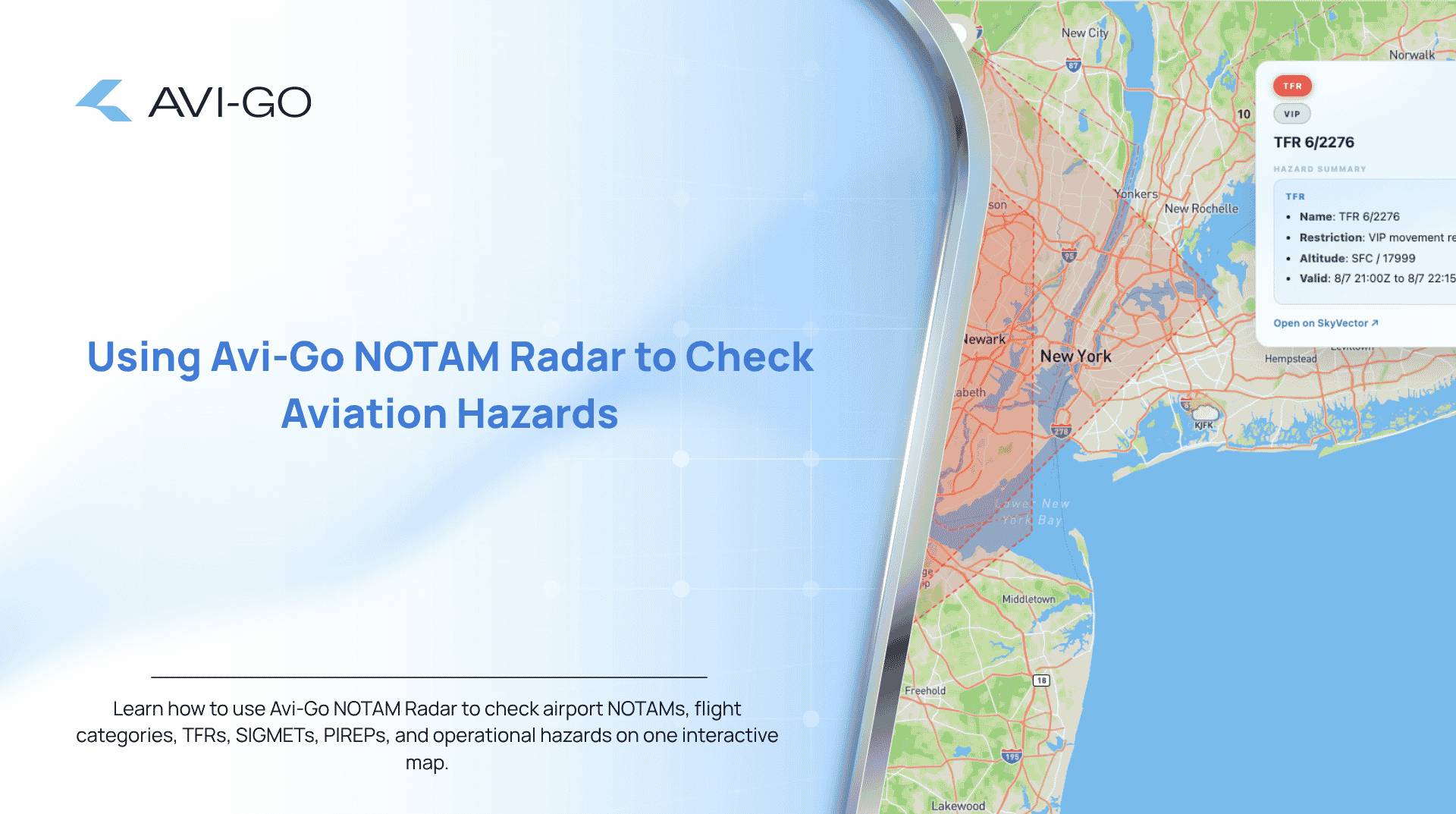
Using Avi-Go NOTAM Radar to Check Aviation Hazards

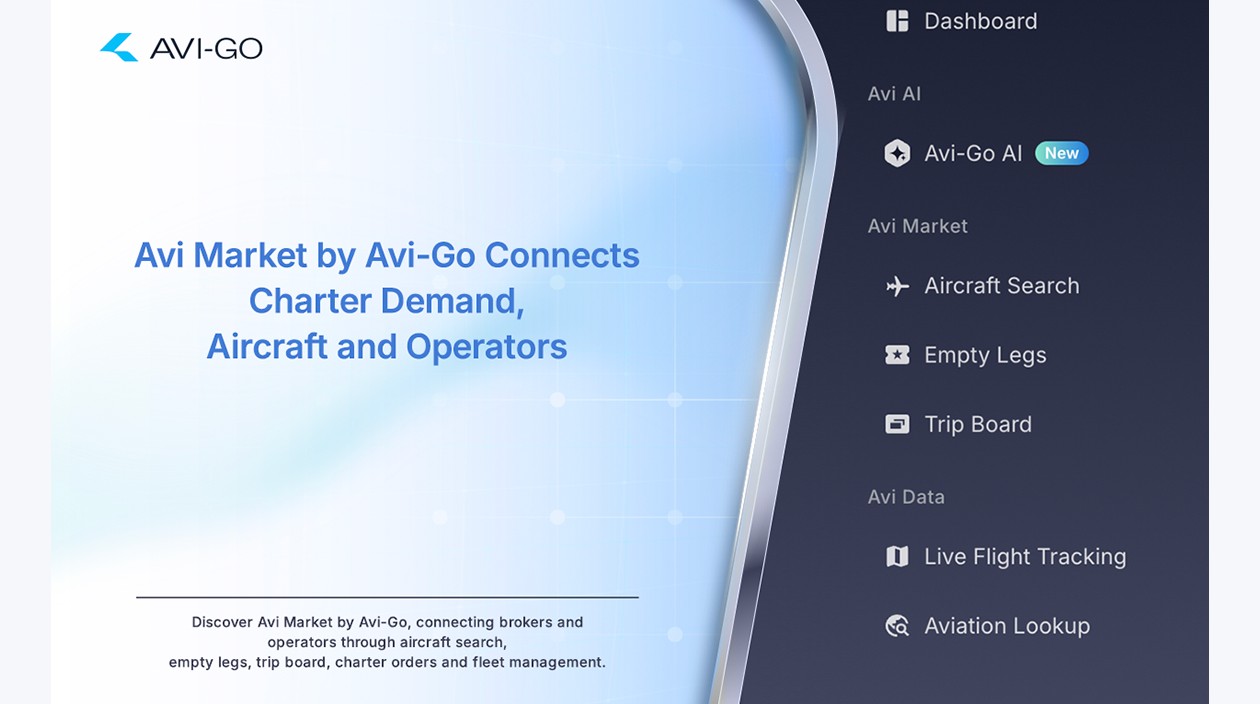
Avi Market by Avi-Go Connects Charter Demand, Aircraft and Operators

Avi-Go AI as an Intelligent Operating System for Business Aviation
Ready to Supercharge
Your Business Aviation Tech Stack with AI and Data?
Sign up free and start using the tools available in your chosen plan.
Discover how our aviation technology helps you work more efficiently and grow with confidence.
Subscribe to the Avi-Go Newsletter
Business aviation data, insights, and trends — trusted by 10,000+ professionals worldwide.