
How to Reduce Cargo Aircraft Charter Costs Without Risking Delivery


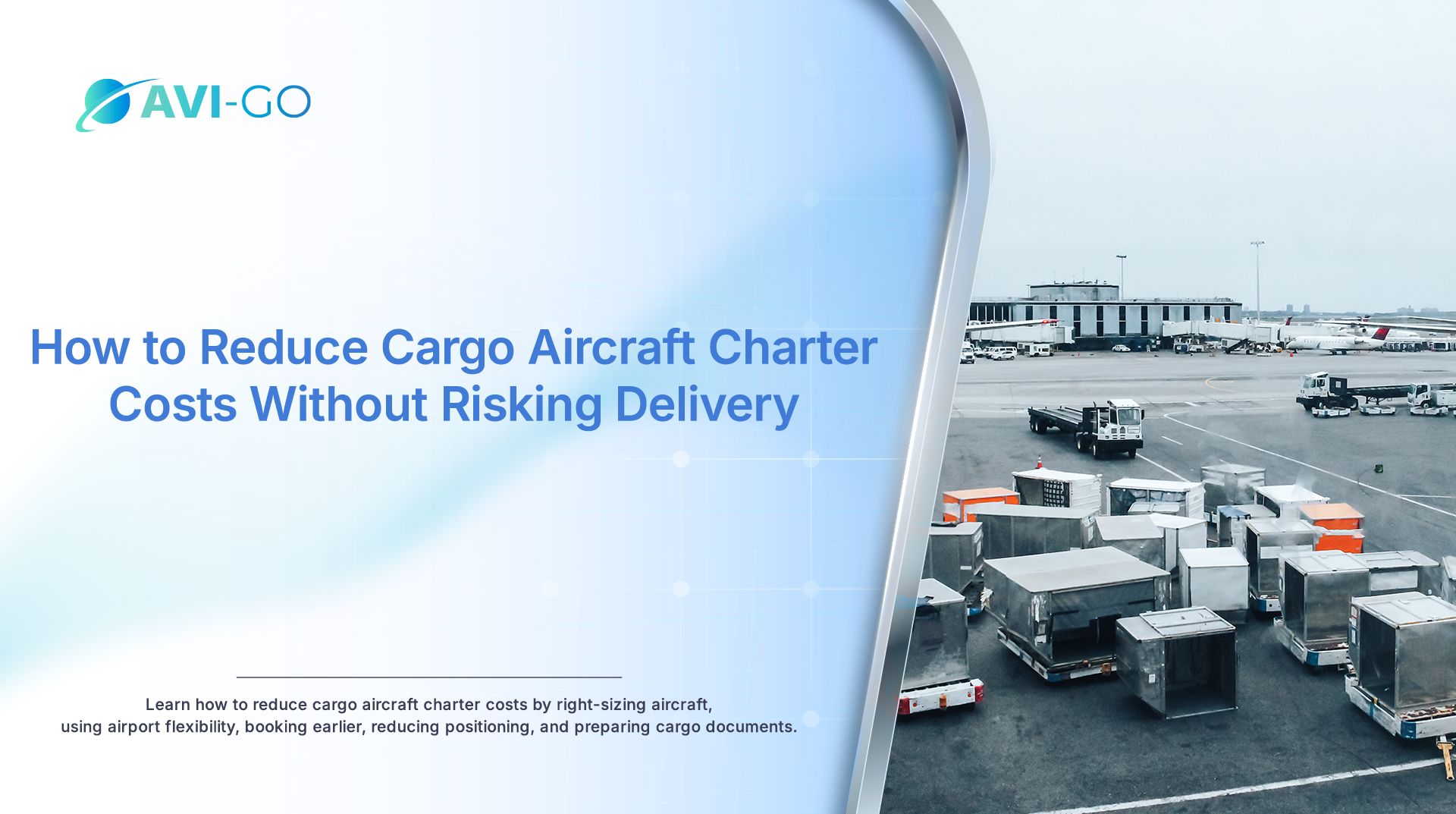
Cargo aircraft charter can be the fastest option for urgent, oversized, high-value, or time-sensitive shipments. But it can also be expensive if the aircraft is oversized, the pickup airport is inflexible, the request is made at the last minute, or the shipment details are incomplete.
Reducing cargo aircraft charter costs does not mean choosing the cheapest aircraft at any cost. The goal is to remove avoidable cost drivers while protecting delivery reliability. A lower quote is only useful if the aircraft can load the cargo, depart on time, meet permit requirements, and deliver within the required schedule.
The safest savings usually come from better aircraft matching, smarter airport selection, more lead time, lower repositioning exposure, and complete shipment readiness.
Right-Size the Aircraft to the Cargo Requirement
Aircraft selection is one of the most important ways to control cargo charter cost. Choosing an aircraft that is too large can increase hourly cost, fuel cost, airport charges, and positioning cost. But choosing an aircraft that is too small can create bigger problems, such as failed loading, rehandling, split shipments, or rebooking delays.
The right aircraft is not selected by weight alone. It must fit the cargo across five key checks:
- Cargo weight
- Cargo dimensions
- Total cargo volume
- Door clearance
- Loading method
For example, a small urgent shipment may be suitable for a turboprop cargo aircraft or a small jet utility lift if the cargo is compact. A larger, heavier, or palletized shipment may require a midsize aircraft, heavy jet, or freighter-converted aircraft. If the cargo is dense, oversized, or requires main-deck loading, a larger freighter may be necessary.
The best cost-saving approach is to avoid overpaying for range or capacity that is not needed, while still confirming that the selected aircraft can safely and practically carry the shipment.
Consider Alternative Departure Airports
Departure airport flexibility can reduce total charter cost without increasing delivery risk. The closest airport is not always the lowest-cost airport for the full mission.
A major airport may be closer to the cargo origin, but it may also have higher handling fees, tighter slot availability, more congestion, limited parking, or less suitable aircraft nearby. A secondary or nearby alternative airport may require slightly more trucking, but it can reduce air charter cost if it improves aircraft availability, lowers handling charges, or avoids congestion-related delays.
When comparing airports, shippers should look beyond road distance and consider:
- Aircraft availability near the airport
- Airport and handling charges
- Slot and ramp access
- Ground handling speed
- Loading equipment availability
- Congestion and delay risk
- Trucking distance from cargo origin
The goal is not simply to choose the cheapest airport. The goal is to choose the airport with the best total mission cost, while still protecting the delivery timeline.
Add Lead Time or Timing Flexibility When Possible
Urgency is one of the strongest cost drivers in cargo charter. Same-day or immediate charter requests usually have fewer aircraft options and higher execution pressure. Operators must secure the aircraft, crew, landing permits, overflight permits, airport slots, and ground handling in a compressed timeline.
This can increase both cost and delivery risk.
Even a small amount of flexibility can help. A shipment that allows 24 to 48 hours of planning may have more available aircraft options than a same-day request. A booking window of three to seven days can give operators more room to optimize aircraft sourcing, routing, permits, and crew planning.
Typical pricing pressure often follows this pattern:
- Same-day or immediate charter: highest cost pressure and highest execution risk
- 24-hour window: better than same-day, but still constrained
- 24–48 hours: more aircraft choice and more stable planning
- 3–7 days: stronger sourcing and better negotiating position
- 1 week or more: best chance to optimize cost without sacrificing reliability
For urgent cargo, timing cannot always be flexible. But when a shipment can move a few hours later, depart from a nearby airport, or allow one extra day of planning, the buyer may reduce avoidable premiums while improving operational confidence.
Reduce Positioning and Empty-Leg Cost
Positioning is one of the most common hidden costs in ad hoc cargo charter. A charter quote may not only include the loaded flight. It may also include the cost of flying the aircraft empty to the pickup airport.
If a suitable aircraft is already at the departure airport, the quote usually has the lowest non-empty-leg baseline. If the aircraft is nearby, the added positioning cost may be moderate. If the aircraft is far away, the repositioning sector can add major cost and increase the risk of knock-on delays.
This is why two quotes for the same cargo route can be very different. One quote may use an aircraft already near the origin. Another may include a long ferry flight before the cargo is even loaded.
Shippers can reduce positioning exposure by:
- Asking for aircraft already near the pickup airport
- Being flexible with departure airport
- Matching shipment timing with aircraft availability
- Considering empty-leg or pre-positioned aircraft opportunities
- Avoiding unnecessary last-minute changes that force new aircraft sourcing
The most practical savings often come from matching the shipment with the right aircraft in the right location, not just negotiating the headline hourly rate.
Prepare Cargo Details and Documents Before Quoting
Documentation readiness is one of the easiest ways to reduce avoidable cargo charter cost. It does not reduce aircraft capability, but it can prevent delays, failed loading, rehandling, aircraft changes, and extra charges.
Before requesting a cargo aircraft charter quote, shippers should prepare:
- Exact cargo weight
- Exact dimensions for each piece
- Number of pieces
- Packaging type
- Cargo description
- Dangerous goods declaration, if applicable
- Temperature-control requirement, if applicable
- Loading equipment requirement
- Customs and export paperwork
- Pickup and delivery contact details
- Consignee readiness at destination
Incomplete details can lead to inaccurate aircraft selection. For example, missing dimensions may cause the cargo to be assigned to an aircraft with insufficient door clearance. Missing dangerous goods information can result in shipment rejection or major delay. Missing customs paperwork can hold the aircraft on the ground and risk the delivery schedule.
Complete shipment readiness helps the operator quote more accurately, plan loading properly, and reduce the chance of expensive last-minute changes.
How to Lower Cost Without Increasing Delivery Risk
The best way to reduce cargo aircraft charter cost is to remove unnecessary friction from the mission.
A shipper can often lower cost by:
- Choosing the smallest suitable aircraft, not simply the cheapest aircraft
- Comparing total mission cost across nearby airports
- Giving the operator more lead time when possible
- Reducing empty repositioning distance
- Preparing cargo details and documentation early
- Avoiding changes after aircraft sourcing has started
- Confirming loading equipment and handling requirements in advance
These steps reduce cost because they make the mission easier to plan, quote, and execute.
What Not to Do When Trying to Save Cost
Some cost-cutting decisions can increase delivery risk. Shippers should be careful with:
- Choosing an aircraft before confirming dimensions
- Ignoring door size and loading method
- Selecting an airport without checking handling capability
- Waiting until the last minute when the shipment is already known
- Providing estimated cargo weight instead of confirmed weight
- Leaving dangerous goods or temperature-control details until later
- Comparing quotes without checking what is included
The cheapest quote may become more expensive if it causes a failed loading attempt, missed permit window, additional waiting time, or aircraft replacement.
Plan Smarter Cargo Charter Savings With Avi-Go
To reduce cargo aircraft charter costs without risking delivery, shippers need better visibility into timing, demand, and aircraft movement. Avi-Go helps teams identify cost-saving opportunities before committing to a charter plan.
Use Avi-Go Event Traffic Forecaster to anticipate major event-driven demand, airport traffic peaks, and congestion risks that may affect charter availability, pricing pressure, and delivery reliability.
Use Avi-Go Tail Number Quick Check to review aircraft activity, recent flight segments, top routes, airports, flight hours, and operator signals before making charter decisions.

Private Jet Charter Cost Estimator and Airline Price Predictor


Best Private Jet Charter Companies 2026

Private Jet Sustainability
Ready to Supercharge
Your Business Aviation Tech Stack with AI and Data?
Sign up free and start using the tools available in your chosen plan.
Discover how our aviation technology helps you work more efficiently and grow with confidence.
Subscribe to the Avi-Go Newsletter
Business aviation data, insights, and trends — trusted by 10,000+ professionals worldwide.