
King Khalid International Airport Guide for Business Aviation


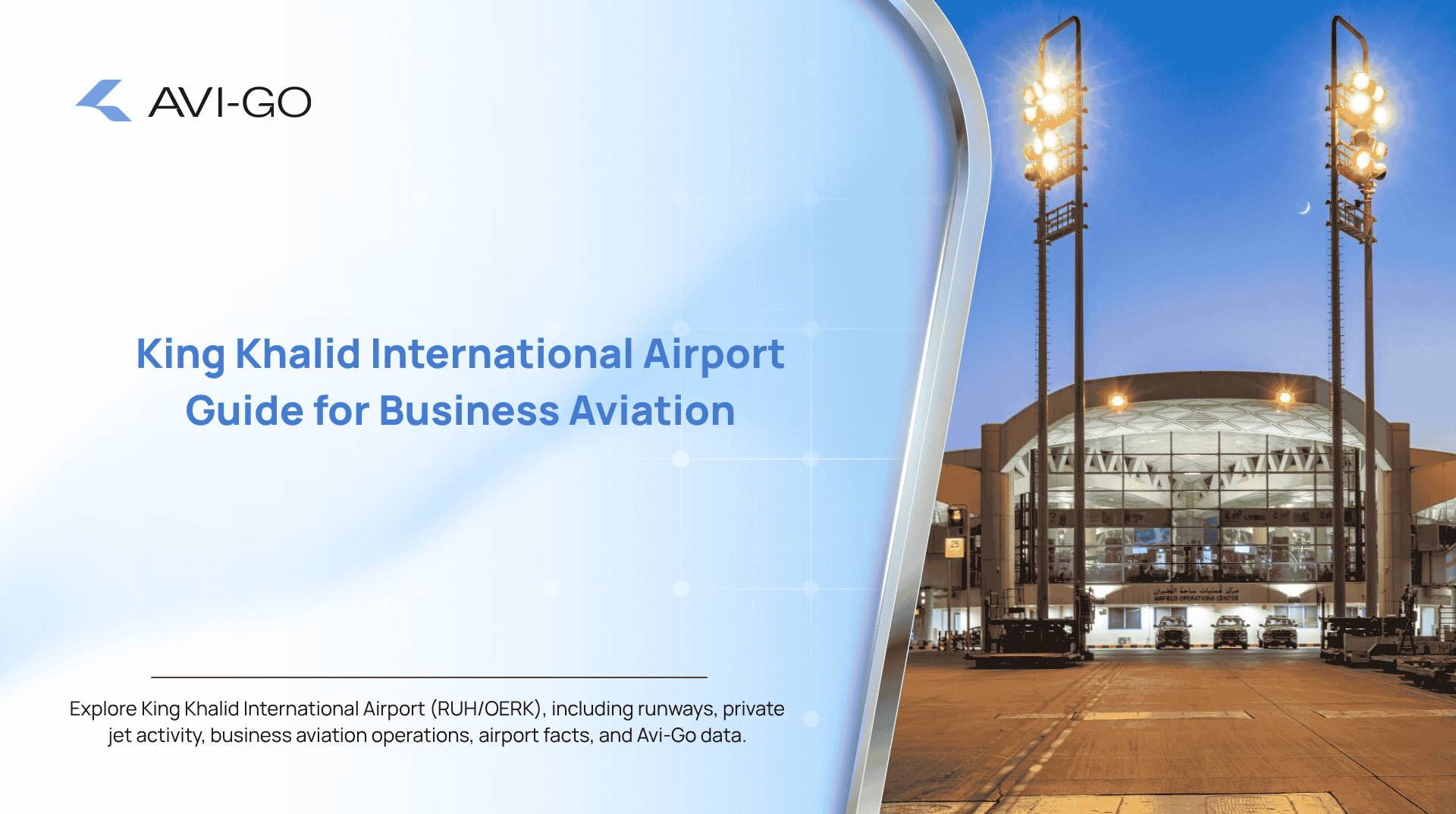
King Khalid International Airport is one of Saudi Arabia’s most important aviation gateways and a key airport for business aviation activity serving Riyadh. Located in the Saudi capital, the airport handles a mix of commercial, government, diplomatic, corporate, charter, and VIP flights.
Known by its IATA code RUH and ICAO code OERK, King Khalid International Airport provides access to one of the Middle East’s fastest-growing business and investment centers.
For operators, brokers, flight planners, and aviation professionals, understanding the airport’s infrastructure and aircraft activity can help support more informed trip planning and market analysis.
Explore King Khalid International Airport details and aircraft activity with Avi-Go Aviation Lookup.
King Khalid International Airport at a Glance
King Khalid International Airport is located in Riyadh, Saudi Arabia, and serves as the primary international airport for the capital and central Saudi Arabia.

Its location makes it strategically important for corporate travel, government movements, international business activity, and connections across Saudi Arabia.
Runways and Airfield Infrastructure
King Khalid International Airport has two parallel asphalt runways, both capable of supporting large aircraft and long-range operations.

The runway length makes the airport suitable for virtually all major business jet categories, including ultra-long-range business jets, large-cabin aircraft, and VIP-configured airliners.
Executive and VIP handling services are also available through local FBO and ground-handling providers.
Private Jet Activity at King Khalid International Airport
Avi-Go data shows significant private-jet activity at King Khalid International Airport.

Data sourced from Avi-Go Database. H1 2026 covers 1 January to 30 June 2026.
During 2025, the airport recorded approximately 24.5 private-jet movements per day on average. During H1 2026, the average was approximately 20.4 movements per day.
Departures accounted for roughly 51% of recorded private-jet movements during both periods, indicating a relatively balanced flow of inbound and outbound activity.
This level of activity reflects Riyadh’s role as a major center for government, finance, investment, energy, and corporate travel.
Why King Khalid International Airport Matters for Business Aviation
Riyadh has become an increasingly important destination for international business aviation. Government meetings, investment conferences, major sporting events, corporate activity, and large-scale development projects can all generate demand for private and charter aircraft.
King Khalid International Airport provides international customs, immigration, and quarantine facilities, making it an important entry point for overseas business aviation flights.
The airport also connects Riyadh with major Saudi destinations such as Jeddah, Dammam, AlUla, NEOM, and the Eastern Province.
During major conferences, government events, or periods of increased travel demand, operators should consider arranging slots, parking, ground handling, and other operational requirements well in advance.
Operational Considerations at RUH
Operating at King Khalid International Airport requires particular attention to Riyadh’s desert environment.
Summer daytime temperatures can exceed 40°C, which may affect aircraft take-off performance, payload capability, fuel planning, and required runway distance.
Dust and sand conditions can also influence visibility and ground operations.
Before operating to RUH, flight departments and operators should confirm relevant requirements including runway availability, aircraft parking, handling arrangements, crew visas, passenger documentation, fuel uplift, and applicable landing or overflight permissions.
International private and commercial flights should also ensure that required Saudi aviation permits have been arranged before operation.
Interesting Facts About King Khalid International Airport
King Khalid International Airport began commercial operations in 1983 and was named after King Khalid bin Abdulaziz Al Saud, who ruled Saudi Arabia from 1975 to 1982.
The airport occupies an exceptionally large site of approximately 375 km², making it one of the world’s largest airport sites by land area.
Both of its main runways are approximately 4.2 kilometers long, supporting large aircraft operations even in demanding desert conditions.
The airport also includes a dedicated Royal Terminal for official royal, state, and diplomatic movements, reflecting Riyadh’s importance as Saudi Arabia’s political capital.
Another distinctive feature is the mosque within the airport complex, while its approximately 81-meter air traffic control tower forms part of the airport’s recognizable architecture.
Looking ahead, the existing airport site is planned to form part of the wider King Salman International Airport development, supporting Riyadh’s long-term ambitions as an international aviation, tourism, business, and logistics hub.
See King Khalid International Airport Data with Avi-Go
Airport information becomes more useful when combined with aircraft and operational activity.
With Avi-Go Aviation Lookup, aviation professionals can explore airport details and review aircraft activity to better understand how airports such as King Khalid International Airport fit into the wider business aviation network.
View King Khalid International Airport and explore aircraft activity on Avi-Go Aviation Lookup.

7 Ways Business Aviation Companies Can Use a Flight Data API

Aircraft Management Services: How to Understand and Control Operating Costs

Business Aviation Agency Explained: Types, Services & Industry Roles
Ready to Supercharge
Your Business Aviation Tech Stack with AI and Data?
Sign up free and start using the tools available in your chosen plan.
Discover how our aviation technology helps you work more efficiently and grow with confidence.
Subscribe to the Avi-Go Newsletter
Business aviation data, insights, and trends — trusted by 10,000+ professionals worldwide.