
Avi-Go Live Flight Tracking: See Private Jet Movements in Real Time


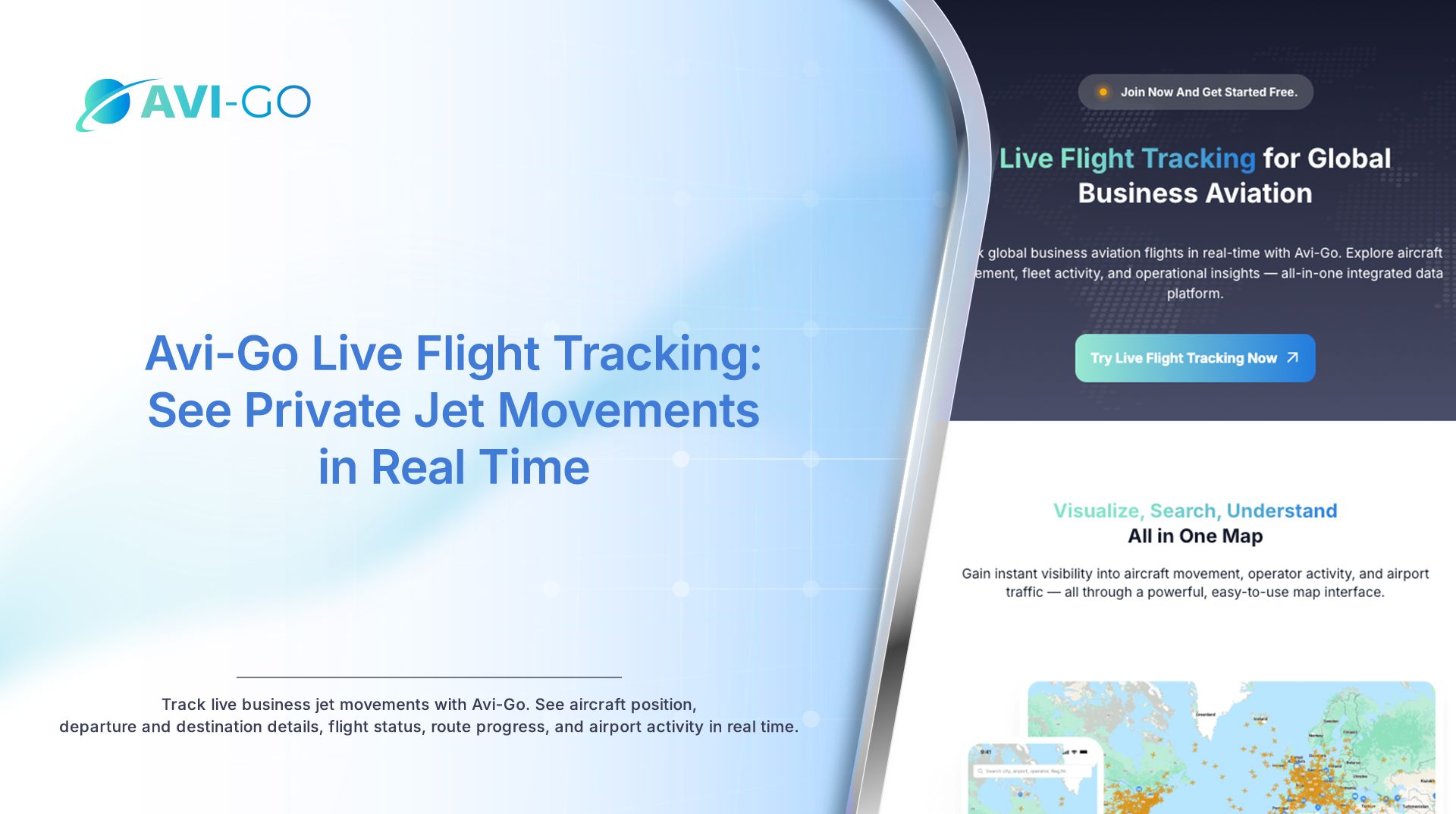
Live flight tracking is an essential tool for anyone who needs to understand where an aircraft is, where it is heading, and how its journey is progressing in real time. For commercial airline passengers, live flight tracking is often used to check whether a scheduled flight is on time. In business aviation, however, the need is more operational, commercial, and time-sensitive.
Avi-Go’s live flight tracking helps users monitor active business jet movements with clearer visibility into aircraft position, route progress, flight status, airport activity, and aircraft identity. Instead of simply showing a moving dot on a map, Avi-Go connects live aircraft movement with the wider context of business aviation activity.
Track Current Aircraft Position
Avi-Go live flight tracking helps users see where a business jet is right now or where it was most recently detected. This includes key movement details such as current aircraft location, direction of travel, speed and altitude, position relative to departure and destination, and whether the aircraft is climbing, cruising, descending, approaching, landing, or on the ground.
This gives operators, brokers, dispatchers, corporate flight departments, and analysts a faster way to understand the current status of an aircraft without relying only on manual updates.
For example, if a jet is approaching its destination, a broker may be able to prepare a client update. If an aircraft has just landed, an operator may coordinate ground services or the next sector. If a repositioning leg is already airborne, a charter team can better assess availability for the next trip.
See Departure and Destination Information
A complete live flight tracking workflow should show more than a position marker. Avi-Go helps users understand where the aircraft departed from and where it is expected to arrive.
This can include the origin airport, destination airport, route progress, diversions or route changes where available, and the aircraft’s position relative to the planned trip.
In business aviation, departure and destination visibility is especially important because flights may not follow predictable airline-style schedules. A private jet may depart from Teterboro, reposition to Miami, fly into a regional airport near a client destination, or operate from a less visible business aviation hub.
By connecting live movement with departure and destination context, Avi-Go helps users understand not only where the aircraft is, but why that movement may matter.
Monitor Flight Status in Real Time
Live flight tracking also supports flight status monitoring. Users may need to know whether an aircraft is scheduled, airborne, delayed, rerouted, landed, or showing signs of an irregular operation.
Avi-Go style live tracking can help monitor scheduled or expected departure, airborne confirmation, estimated arrival time, landed status, delays or possible irregularities, and reroutes or diversions where available.
For operators and dispatch teams, this supports active fleet coordination. For charter brokers, it helps improve client communication and positioning awareness. For corporate flight departments, it supports schedule visibility and ground logistics. For analysts, it can reveal live movement patterns that may indicate demand shifts or event-driven activity.
Follow Route Progress from Departure to Arrival
Live flight tracking is not only about locating an aircraft at a single point in time. It is also about understanding how far along the journey the aircraft is.
Avi-Go can support route progress visibility such as percent of route completed, remaining distance, progress map, deviation from a typical route, and aircraft movement relative to origin and destination.
This matters in business aviation because route decisions are often influenced by operational realities. Weather, airport slots, customs arrangements, passenger timing, aircraft repositioning, and crew requirements can all shape how and when a business jet moves.
By tracking route progress, users can make faster decisions and maintain better situational awareness throughout the trip.
Connect Live Movement with Aircraft Identity
One of the most important differences between basic flight tracking and business aviation intelligence is aircraft context.
Avi-Go live flight tracking can connect movement data with aircraft profile details such as registration, aircraft type, operator, performance category, home base, or frequent operating region.
This means users are not only asking, “Where is the aircraft now?” They can also understand what aircraft is moving, what type of mission it may be operating, and which operator or fleet may be involved.
For charter brokers, this can support availability signals. For market analysts, it can help identify operator presence in a region. For operators, it can support fleet monitoring and operational awareness.
Monitor Business Jet Activity at Airports and Regions
Live flight tracking is also valuable beyond a single aircraft. Avi-Go can help users monitor airport-level and regional business jet activity, including arrivals, departures, traffic volume, and movement patterns.
Users may monitor business aviation activity around key airports and markets such as Teterboro, Van Nuys, Farnborough, Geneva, Dubai, or Miami during major events.
This wider view can help identify traffic spikes, high-demand windows, event-related movement, and regional operator activity. For teams focused on market intelligence, this transforms live flight tracking from a simple map into a demand-sensing tool.
Why Live Flight Tracking Matters in Business Aviation
Business aviation users often need more than passenger-style flight information. They may need to answer operational and commercial questions quickly, such as whether an aircraft is on time for a client pickup, whether a repositioning leg has already departed, whether a competitor fleet is active in a region, whether there are unusual traffic surges at a key airport, or whether an aircraft is likely to become available soon after landing.
Avi-Go live flight tracking supports both operational awareness and commercial decision-making. It helps users monitor aircraft movement, understand airport activity, track operator behavior, and identify signals that may affect charter availability or market demand.
How Business Aviation Flight Tracking Differs from Airline Flight Tracking
Business aviation flight tracking is different from airline flight tracking in several important ways.
Airline tracking is usually based on fixed passenger schedules, major airports, and published flight numbers. Business aviation is more dynamic. Private jets may use non-primary airports, change schedules frequently, operate empty legs, or reposition between markets.
Business aviation users also care about different questions. They may be less focused on a passenger timetable and more focused on aircraft availability, operator activity, airport demand, repositioning movement, and market signals.
That is why Avi-Go focuses on live flight tracking built around business aviation workflows, not just passenger-style flight status.
Avi-Go Live Flight Tracking: More Than a Map
Avi-Go live flight tracking is designed to help users monitor active business jet movements in near real time while connecting those movements to aircraft, operator, airport, and regional context.
With Avi-Go, live flight tracking can help answer questions such as:
- Where is the aircraft now?
- Where did it depart from?
- Where is it going?
- What is its current flight status?
- How far along is the route?
- What aircraft and operator are involved?
- How is business jet activity changing at an airport or region?
For business aviation professionals, this makes live flight tracking more than a visual map. It becomes an intelligence workflow for operations, charter sales, corporate travel coordination, and market analysis.
Start Tracking Business Jet Activity with Avi-Go
Avi-Go helps business aviation teams move from basic flight visibility to smarter situational awareness. Whether you are monitoring an active aircraft, checking airport activity, following operator movement, or identifying regional demand signals, Avi-Go live flight tracking gives you a clearer view of what is happening now.
For operators, brokers, flight departments, and analysts, live flight tracking is no longer just about finding a plane on a map. It is about understanding the movement behind the market.
Discover Avi-Go live flight tracking and see business aviation activity as it happens.
Avi-Go NOTAM Radar: Global Airport Disruption Data for Charter Operators

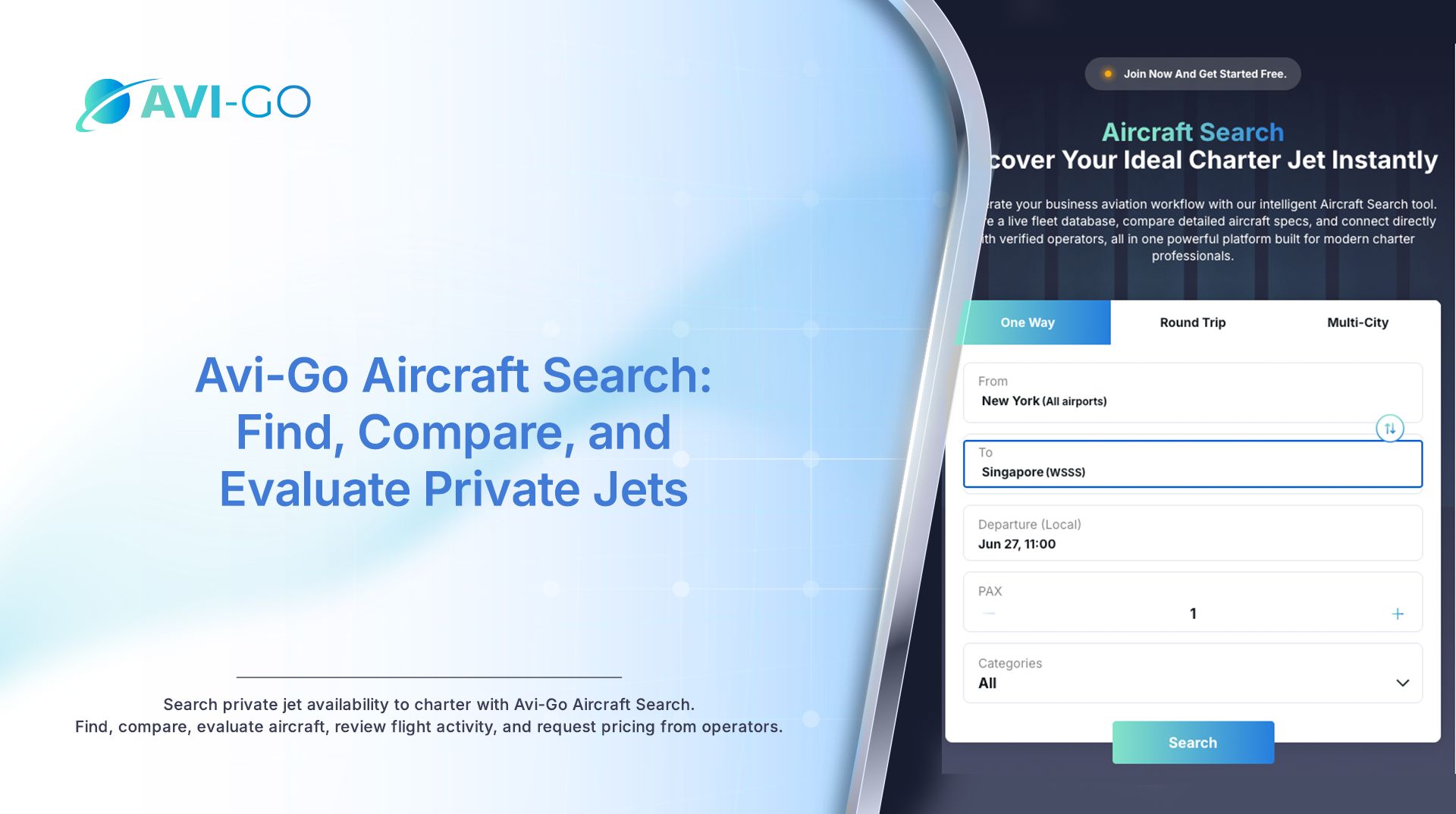
Avi-Go Aircraft Search: Find, Compare, and Evaluate Private Jets

Short-Haul Flying Drives Global Business Aviation
Ready to Supercharge
Your Business Aviation Tech Stack with AI and Data?
Sign up free and start using the tools available in your chosen plan.
Discover how our aviation technology helps you work more efficiently and grow with confidence.
Subscribe to the Avi-Go Newsletter
Business aviation data, insights, and trends — trusted by 10,000+ professionals worldwide.