
Hidden Fees on Discounted Empty Leg Charters


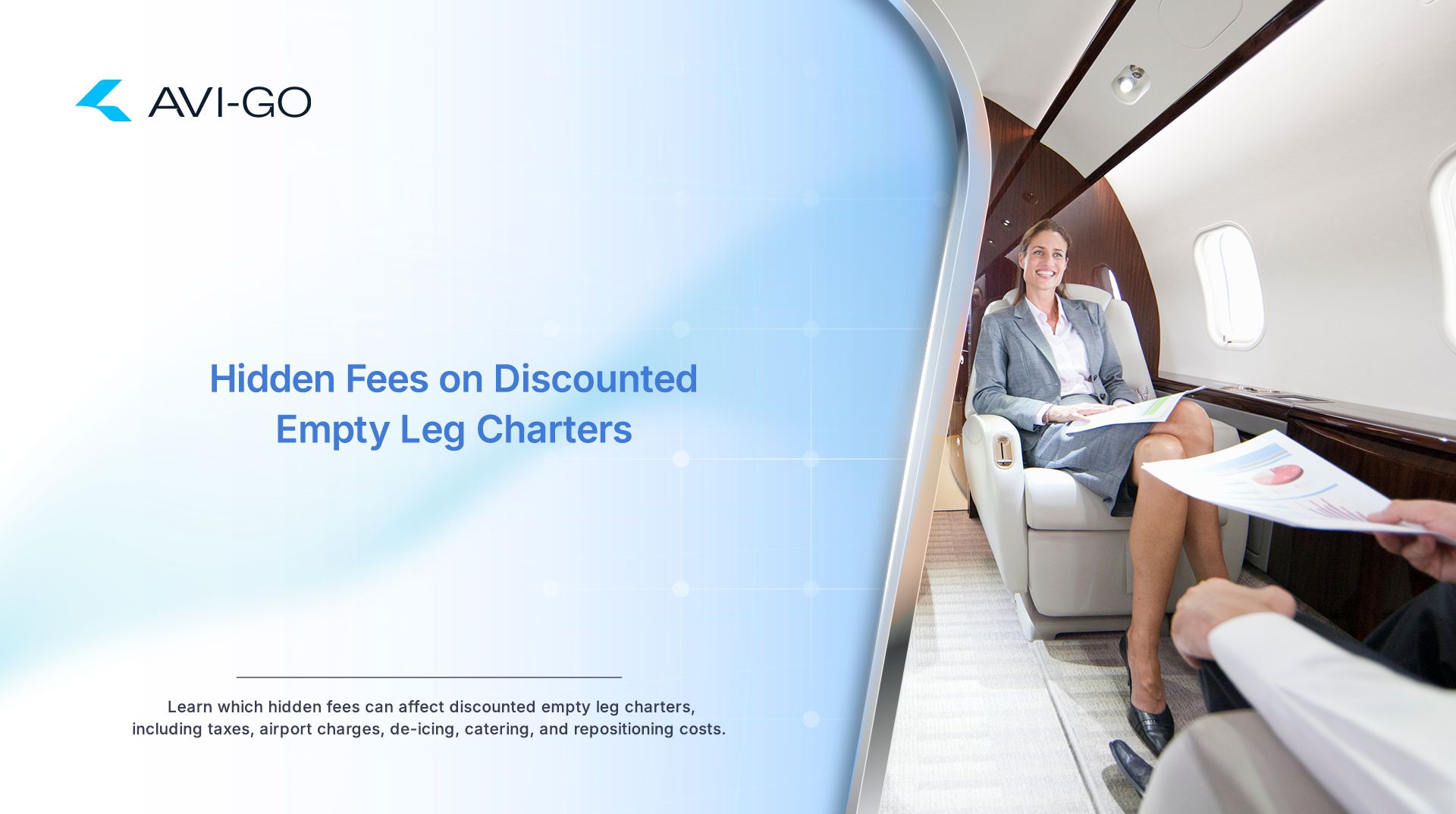
Discounted empty leg charters can offer a lower price than arranging a standard private flight, but the advertised amount may not always represent the final amount payable.
Taxes, airport charges, catering, de-icing, route changes, and other operational expenses can increase the total cost. In some cases, these additions may significantly reduce the expected savings.
Before confirming an empty leg, request a complete written quotation and check exactly what is included.
Are There Hidden Fees on Empty Leg Charters?
Not every additional charge is deliberately hidden.
Some costs vary according to the airport, weather, passenger request, or final operating conditions and may not be known when the flight is first advertised. Problems arise when a listing shows only a base price without clearly explaining which charges may be added later.
The safest comparison is therefore not the advertised discount. It is the final all-inclusive charter price.
Common Empty Leg Charter Fees
Federal Excise Tax and Passenger Taxes
Taxes depend on the countries and jurisdictions involved.
For qualifying domestic charter transportation in the United States, a 7.5% federal excise tax may apply, together with a per-passenger domestic segment tax. Different charges apply to certain international journeys and flights involving Alaska or Hawaii.
A quotation should clearly state whether applicable taxes are:
- Included in the displayed price
- Added separately
- Estimated and subject to adjustment
Tax rules vary, so the charter provider should confirm the treatment for the specific itinerary.
Landing and Airport Fees
Airports may charge operators for landing, parking, ramp access, passenger facilities, security, and ground services.
These fees can vary considerably between airports. Busy international airports and airports with limited private aviation infrastructure may be more expensive than nearby alternatives.
Ask whether the quotation includes:
- Landing fees
- Ramp or parking charges
- Passenger facility charges
- Airport security fees
- Terminal or FBO charges
Changing to another airport may alter the final price.
Ground-Handling Charges
Private aircraft often require assistance from a fixed-base operator or ground-handling company.
Handling may cover aircraft coordination, passenger reception, baggage services, transportation across the apron, flight planning support, and other ground arrangements.
Some quotations include basic handling but charge separately for additional services or out-of-hours operations.
Fuel Surcharges
Fuel is normally part of the aircraft’s operating cost, but some providers may apply a separate fuel surcharge.
The amount may depend on fuel prices, the airport used, the aircraft type, or changes to the original route. A low advertised base rate can appear less attractive once a substantial fuel surcharge is added.
Ask whether the quoted price is fixed or subject to a fuel adjustment before departure.
Repositioning and Route-Change Costs
A genuine empty leg follows an aircraft movement that already needs to occur.
However, additional positioning costs may arise when the requested journey does not exactly match the aircraft’s planned route. An operator may agree to use a nearby departure airport, different destination, or adjusted schedule, but the extra flying time can increase the price. Industry empty-leg listings commonly warn that rerouting or positioning beyond the original movement can create additional costs.
Confirm whether the quote is based on:
- An exact route match
- A nearby-airport diversion
- An additional positioning sector
- A change to the aircraft’s planned destination
Once extra repositioning is required, the flight may no longer deliver the same level of discount.
De-Icing Fees
De-icing may be required when ice, frost, or snow affects the aircraft.
The cost is difficult to predict because it depends on weather conditions, aircraft size, the amount of fluid used, and airport pricing.
De-icing can be a significant last-minute expense, particularly for winter departures. Ask how the charter agreement handles weather-related charges and whether there is an estimated maximum.
Catering and Special Requests
Basic refreshments may be included, but premium catering is often charged separately.
Additional costs may apply for:
- Hot meals
- Premium beverages
- Dietary-specific menus
- Last-minute catering
- Remote-airport delivery
- Special celebration arrangements
Request the catering menu and price before approving any order.
Ground Transportation
Transport to and from the airport is not always included in a private charter quotation.
Car transfers, limousine services, airport parking, and destination transportation may appear as separate charges. Clarify whether the provider is including these services or only arranging them on the passenger’s behalf.
Crew Overnight and Travel Costs
Crew accommodation, transportation, meals, or positioning may be added when the itinerary requires the pilots to stay overnight or travel separately.
These charges are less likely on a simple empty leg that exactly matches the aircraft’s schedule, but they can arise when the customer requests timing or route changes.
International Permits and Handling
International flights may involve overflight permits, landing permits, customs arrangements, immigration services, and international handling.
The applicable costs depend on the countries, airports, aircraft, and notice period. Confirm whether these charges are included, estimated, or billed after the flight.
Credit Card and Payment Fees
Some charter providers apply transaction fees for credit-card payments, foreign currency conversion, or international bank transfers.
Even a small percentage can become material on a high-value charter. Ask whether another payment method avoids the charge.
Empty Leg Charter Cost Checklist

How to Identify an All-Inclusive Quote
An all-inclusive quote should clearly show the total amount payable for the agreed itinerary and list any conditions that could change it.
Before booking, check that the document identifies:
- Aircraft type
- Departure and arrival airports
- Departure window
- Passenger count
- Total charter price
- Taxes
- Airport and handling charges
- Catering allowance
- Payment terms
- Cancellation terms
- Possible variable expenses
Do not assume that “all-inclusive” covers every possible event. Weather diversions, de-icing, passenger-requested changes, extended waiting time, and additional ground services may still be excluded.
Ask the provider to explain every item marked as estimated, variable, or payable after the flight.
Advertised Price vs Final Price
A discounted listing may display one of several different price types.

The phrase “starting from” is particularly important. It indicates that the displayed amount may not be the final quotation.
Always compare written quotes using the same itinerary, passenger count, airports, and included services.
Can an Empty Leg Become More Expensive Than Expected?
Yes.
An empty leg can lose much of its financial advantage when the passenger requests:
- A different airport
- A major schedule adjustment
- An additional stop
- An aircraft hold or extended waiting period
- Extensive catering
- A guaranteed backup aircraft
- A return sector
- Significant ground transportation
The empty leg is discounted because the aircraft already has an operational reason to fly a particular route. The further the request moves away from that plan, the more likely additional costs become.
A standard charter may offer better overall value when the itinerary requires extensive customization.
Watch for Cancellation and Schedule-Change Terms
Price is not the only financial risk.
Empty legs usually depend on another confirmed aircraft movement. If the original mission changes, the empty leg may be rescheduled or cancelled.
The contract should explain:
- Whether the payment is refundable
- What happens if the operator cancels
- Whether a replacement aircraft will be offered
- Who pays for alternative transportation
- Whether schedule changes allow the customer to cancel
- Which customer payments are non-refundable
Empty legs are inherently opportunistic and are generally less predictable than charters arranged specifically around the passenger’s itinerary.
Travelers with fixed meetings, events, or onward connections should consider the financial consequences of a schedule disruption.
Red Flags Before Booking
Be cautious when a provider:
- Refuses to provide a written itemized quote
- Cannot identify the operating company
- Requests payment before explaining the terms
- Advertises an unusually low price without conditions
- Avoids questions about taxes or airport fees
- Cannot confirm cancellation arrangements
- Describes a charter as guaranteed when it depends on another flight
- Pressures the customer to pay immediately
In the United States, the FAA advises charter customers to research the operator and warns that an offer that appears too good to be true may indicate a problem. It also provides a regularly updated list of certificated Part 135 operators and authorized aircraft.
A low price should never replace proper operator and aircraft verification.
Questions to Ask Before Paying
Send these questions to the broker or operator before signing the agreement:
- Is this the final all-inclusive price?
- Which taxes are included?
- Are landing, handling and FBO fees included?
- Could fuel or de-icing charges be added?
- Does the requested route require extra repositioning?
- Is catering included?
- Are there credit-card or transfer fees?
- What happens if the original charter changes?
- Is the payment refundable if the operator cancels?
- Who is the certificated operator performing the flight?
The answers should also appear in the written charter agreement.
How to Avoid Unexpected Empty Leg Costs
The most effective way to avoid unexpected charges is to request a detailed quote before paying.
Use the following approach:
- Request the final price in writing
- Ask for every charge to be itemized
- Confirm the exact airports and schedule
- Avoid unnecessary route changes
- Review variable weather-related costs
- Confirm the cancellation policy
- Verify the operating company
- Compare the final total with a standard charter quote
A discounted empty leg should be assessed on its complete cost and operating conditions, not only on the headline saving.
Final Considerations
Empty leg charters can provide strong value when the route, aircraft, and timing closely match an existing repositioning flight.
However, taxes, handling, airport fees, fuel adjustments, de-icing, catering, route changes, and payment charges can reduce the advertised discount.
Before booking, request an itemized all-inclusive quotation, review the cancellation terms, and verify the operator responsible for the flight.
The best empty leg deal is not necessarily the listing with the lowest advertised price. It is the option with a clear final cost, suitable operating conditions, and no unexpected charges after confirmation.
References
- Internal Revenue Service. Publication 510: Excise Taxes. Used for information about US air transportation taxes, including federal excise tax and passenger-related charges.
- Federal Aviation Administration. Thinking of Chartering an Aircraft? Used for guidance on verifying certificated charter operators and recognizing potentially unsafe or unauthorized charter offers.
- Mercury Jets. Empty Leg Flights: Discounted Private Jet Charters. Used for information about repositioning flights, route limitations, and costs that may arise when changing the original empty-leg itinerary.
- Condé Nast Traveler. How to Fly Private Like Your Really Rich Friend Who Hates Spending Money. Used for background on empty-leg availability, flexibility requirements, and the possibility of schedule changes or cancellations.

Best Empty Leg Flights Website for Charter Brokers

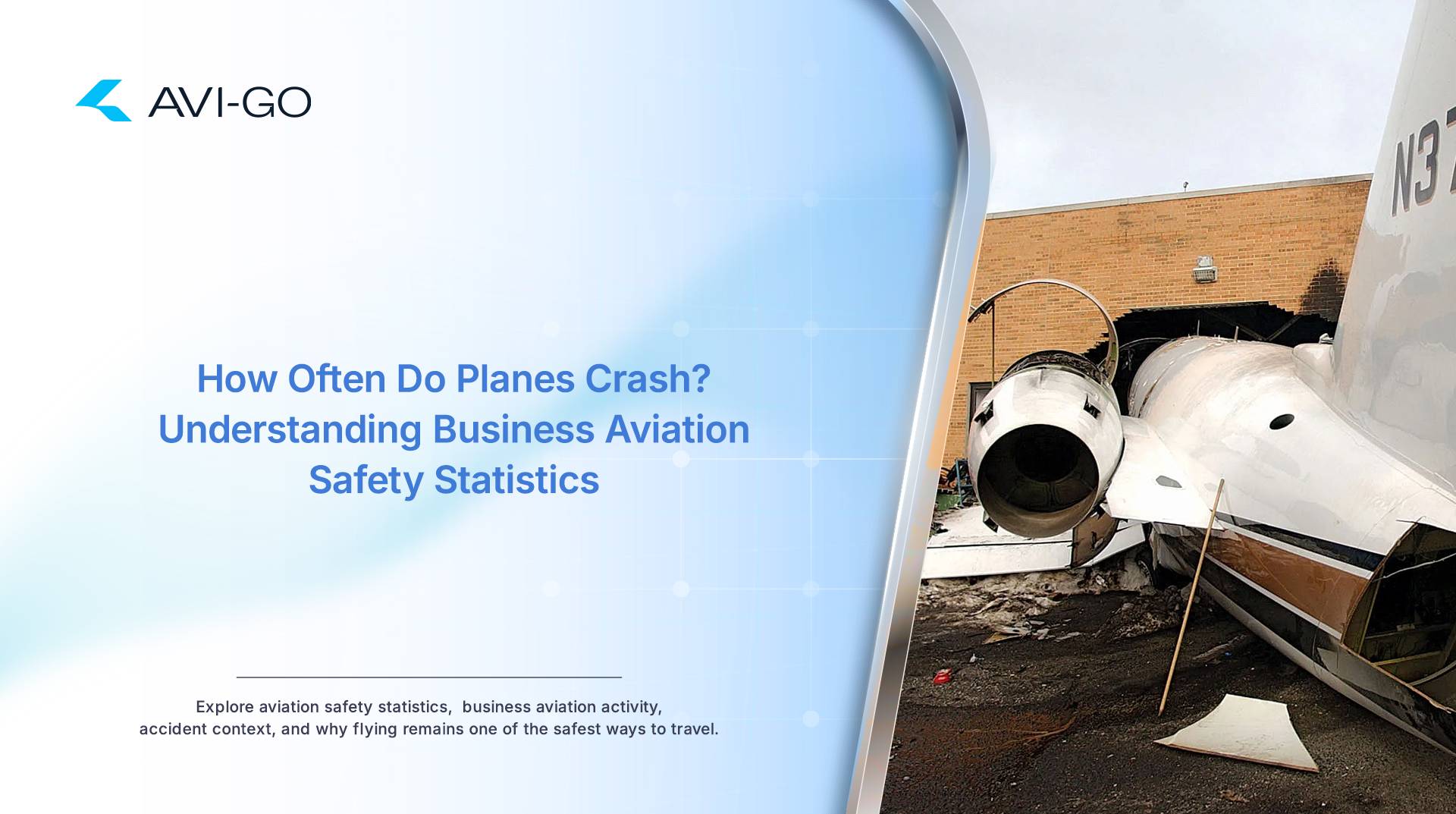
How Often Do Planes Crash? Understanding Business Aviation Safety Statistics
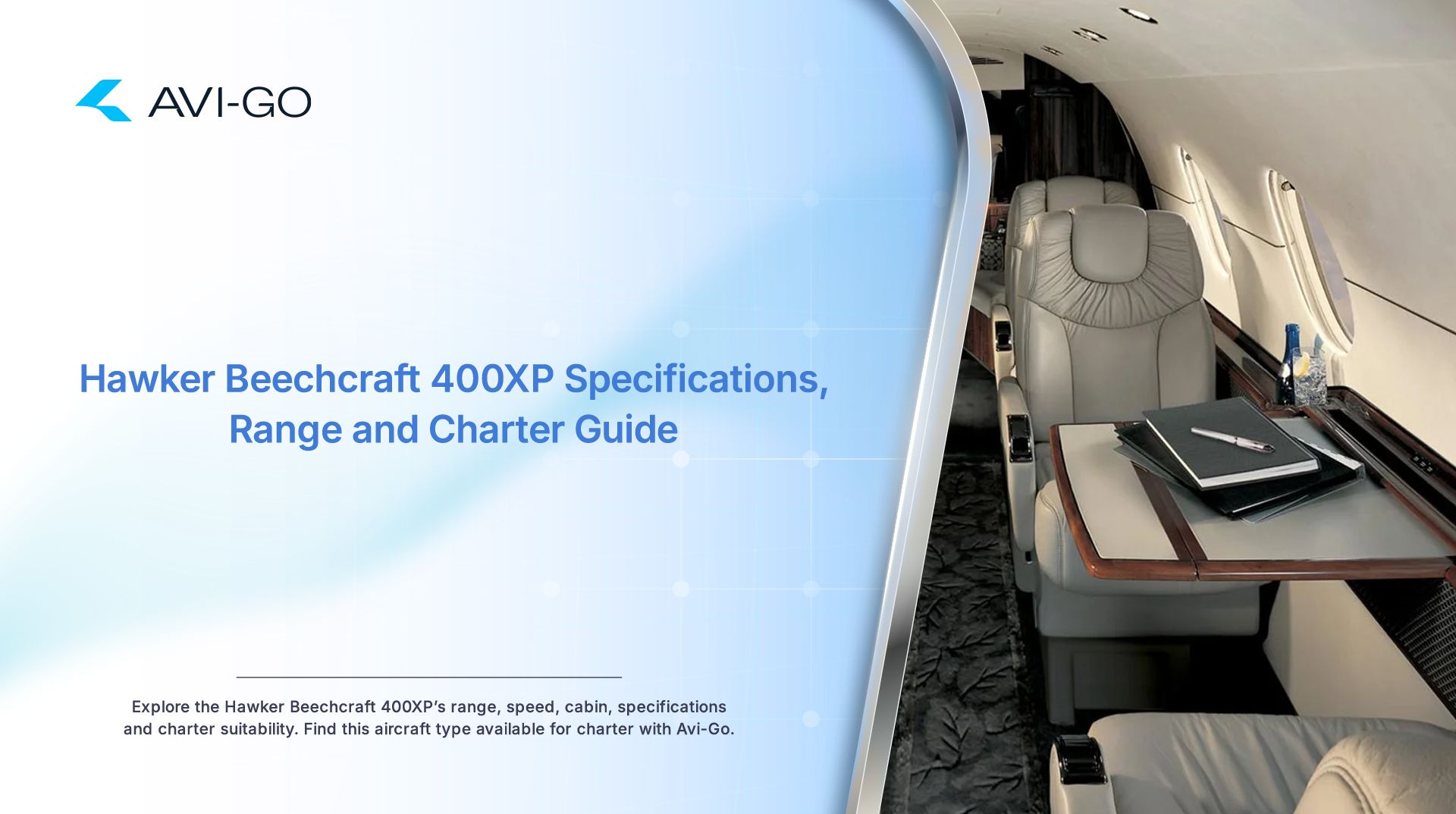
Hawker Beechcraft 400XP Specifications, Range and Charter Guide
Ready to Supercharge
Your Business Aviation Tech Stack with AI and Data?
Sign up free and start using the tools available in your chosen plan.
Discover how our aviation technology helps you work more efficiently and grow with confidence.
Subscribe to the Avi-Go Newsletter
Business aviation data, insights, and trends — trusted by 10,000+ professionals worldwide.