
How Much Does It Cost to Fuel a Private Jet?


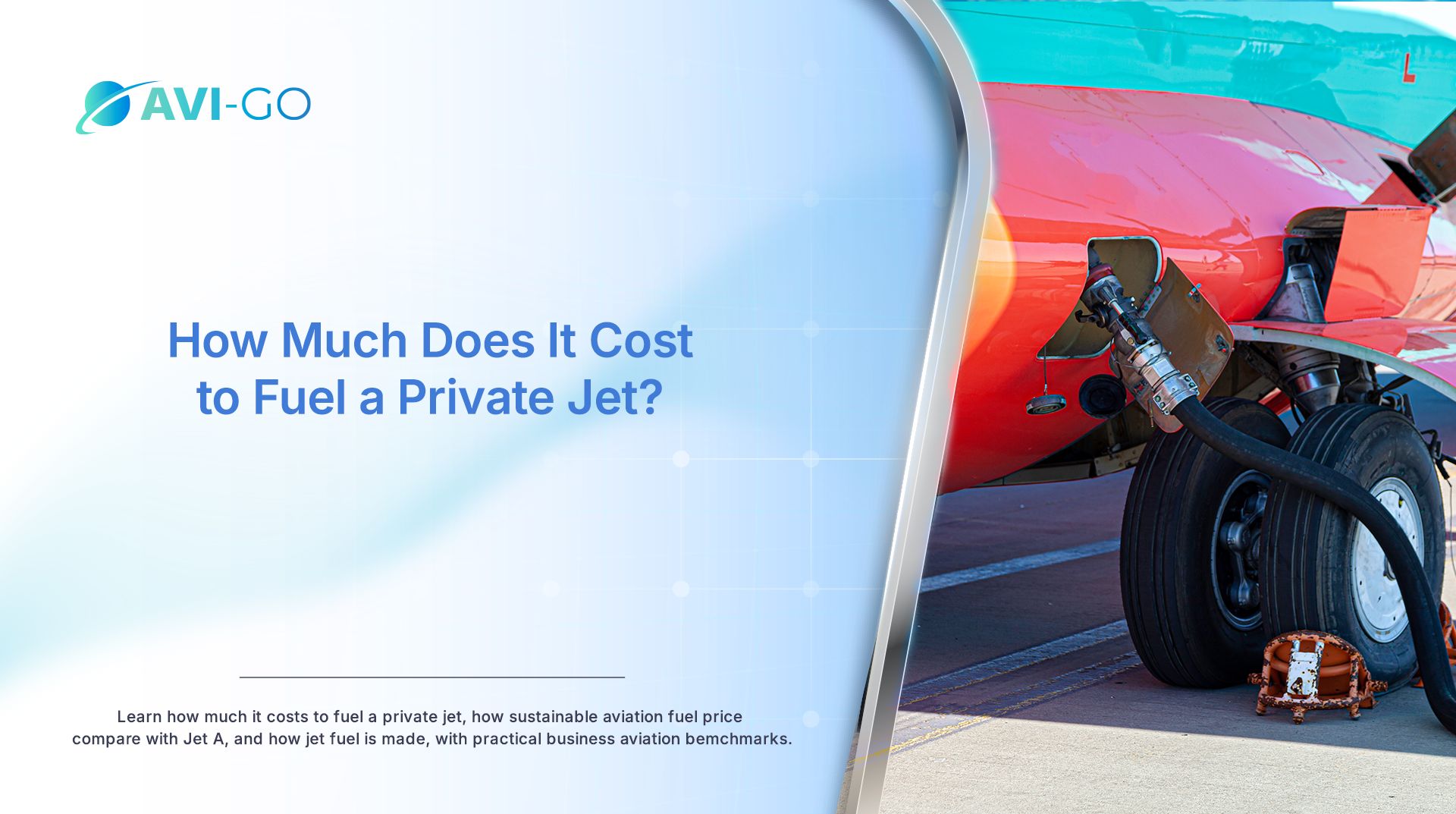
Fuel is one of the biggest direct operating costs in business aviation. So, how much does it cost to fuel a private jet? A practical benchmark is about USD 1,500–4,000 per flight hour for many midsize to large business jets, although long-range flagship aircraft can run higher depending on fuel burn and local fuel prices. For a typical 2–3 hour business jet flight, fuel cost may land around USD 4,000–12,000+.
In simple terms, total fuel cost depends on two things: how much fuel the aircraft burns and what the operator pays per gallon. Using a planning assumption of roughly USD 6.00–8.00 per gallon for conventional Jet A or Jet A-1, operators can build quick budget estimates for different aircraft categories.
Private Jet Fuel Cost by Aircraft Category
A light jet typically burns around 120–180 gallons per hour, with estimated fuel cost of about USD 720–1,440 per flight hour. On a short 1.5–2.0 hour trip, that puts fuel cost at roughly USD 1,100–2,900.
A midsize jet usually burns around 180–260 gallons per hour. That translates to about USD 1,080–2,080 per flight hour in fuel cost. For a common 2.0–3.0 hour mission, fuel cost is often around USD 2,200–6,200.
A super-midsize or large jet may burn around 260–450 gallons per hour, with fuel cost of roughly USD 1,560–3,600 per hour. On a 3.0–5.0 hour trip, fueling cost can range from about USD 4,700 to 18,000.
As a quick commercial rule of thumb, operators may budget around USD 1,000–2,000 for a short light jet trip, USD 2,500–5,000+ for a midsize jet mission, and USD 5,000–15,000+ for a super-midsize or large-cabin trip.
What Affects Private Jet Fuel Costs?
Fuel prices vary materially by region, country, airport, and FBO pricing structure. In the U.S. market, a broad planning figure is around USD 6.5 per gallon, but actual prices can move meaningfully depending on where the aircraft fuels.
For example, reported U.S. Jet A benchmarks showed:
- USD 5.82/gal in the Central Region
- USD 7.15/gal in the Western Pacific
- USD 6.52/gal as a December 2024 U.S. average
- USD 6.63/gal as a July 2025 U.S. average
That means even regional differences can reach USD 1.33 per gallon. For a 1,000-gallon uplift, that is a USD 1,330 difference. For 2,000 gallons, the gap becomes USD 2,660.
Airport-specific pricing can be even higher. Premium business aviation airports such as KIAD, KPBI, KTEB, and KHPN showed prices in the USD 8.10–9.25/gal range. This is why operators often optimize uplift strategy, contract fuel, and tankering decisions across multi-leg trips.
Sustainable Aviation Fuel Price
When comparing conventional jet fuel with SAF, conventional Jet A / Jet A-1 remains the lower-cost option in most markets. Sustainable aviation fuel price is typically higher, with a practical commercial benchmark of around 2x to 5x the price of conventional fuel, depending on region, blend ratio, supplier, logistics, and incentives.
So, if conventional jet fuel is budgeted at USD 6.00–8.00 per gallon, SAF can be materially above that range. In business aviation, this premium matters because fuel is already a major trip-cost driver, especially for longer missions and larger aircraft.
That said, SAF remains increasingly important in business aviation because operators, charter customers, and corporate flight departments are looking for lower-emission options. In practice, pricing and availability still vary widely by airport and market.
How Is Jet Fuel Made?
To understand pricing, it also helps to know how jet fuel is made. Conventional jet fuel such as Jet A or Jet A-1 is produced from crude oil during the refining process. The crude oil is separated into different fractions, and the kerosene-range portion is further treated and refined to meet aviation specifications. The final product must meet strict quality and performance standards before it can be used in aircraft.
SAF is different. Instead of being made only from crude oil, SAF can be produced from alternative feedstocks and processes, then blended for aviation use. While it is designed to work within existing aircraft and fueling systems, it usually comes at a higher price today because of feedstock costs, production scale, and supply limitations.
Disclaimer on Fuel Price Volatility Due to Geopolitical Issues
Following the recent strikes involving Iran and wider Middle East escalation, jet fuel prices moved up sharply, with added concern around supply risk, airport pricing volatility, and higher SAF premiums.
Reported U.S. average jet fuel rose to about USD 3.99/gal by March 14, 2026, up from roughly USD 2.50/gal around two weeks earlier, an increase of about USD 1.49/gal, or 58%. SAF also remained significantly higher, with a California reference at around USD 8.85/gal, or about 2.2x the post-spike conventional fuel price.
For business aviation, that kind of move can quickly change trip economics. A USD 1.49/gal increase adds about USD 447 on a 300-gallon uplift, USD 1,490 on 1,000 gallons, and USD 2,980 on 2,000 gallons. This is why fuel benchmarks should be treated as planning guides only, especially during geopolitical disruptions.
Data sourced from Avi-Go Database.

Private Jet Charter Cost Estimator and Airline Price Predictor


Best Private Jet Charter Companies 2026

Private Jet Sustainability
Ready to Supercharge
Your Business Aviation Tech Stack with AI and Data?
Sign up free and start using the tools available in your chosen plan.
Discover how our aviation technology helps you work more efficiently and grow with confidence.
Subscribe to the Avi-Go Newsletter
Business aviation data, insights, and trends — trusted by 10,000+ professionals worldwide.