Private Jet Sustainability


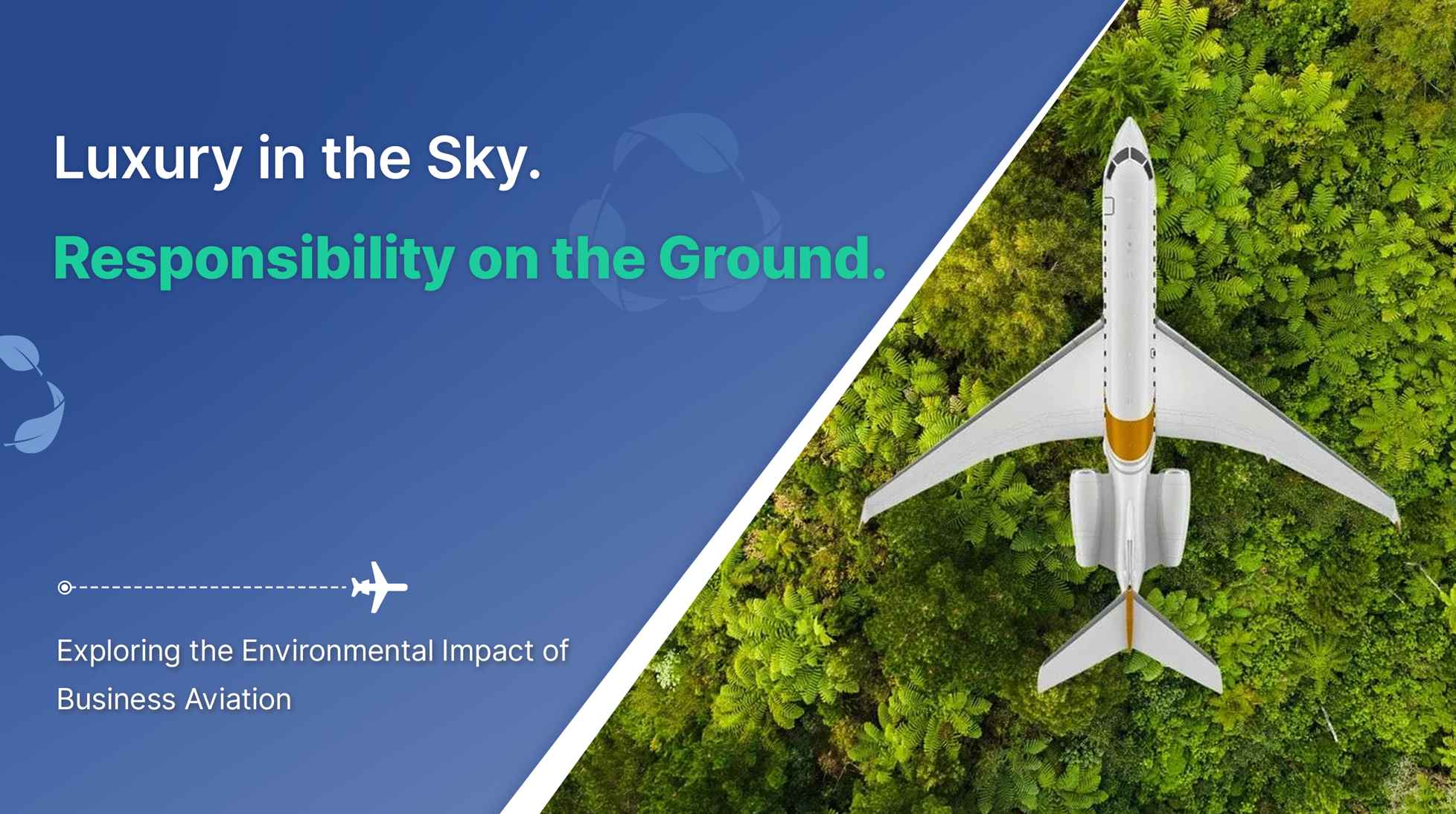
The private aviation sector faces a pivotal moment, sustainability is no longer optional. Through SAF, technology, and operational reforms, private jet companies can redefine luxury as environmentally responsible—and lead the transformation toward greener high-end travel. In this article we explore the environmental costs of private jet travel and the industry’s drive to reconcile luxury with sustainability. While private jets symbolize prestige and convenience, they produce far higher per-passenger emissions than commercial flights.
Luxury in the Sky—And Its Environmental Toll
Private jet travel has long been associated with convenience, but today, it’s a luxury symbol, a sign of status and exclusivity. For ultra-high-net-worth individuals, flying private is about more than saving time—it’s about curating an image.
However, this lifestyle comes at a cost. While private jets make up only a small portion of air traffic, they emit a disproportionately high amount of carbon. The rise in private jet use during global events like the Cannes Film Festival or Davos—often centered around climate awareness—only amplifies this contradiction.
As the debate intensifies, private aviation faces a pressing question: Can it continue offering the ultimate luxury experience while addressing its environmental impact? This article delves into the sustainability challenge of private aviation and explores emerging solutions that could help balance luxury with responsibility.

Carbon Footprint of Private Jets: A Brutal Reality
When it comes to carbon emissions, private jets are in a league of their own. On average, a private jet produces 1-2 kg of CO₂ per passenger-kilometer, a stark contrast to commercial flights, which emit only 0.08 - 0.10 kg of CO₂ per passenger-kilometer. To put it simply, private aviation generates 10 to 40 times higher emissions per passenger-kilometer than its commercial counterpart.
This massive difference highlights a central challenge for the industry: luxury travel and sustainability seem almost incompatible.
Aircraft Emissions: Private vs. Commercial
Let’s break it down with some real-world examples of emissions for typical aircraft:
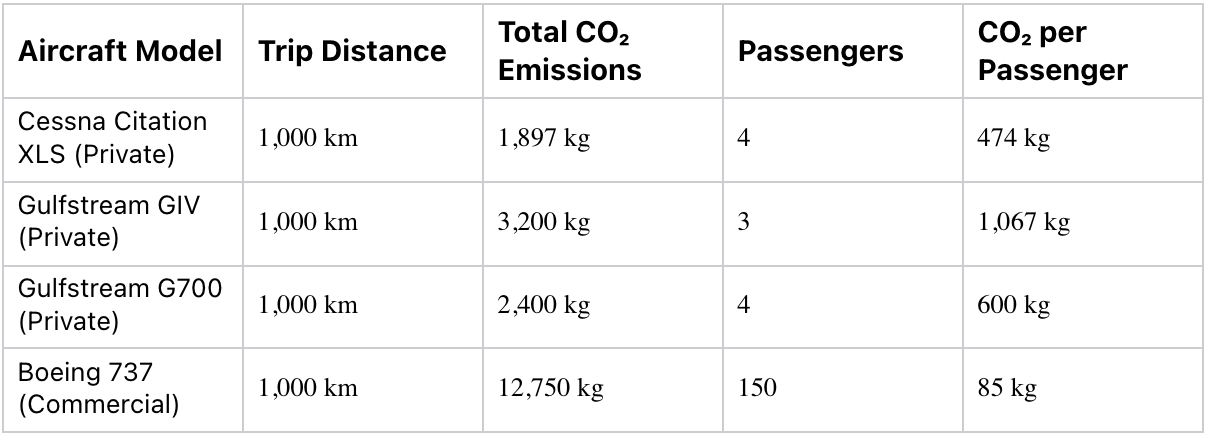
*The data is for reference only.
Even on a relatively short 1,000 km flight, private jets can produce several times the carbon footprint of a commercial flight. For example, a Gulfstream GIV emits 1,067 kg of CO₂ for just three passengers, whereas a Boeing 737 carrying 150 passengers emits 12,750 kg—a far larger amount, but spread across many more passengers, resulting in significantly lower per-passenger emissions.
The Impact of Empty Legs
Another often-overlooked factor is the issue of empty leg flights — when private jets fly without passengers, often repositioning for their next job. Around 35% of all private jet movements are empty legs, contributing nothing but unnecessary emissions.
These flights significantly inflate the sector’s overall carbon footprint. When accounting for repositioning flights, emissions per passenger-kilometer jump by another 35-40%. The brutal math is clear: the private aviation sector’s carbon impact is even more substantial than it might seem at first glance.
Public Perception
As climate awareness grows, private jets have increasingly come under public scrutiny, especially in the wake of the pandemic. The image of luxury air travel—often used by billionaires and celebrities—clashes with the global push for sustainability. Media coverage of “carbon hypocrisy” has highlighted how private jet use often contradicts environmental goals, sparking backlash on social media and in the press. This growing scrutiny reflects a larger societal shift, where the demand for eco-consciousness is intensifying even in the world of high-end travel.
Sustainable Aviation Fuel (SAF): A Path to Greener Skies
What is SAF?
Sustainable Aviation Fuel (SAF) is a next-generation fuel made from renewable sources like agricultural waste, algae, and even used cooking oil, designed to replace traditional jet fuel. Unlike conventional jet fuel, which is derived from crude oil, SAF is produced through various chemical processes that convert these renewable feedstocks into a high-quality alternative for powering aircraft. The key difference is that SAF offers a much lower carbon footprint, making it a promising solution for reducing aviation’s environmental impact.
Environmental Benefits: Reducing Carbon Emissions
One of the most compelling reasons for adopting SAF is its potential to reduce aviation’s carbon footprint. SAF can cut lifecycle carbon emissions by up to 80%, depending on the feedstock and production process used. This drastic reduction comes from the fact that SAF absorbs carbon dioxide as the feedstock grows, which is then released when the fuel is burned during flight, effectively closing the carbon loop. This makes SAF one of the most promising solutions to decarbonize aviation without compromising performance.
Current Adoption: The Roadblocks and Progress
Despite its potential, SAF adoption remains limited. Currently, SAF makes up only a small fraction of total aviation fuel consumption—roughly 0.1% globally. The barriers to broader adoption include high production costs (SAF is typically 2-3 times more expensive than conventional jet fuel) and scalability. While SAF production has grown in recent years, it's still far from being available in large quantities to meet global demand.
To overcome these hurdles, several major airlines and aircraft manufacturers have started implementing SAF in pilot programs and flight trials, but widespread use will depend on expanding production capacity, reducing costs, and streamlining regulatory approvals. Some governments and industry groups are working on incentives, tax breaks, and funding to boost SAF production and make it more competitive with traditional jet fuel.
Turning a Challenge into an Opportunity for Private Aviation
Luxury Meets Sustainability
In today's market, sustainability is not just a responsibility—it's a distinguishing feature. For private aviation, integrating eco-friendly practices can enhance brand prestige, appealing to clients who value both luxury and environmental consciousness. Offering sustainable private aviation options, such as green jet charters and eco-friendly luxury travel experiences, positions companies as forward-thinking leaders in a competitive industry.
Business Incentives: Attracting ESG-Conscious Clients and Investors
Environmental, Social, and Governance (ESG) considerations are increasingly influencing investment and purchasing decisions. Private aviation companies that prioritize sustainability may attract ESG-focused investors and clients seeking to align their travel choices with their values. This alignment can lead to increased customer loyalty and open doors to new market segments.
Innovation Opportunities: Advancing Technology and Operations
The push for sustainability drives innovation in aircraft design and operations. Developments such as lighter aircraft materials, hybrid-electric propulsion systems, and optimized flight routing contribute to reduced emissions and operational efficiency. Additionally, implementing carbon offset programs allows companies to mitigate their environmental impact while offering clients the opportunity to participate in eco-conscious initiatives.
Industry Leadership: Shaping the Future of Eco-Friendly Luxury Travel
Private aviation has the opportunity to lead by example, setting standards for sustainability in luxury travel. By embracing green technologies and practices, the industry can redefine what it means to offer premium services, ensuring that luxury and environmental responsibility go hand in hand. This proactive approach not only addresses environmental concerns but also positions private aviation as a pioneer in sustainable innovation.
A Path Forward for Sustainable Private Jet Travel
The private aviation industry stands at a pivotal crossroads, where exclusivity must now coexist with environmental responsibility. As public scrutiny intensifies and climate concerns grow, the sector can no longer afford to view sustainability as a threat—it must see it as a defining opportunity.
Innovations like Sustainable Aviation Fuel (SAF), green aircraft design, and carbon-conscious operations are proving that luxury and sustainability can go hand in hand. These advancements not only reduce environmental impact but also open the door to a new era of eco-friendly luxury travel that resonates with modern values.
To ensure a future where sustainable private aviation thrives, stakeholders—manufacturers, brokers & operators, and clients alike—must commit to continuous progress. By embracing innovation and leading with purpose, the industry can redefine prestige in the skies: one where green jet charter becomes the new standard, not the exception.


Private Jet Categories Explained: Source the Right Aircraft for Your Needs

Avoiding Common Pitfalls in Business Aircraft Charter: A Guide for Brokers and Operators

Private Jet Charter Cost Estimator and Airline Price Predictor
Ready to Supercharge
Your Business Aviation Tech Stack with AI and Data?
Sign up free and start using the tools available in your chosen plan.
Discover how our aviation technology helps you work more efficiently and grow with confidence.
Subscribe to the Avi-Go Newsletter
Business aviation data, insights, and trends — trusted by 10,000+ professionals worldwide.