International Private Jet Charters Require eAPIS Passenger Data, Foreign Permits and Cabotage-Compliant Routing
Why It MattersCompliance duties for cross-border charter fall on the operator holding operational control, so brokers cannot shift filing and permit risk, and cabotage limits shape how multi-leg international itineraries can be sold.
An international private jet charter requires three things that a domestic charter does not: passenger data filed with U.S. Customs and Border Protection (CBP) through the Electronic Advance Passenger Information System (eAPIS), any landing or overflight permits required by countries on the route, and a routing that complies with cabotage rules. The eAPIS manifest, which covers every person on board including crew, must be filed no later than 60 minutes before departure from or arrival in the United States, according to the AOPA cross-border guide used in FAA Safety Team training.
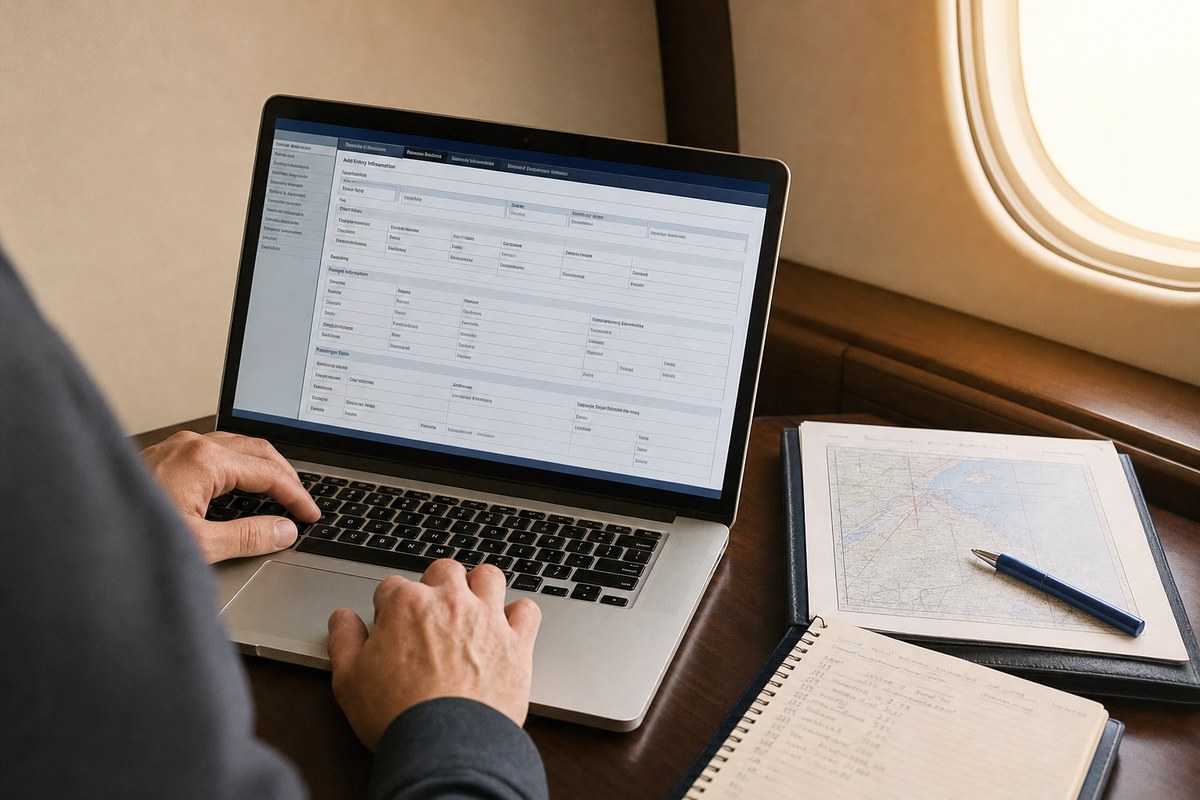
On a Part 135 charter, the operator holds operational control of the flight and is responsible for filing eAPIS, arranging customs clearance, securing permits and confirming the itinerary is legal. Passengers are responsible for valid travel documents, visas where needed, and declaring anything that must be declared. A broker can relay information, but the filings are made by the operator flying the aircraft. The manifest requires each passenger's full legal name exactly as printed on the passport, date of birth, nationality, passport number, issuing country and expiry date, plus addresses in the U.S. and at the destination. A missing middle name or transposed digit can force a refiling and a late departure, and many countries expect a passport to remain valid for several months beyond the stay; six months is a common requirement.
Universal Weather's guide notes that charter flights clear customs on both departure and arrival, while private non-revenue flights generally clear inbound only. The AOPA guide lists one hour's advance notice for standard international airports, while landing-rights and user-fee airports require advance permission, typically 24 to 48 hours' notice. Flights arriving from directly south of the U.S., including Mexico, Central America and much of the Caribbean, must land first at a CBP-designated airport unless the operator holds an overflight exemption. Many countries require landing permits for charter flights, and some require overflight permits; requirements and lead times vary by country. Typical documents include the aircraft's registration and airworthiness certificates, insurance, the operator's certificate and the passenger and crew manifest, and adding a stop or changing an airport abroad can require a new permit.
Cabotage is the carriage of paying passengers between two points within the same country on an aircraft registered elsewhere. In the U.S., 49 U.S.C. § 41703 prohibits it for foreign-registered aircraft, and Universal Weather reports civil penalties of up to $27,500 per violation, assessed per passenger. A U.S.-registered jet can fly New York to Paris and back but generally cannot be chartered for a separate paid domestic leg such as Paris to Nice. According to Jetex, the UK, France, Germany and Italy strictly enforce cabotage on charter operations.