EU's U-Space Framework Sets Digital Rules for Drone Traffic Management Under Regulation (EU) 2021/664
Why It MattersDrone traffic management in Europe is being built on competing, certified private service providers rather than a central government facility, which shapes how low-altitude airspace will be shared with crewed aircraft.
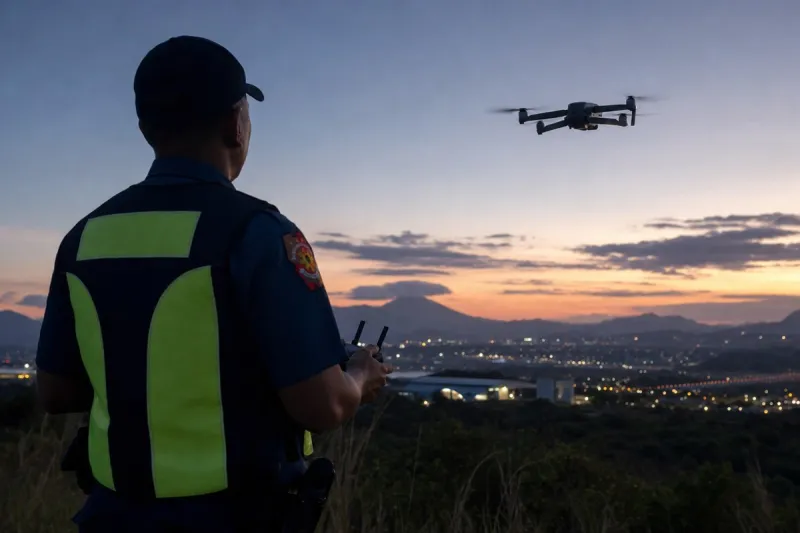
U-space is the European Union's regulatory and operational framework for uncrewed aircraft system traffic management, built to let large numbers of drones share low-altitude airspace safely with crewed aviation. It is governed mainly by Commission Implementing Regulation (EU) 2021/664 and technical standards from the European Union Aviation Safety Agency (EASA). It replaces voice-based radio communication with machine-to-machine protocols, automated flight authorisations and continuous digital situational awareness. The legal baseline was published in April 2021 and has applied since January 2023.
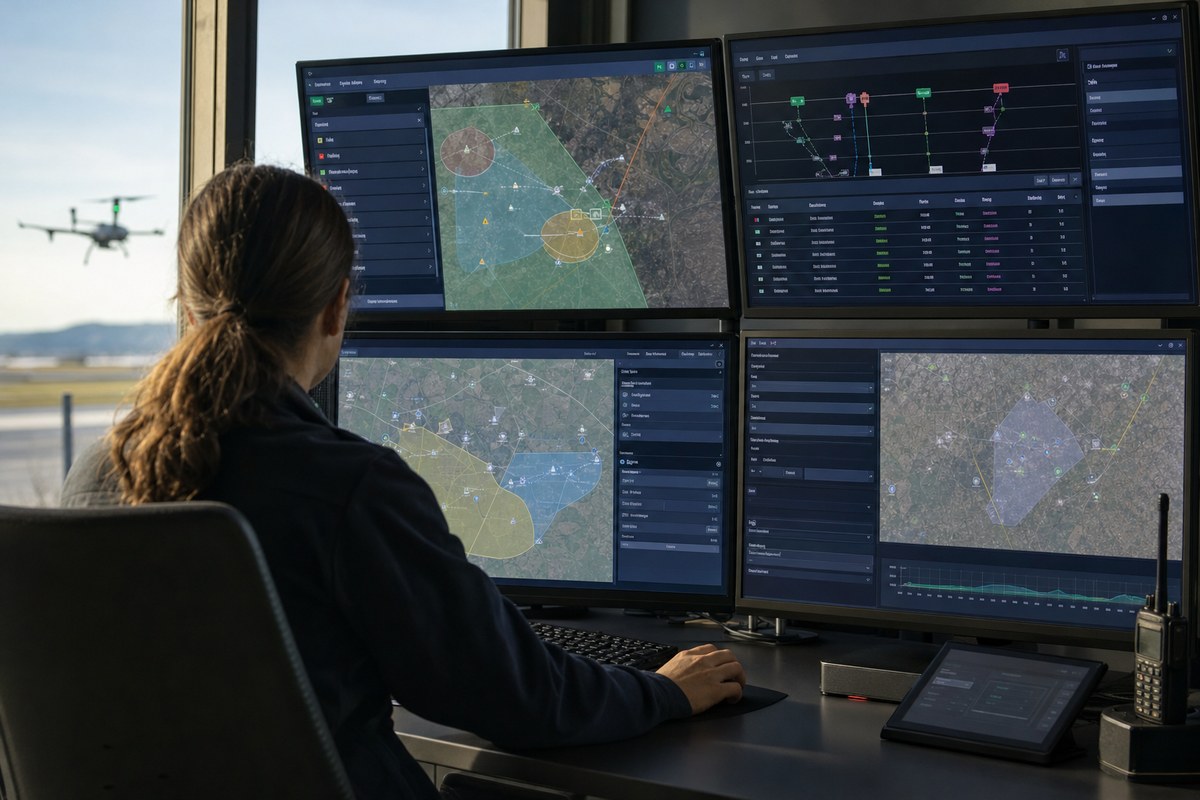
A U-space is an airspace volume that an EU Member State designates as a UAS geographical zone, where drone operations are permitted only when supported by certified digital services. The framework uses a federated, competitive service model rather than a single central government traffic control facility. Regulation (EU) 2021/664 covers airspace designation, certification of U-space Service Providers and Common Information Service Providers, and the mandatory services. It requires four core services: network identification, geo-awareness, UAS flight authorisation and traffic information.
The architecture rests on three pillars: U-space Service Providers, which interface directly with drone operators; Common Information Service Providers, which aggregate and distribute verified airspace data; and traditional air navigation service providers, which keep authority to reconfigure airspace. The concept originated in the Warsaw Declaration on Drones of November 2016 and was formalised in the SESAR Joint Undertaking's U-space Blueprint, which defines four maturity levels. U1 covers e-registration, network Remote ID and geofencing; U2 adds digital flight planning, flight authorisations, live tracking and interfaces with air traffic control; U3 introduces tactical conflict detection and resolution and dynamic capacity management; and U4 envisions full integration of crewed and uncrewed aviation.
The U.S. counterpart is the FAA's Unmanned Aircraft System Traffic Management (UTM), a collaborative ecosystem for managing drone operations at low altitudes, particularly beyond visual line of sight, in airspace where air traffic services are not provided. The FAA's Near-Term Approval Process, created under Section 377 of the FAA Reauthorization Act of 2018, evaluates third-party UTM services for safety mitigation value rather than certifying them, and covers operations up to 400 feet AGL.