Air India and Airbus Sign Feasibility Study for India's First Voluntary Corporate SAF Programme
Why It MattersA corporate-funded SAF certificate model could create a new source of demand in India, strengthening the case for domestic SAF production and a local supply ecosystem.
Air India and Airbus have signed a feasibility study agreement to develop India's first voluntary corporate Sustainable Aviation Fuel (SAF) programme. The aim is to encourage businesses across different industries to support aviation decarbonisation through voluntary SAF adoption, reducing the lifecycle emissions associated with business air travel.
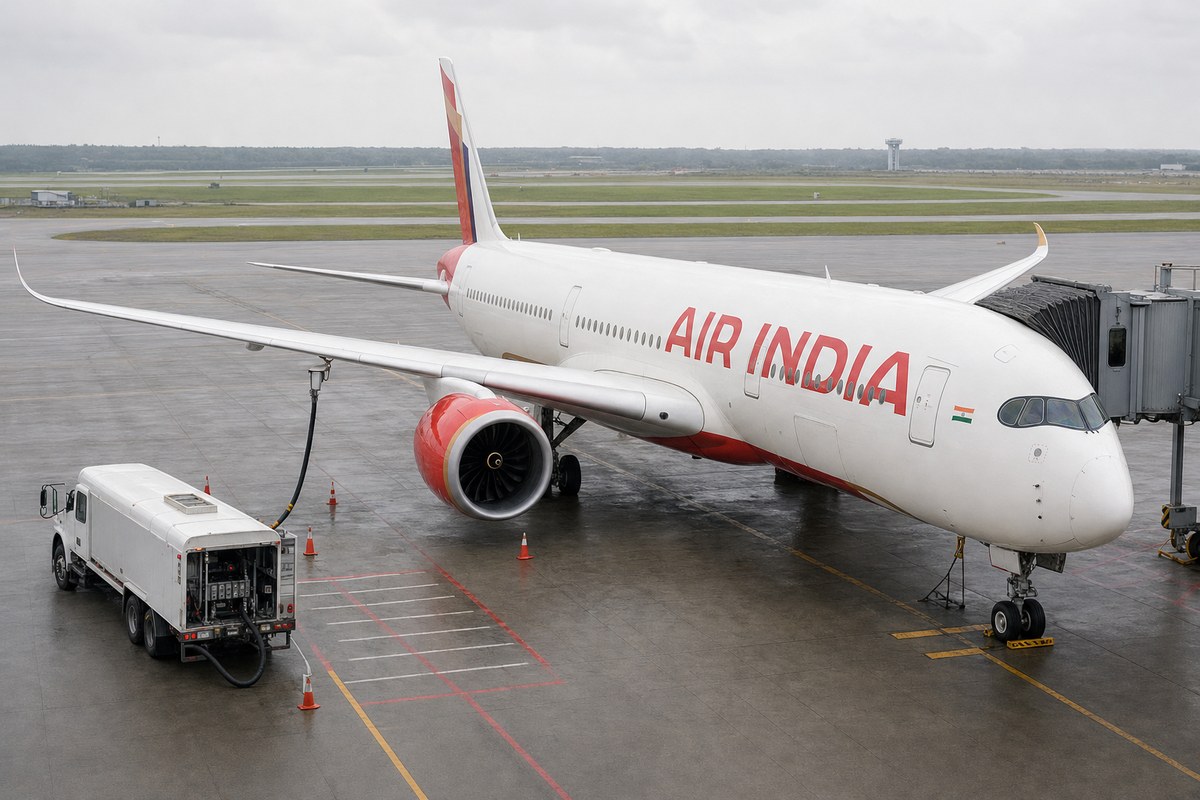
Under the model being evaluated, Air India would procure and use SAF on selected routes and offer eligible corporate customers the associated Scope 3 SAF certificates (SAFc). The study will assess how the programme could operate, including SAF procurement and use, certificate allocation and emissions accounting. Lifecycle emissions reductions would be calculated by comparing SAF with conventional jet fuel using internationally recognised frameworks, allowing participating companies to account for the reductions in their sustainability reporting. The initiative is intended to create a scalable corporate SAF offering and stimulate demand for SAF in India; greater corporate participation could help strengthen the business case for SAF production and support a domestic supply ecosystem.
Air India and Airbus describe the programme as part of a broader industry effort to reduce aviation's environmental impact, alongside fleet modernisation, operational efficiency and next-generation aircraft technologies. Air India's fleet renewal programme includes 600 aircraft on order, of which 350 are from Airbus. The airline is also implementing flight planning optimisation, single-engine taxiing, aircraft washing and autonomous electric-vehicle towing to reduce fuel consumption. The corporate SAF programme remains at the feasibility study stage, and its implementation will depend on the findings of the assessment and the development of a workable framework for participating businesses.