Six Aircraft Trace the Piper Cub's Path from 1930s Trainer to Modern Backcountry Machine
Why It MattersThe Cub's long lineage shows how one light-aircraft design can sustain a general-aviation niche for decades, now carried forward by a factory producer building to modern certification standards.
The Piper Cub, first introduced in the 1930s, evolved from a simple, affordable trainer into a versatile aircraft that served in military operations and recreational flying before becoming the foundation of modern backcountry aviation. Six aircraft mark its development.
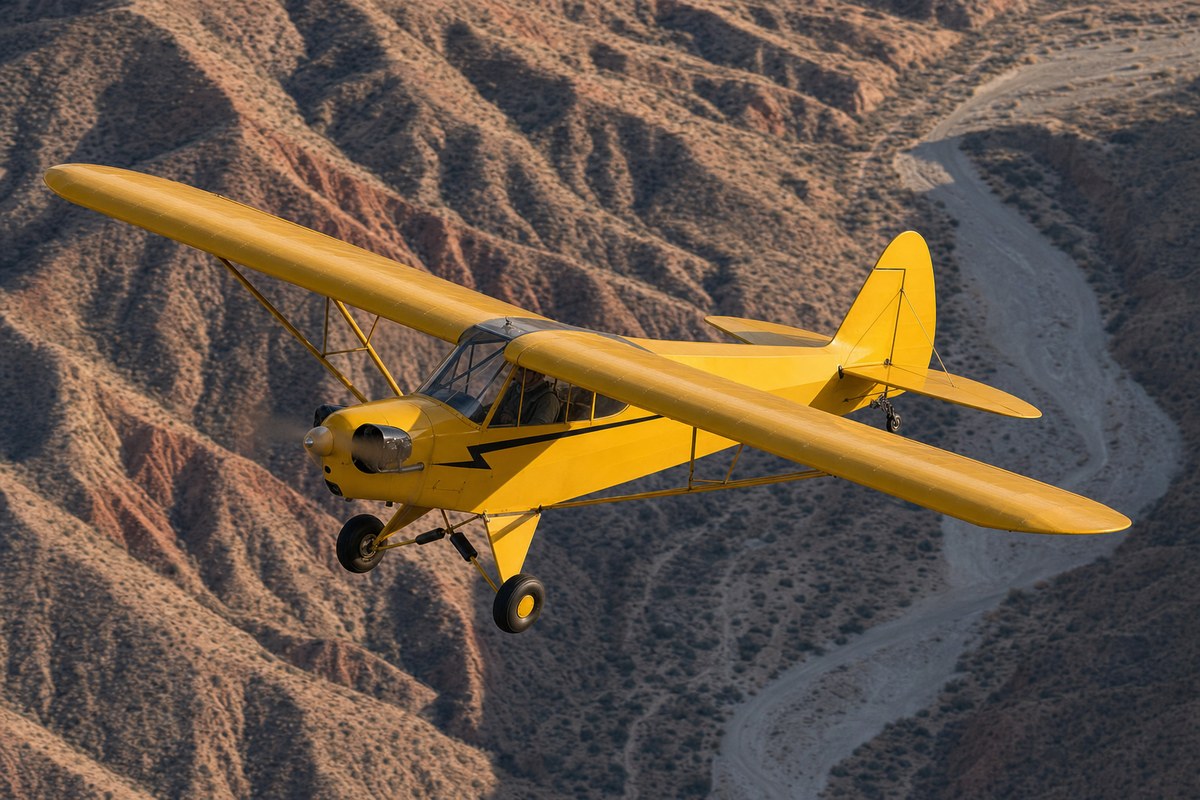
The Piper J-3 Cub (1938–1947) established the Cub family. Typically powered by a 65-horsepower Continental engine, it had tandem seating, a fabric-covered steel-tube fuselage, fixed landing gear and forgiving low-speed handling, and could operate from short grass strips. The Piper L-4 Grasshopper (1941–1945) was the military version of the J-3 built for the United States Army during World War II. Mechanically similar to the civilian aircraft, it had expanded windows for better visibility and was used for reconnaissance, artillery spotting, liaison and personnel transport.
The Piper PA-11 Cub Special (1947–1950) was Piper's postwar refinement of the J-3. It added an enclosed engine cowling, improved engine options, revised fuel tank placement and a seating arrangement allowing solo flight from the front seat, and introduced design elements carried into the Super Cub. The Piper PA-18 Super Cub (1949–1983; 1988–1994) brought a strengthened airframe and engines ranging from 90 to 150 horsepower, improving payload and climb performance while keeping the tandem-seat, tailwheel configuration.
The CubCrafters Top Cub (2004–present) put the traditional Super Cub design into a factory-produced aircraft with its own FAA type certificate. Built on the PA-18 platform, it uses a 180-horsepower engine, strengthened components and modern construction techniques. The CubCrafters Carbon Cub (2009–present) departed from the traditional formula with a lightweight design focused on power-to-weight ratio and short-field performance. It began as the Sport Cub, was developed into the Carbon Cub SS, uses a 180-horsepower engine and modern materials, and has expanded into EX, FX and UL configurations.