Charter and Go Argues AI's Value in Air Charter Extends Beyond Faster Quotes to Pricing, Utilization and Connected Operations
Why It MattersThe argument points to charter competition shifting from quoting speed toward integrated data, repositioning-aware pricing and fleet utilization, where operators running disconnected systems carry the most friction.
Charter and Go, in an article by Christian Huff, says artificial intelligence is beginning to reshape air charter economics, and that focusing only on faster charter quotes overlooks a larger opportunity. The company's view is that AI should connect sales, pricing, customer relationships, aircraft utilization and operations so aviation businesses can make more informed and profitable decisions.

The traditional quoting process requires an operator or broker to gather trip requirements, identify aircraft options, determine availability, evaluate positioning, calculate pricing and prepare a proposal, often across separate systems, spreadsheets, phone calls and emails. Charter and Go says AI-powered quoting can interpret incoming inquiries, identify missing trip information and help organize the workflow, reducing administrative delays. Its ConnieAI tool was developed to apply aviation-specific intelligence to the charter sales process.
As a hypothetical illustration of workload savings, a sales team receiving 100 inquiries at 30 minutes of administrative work per initial proposal spends about 50 hours; if connected automation cuts that to 10 minutes per inquiry, the workload falls to about 17 hours, returning roughly 33 hours of capacity. Charter and Go states this is not a claim about customer results, and that actual savings depend on workflow complexity, data quality, integrations and required human review.
On pricing, Charter and Go says each mission can involve different operating costs, positioning needs and market conditions, so a fixed hourly rate may not reflect the financial implications of a trip. Two flights of similar duration can differ sharply if one requires significant repositioning and the other starts near the aircraft's current location. Its Dynamic Pricing Engine supports configurable methodologies that weigh factors such as operating costs, mileage, positioning expenses, demand, seasonality, customer agreements, utilization and target margins.
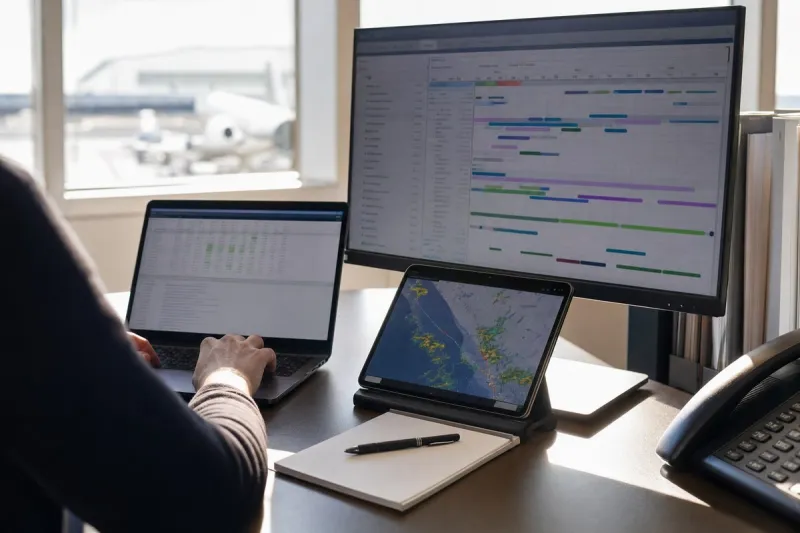
On utilization, Charter and Go says simply adding flight hours is not always the answer if repositioning costs or scheduling inefficiencies consume the revenue. Connected technology can help operators evaluate aircraft location, availability, scheduling and pricing together, which matters especially for floating fleets, and AI could eventually offer recommendations on fleet positioning, demand patterns and empty-leg opportunities. The company adds that AI depends on accurate, connected information: operators using separate systems for CRM, quoting, scheduling, crew management, accounting and reporting must spend time moving and reconciling data, so its approach combines an integrated environment with open APIs for third-party systems. It concludes that AI cannot replace professional responsibility for aircraft suitability, operational control, regulatory compliance, safety or customer service.