Guide: Accessible Private Jet Travel Requires Confirming Boarding, Cabin and Wheelchair Handling at Both Airports
Why It MattersAccessibility on charter flights is determined aircraft by aircraft and airport by airport, so substituting either one can undo an arrangement that was already confirmed.
A BizJet Journal guide by Joash Koech says accessible private jet travel depends on a complete route from the ground vehicle to the aircraft seat and back again at the destination. Cabin size alone does not establish accessible boarding, a suitable transfer or usable lavatory access.
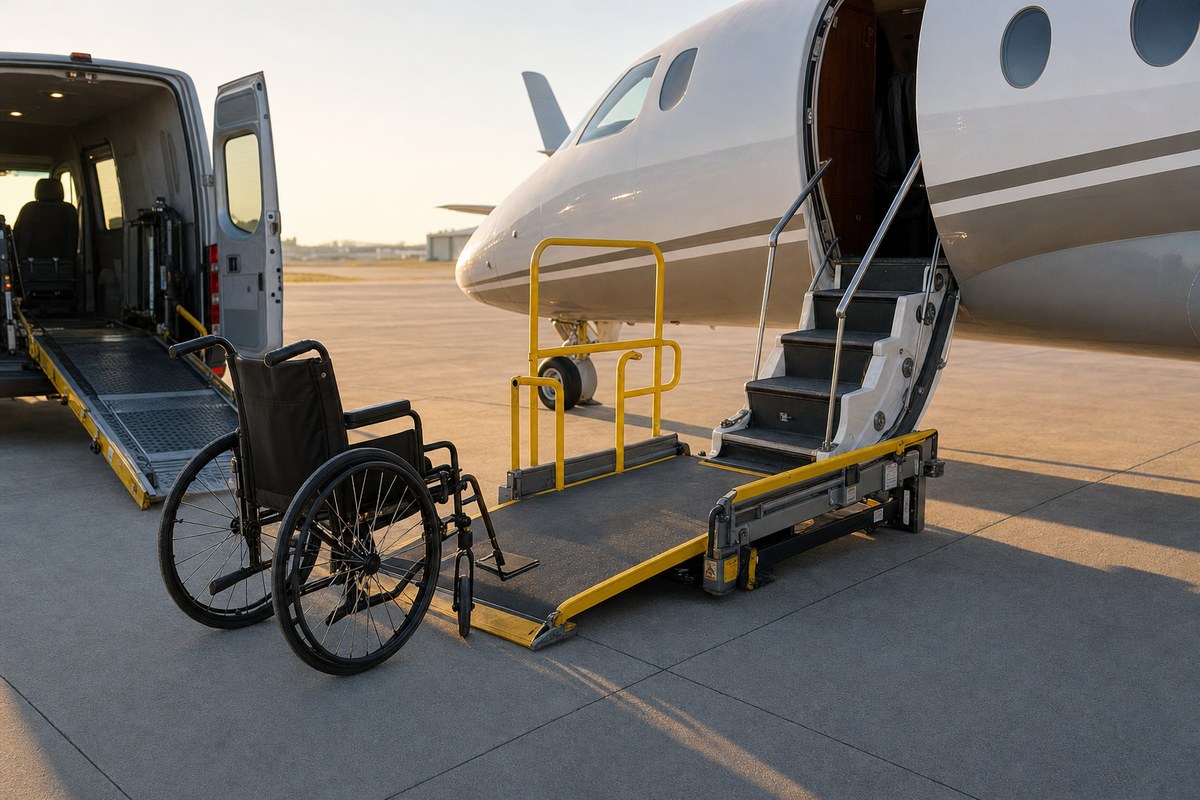
Passengers are advised to describe the assistance they actually want, including whether they can use steps, prefer to avoid them, need a lift or require help transferring between a wheelchair and another seat. They should supply the chair's make, model, dimensions, weight, folding instructions and removable parts; for powered equipment, battery chemistry, capacity and manufacturer handling instructions as well.
On boarding, the guide recommends requesting the aircraft's door clearance, threshold height and step arrangement, and confirming that any lift or ambulift is compatible with the specific aircraft. Availability must be checked at both departure and arrival airports, including booking, operating hours, trained personnel and a local contact, because facilities differ between airports. Adapted aircraft are treated as specific configurations: the guide cites Air Charter Advisors' description of a Challenger 604 fitted with a hydraulic lift, where passengers transfer from their own chair into an aisle wheelchair for boarding, and notes that this public description does not confirm availability on a given date or suitability for a given passenger.
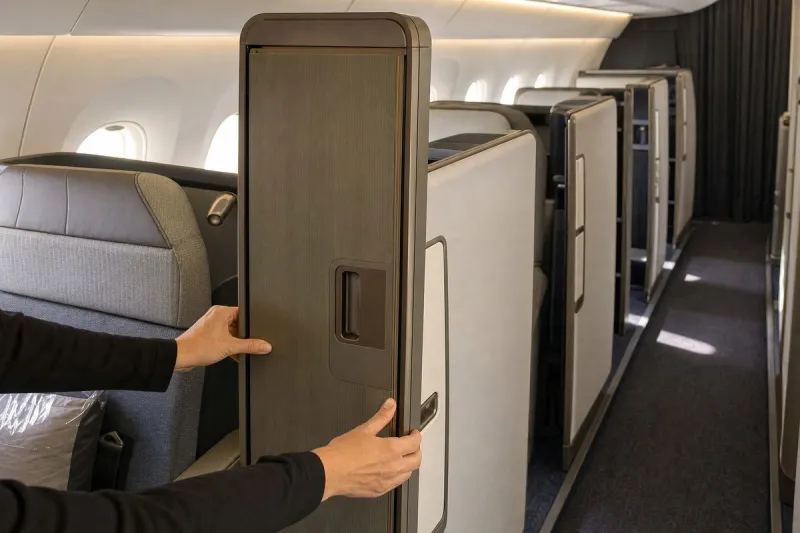
Inside the cabin, passengers should check the aisle, turns, seat position and transfer space, since a private lavatory is not necessarily wheelchair-accessible. For US Part 135 charter, 14 CFR 135.128 generally requires passengers to occupy an approved seat or berth with a secured safety belt during surface movement, takeoff and landing, subject to exceptions, so room for a wheelchair does not establish an approved position for remaining in it.
For wheelchair carriage, the guide says to check the baggage loading opening as well as volume, and to agree whether the chair stays assembled, which parts are removed and how it is secured. For powered devices on US flights, FAA mobility-device battery guidance distinguishes adequately protected installed lithium-ion batteries from those requiring removal, and separates lithium-ion devices from nonspillable or dry-battery arrangements, so a single generic battery limit is not an adequate check.
The guide recommends documenting the journey in separate departure and arrival columns covering ground vehicle, boarding, aircraft access, wheelchair handling, timing and change response, and requiring a fresh accessibility check whenever the aircraft or airport is substituted.