SkyGrid Extends MIT Lincoln Laboratory Agreement to Mature High-Resolution Weather Forecasting for Advanced Air Mobility
Why It MattersForecast resolution at low altitude is emerging as a gating requirement for scaling autonomous cargo and eVTOL services, and the work aims to ground future weather standards for regulators and operators.
SkyGrid, an Advanced Air Mobility (AAM) Third-Party Service Provider based in Austin, Texas, announced on Nov. 12, 2026 that it has extended its Cooperative Research and Development Agreement (CRADA) with MIT Lincoln Laboratory to continue developing high-resolution weather forecast systems for safe, scalable AAM operations. The new phase runs through July 2027 and shifts the work from evaluating to maturing high-resolution forecast (HRF) models for future operational use.
The partnership began in October 2025, combining SkyGrid's traffic management, airspace integration and simulation expertise with MIT Lincoln Laboratory's work in aviation weather sensing, forecasting and decision support. In the first year, the team used SkyGrid's AAM simulation environment to evaluate Lincoln Laboratory's HRF data and study how higher-resolution forecasts affect operational planning for safety and efficiency, producing an early framework for AAM-specific weather requirements presented at the AIAA AVIATION 2026 Forum.
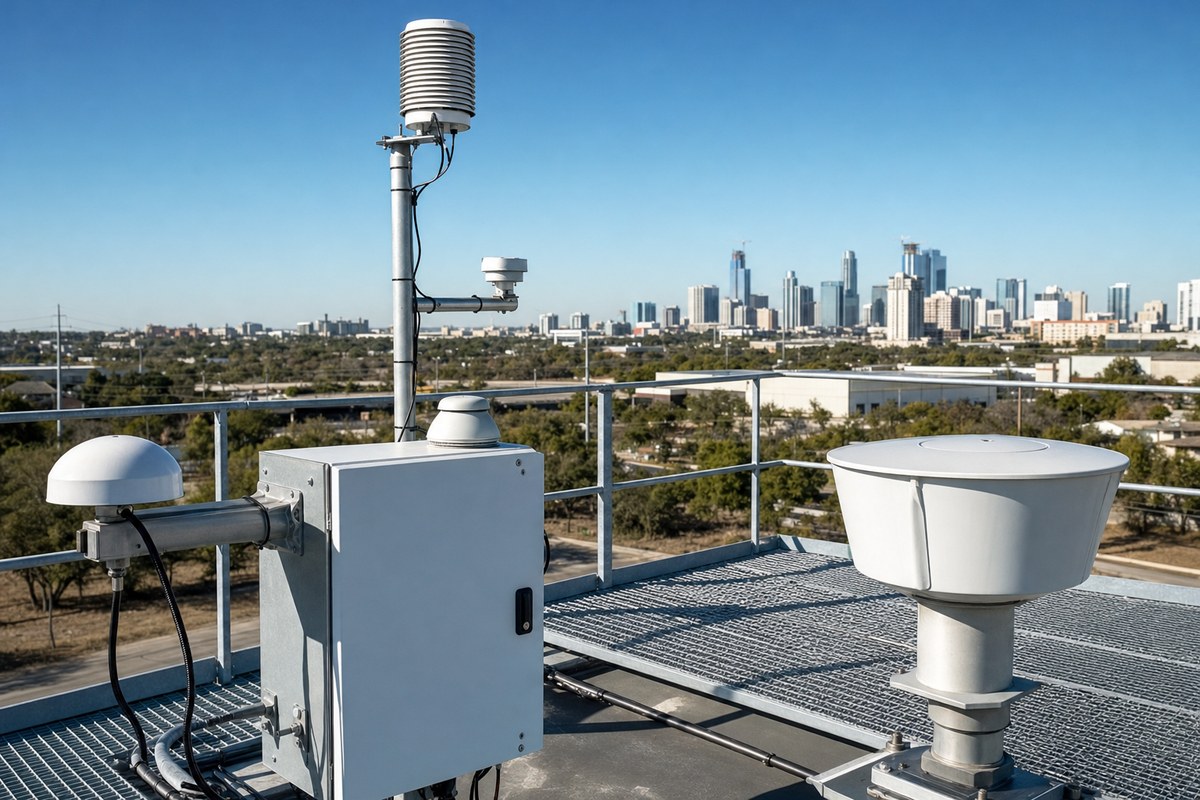
AAM flights, from autonomous cargo to passenger-carrying eVTOL services, operate at low altitudes where winds, turbulence, visibility and convection can change rapidly over short distances, and forecasts built for conventional aviation typically lack the resolution to capture small-scale weather dynamics near the planetary boundary layer. The second phase targets that gap by upgrading the models to better capture low-altitude weather, evaluating forecasts with sensors deployed across a range of operational sites, and enhancing SkyGrid's simulation environment and decision support tools. Planned work includes integrating high-resolution terrain and sensor data such as surface weather stations, aircraft reports, radiosondes, NEXRAD and LIDAR; expanding hazard products to cover turbulence, 3-D visibility, icing and precipitation; introducing probabilistic forecasting through ensemble approaches and 4-D error models; and comparing the HRF model against NOAA's High-Resolution Rapid Refresh (HRRR) model in simulations of AAM flights across multiple regions and seasons.
By linking gaps between forecast and observed weather to operational impacts such as delays, reroutes or cancellations, the team will propose AAM weather forecast requirements grounded in both meteorology and operational outcomes, intended to inform regulators, service providers and operators as the industry scales. Jordan Cohen, R&D Lead at SkyGrid, said year one showed that forecast resolution shapes how confidently autonomous flights can be planned and sequenced. Dr. Gabriele Enea, Assistant Group Leader of the Air Traffic Control & Weather Systems Group at MIT Lincoln Laboratory, said the first phase confirmed that high-resolution forecasts can make a measurable difference for highly automated flight. SkyGrid is part of Wisk Aero, headquartered in California.