Pilatus Aircraft trials Hexagon's AEON humanoid robot on its Stans final assembly line
Why It MattersThe trial points to business jet manufacturers exploring humanoid robots for repetitive quality checks, with regulatory frameworks still a hurdle before such automation can move beyond testing.
Pilatus Aircraft is testing a humanoid robot on its final assembly line in Stans, Switzerland, to see whether it can spot parts fitted in the wrong place. It is the first time Pilatus has used a humanoid robot, and the trial is being run jointly with Hexagon, the Swedish technology group that developed the robot, called AEON.
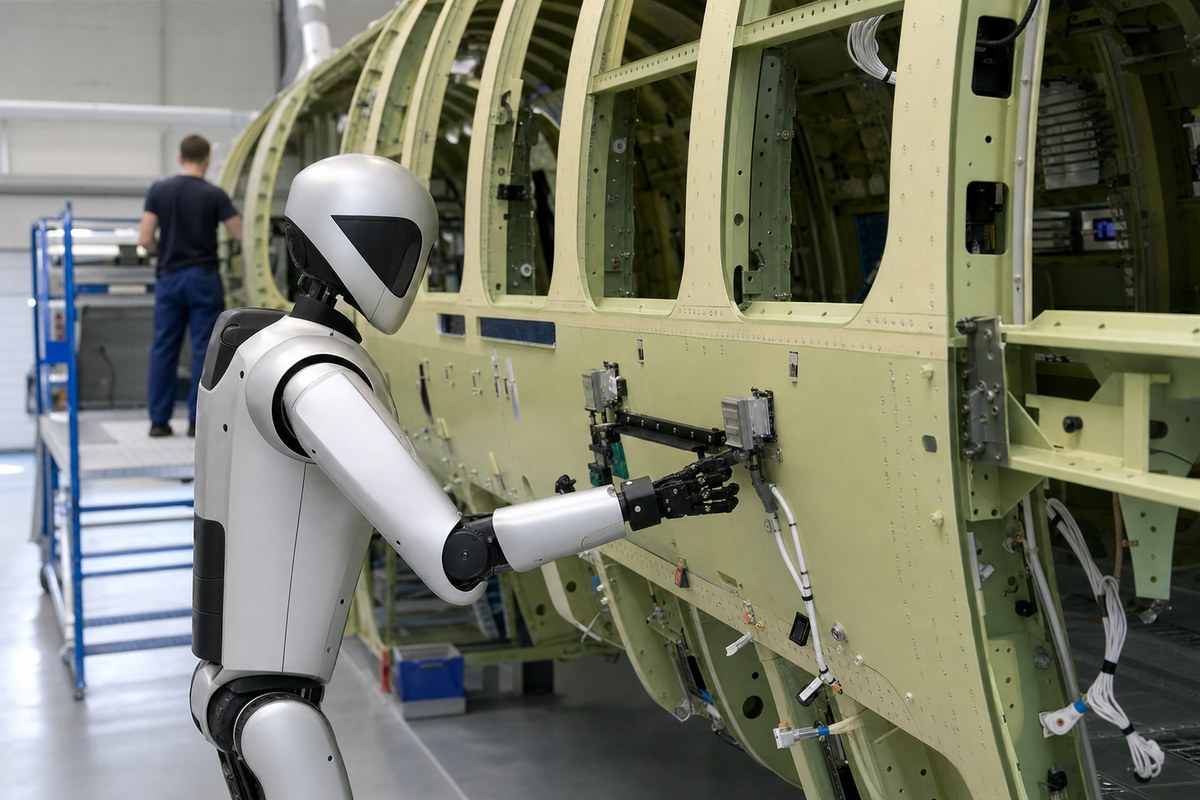
In an initial test, AEON finds its way to an assembly such as a PC-24 fuselage sidewall and checks that a worker has fitted the right component in the right place. Pilatus says the robot could eventually carry out such checks at night, inspecting work completed during the day. AEON uses sensors, artificial intelligence and precision measurement to inspect parts, handle objects and make digital recordings. Before it can inspect, it must identify where assemblies are located and navigate the hangar without putting workers or aircraft components at risk.
Benjamin Mettler, head of structure assembly at Pilatus, whose hangar is hosting the trial, said the robot initially triggered a certain sense of unease among some employees in his team, but that the company recognizes its potential. Kilian Läubli, the Pilatus project manager overseeing the trial, said the aim is not to replace people but to have robots perform highly repetitive, unattractive or physically demanding jobs for which Pilatus generally has difficulty recruiting staff.