Soongsil University Develops Ultrathin De-Icing Coating That Cuts Ice Adhesion by About 98.6%
Why It MattersA thin, sprayable passive coating, if it scales beyond the lab, would give aircraft and other icing-exposed equipment an alternative to power-hungry heaters and costly mechanical de-icing.
Soongsil University said on the 3rd that a team led by Professor Park Seong-hun of its Department of Mechanical Engineering has developed a next-generation de-icing coating that lets ice shed easily while the coating itself stays firmly attached to the surface of an object. Compared with ordinary metal surfaces, the coating reduces ice adhesion by about 98.6%, so ice can be removed with only about one-seventieth of the force previously required. It maintains its performance at thicknesses dozens of times thinner than a human hair.
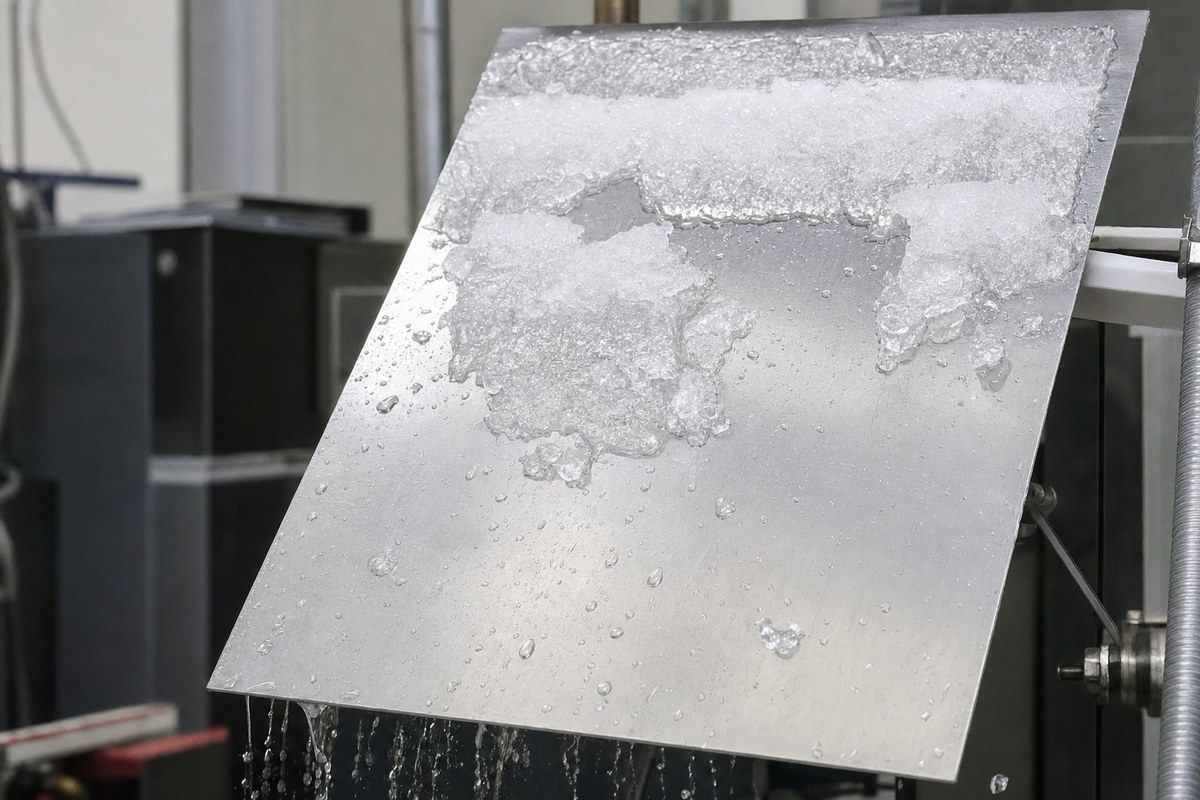
Ice forming on aircraft, wind turbines and autonomous vehicle sensors can lead to equipment failures and safety accidents. The main existing approaches are melting ice with electric heaters or scraping it off mechanically, which consume a lot of power and are costly to maintain. Existing anti-sticking coatings can lose performance as they become thinner or can peel off easily.
The team used a special silicone material, polyborosiloxane, whose molecular bonds can break and then reconnect. The coating is designed so that its molecular structure moves flexibly and disperses force when an external force is applied, so ice sheds with only wind or slight vibration while the coating remains attached to the underlying material. In tests, the coating showed about nine times the adhesion strength of conventional silicone coatings and reliable durability in repeated friction and tape-peel tests. It can be made through simple processes such as spraying or dipping in liquid.
Professor Park said the team achieved both de-icing performance and durability while overcoming the problem of performance declining with reduced thickness, and that applications will be expanded from polar vessels and aircraft to household appliances and industrial heat exchangers. Researcher Nam Geon-u was the first author of the study, which was published in the international journal Nature Communications.