SpaceX Eyes November Launch of Starship Flight 15, Aiming for First Ship Tower Catch
Why It MattersA ship catch would mark a step toward reusable heavy-lift launch, though one successful catch would not by itself show that Starship can be rapidly refurbished and reflown.
SpaceX is targeting November 2026 for the 15th integrated flight test of Starship, but as of October 28 it has not announced an official launch date. The mission is expected to attempt the first launch-tower catch of the Starship upper stage after its return from space, while also recovering the Super Heavy booster, potentially bringing both stages back to Starbase in South Texas. Timing will depend on testing, vehicle readiness and regulatory approval.
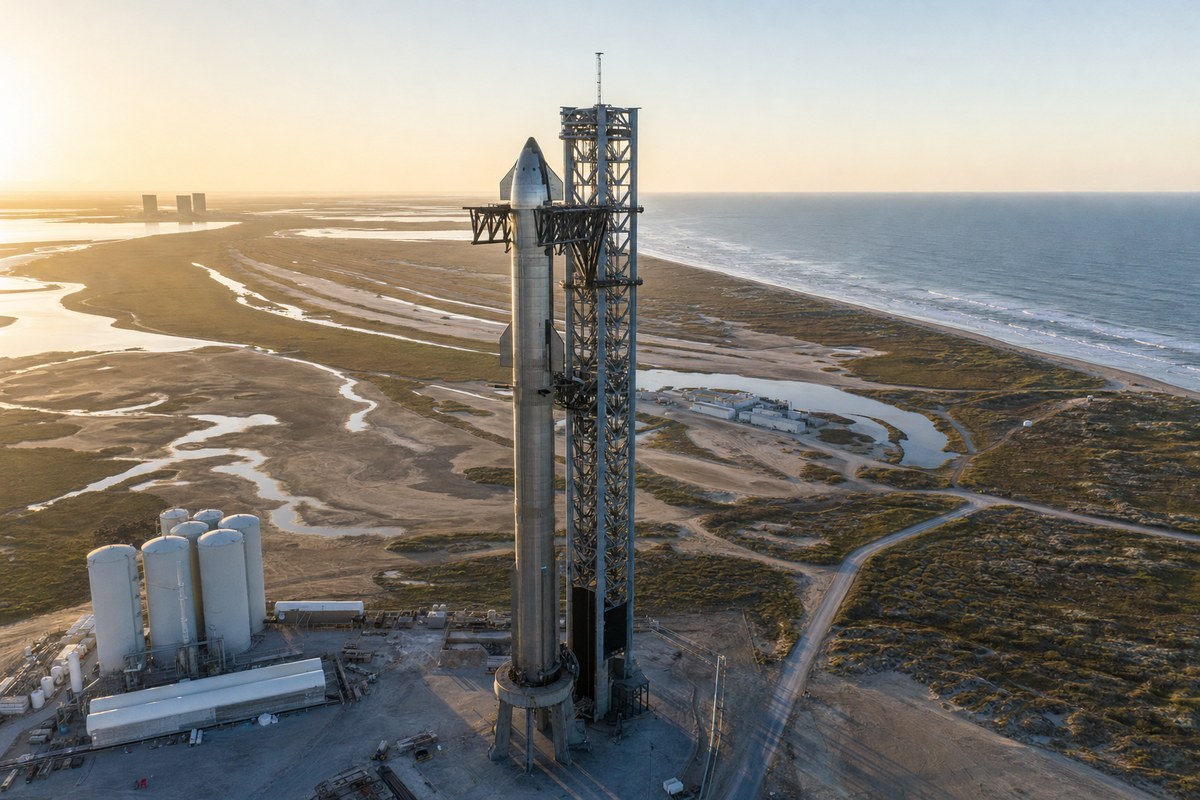
On October 25, SpaceX ran a full-duration static-fire test of Super Heavy Booster 22, igniting all 33 Raptor engines for about 15 seconds. The booster will fly with upper stage Ship 42, which has completed its own engine test and is undergoing final systems checks. SpaceX President and Chief Operating Officer Gwynne Shotwell said on an October earnings call that the company expected its FAA license for Flight 15 to cover return-to-launch-site operations and tower catches for both stages.
SpaceX has already caught boosters on earlier flights using the mechanical "chopsticks" arms on the launch tower, while Ship has so far made controlled ocean splashdowns. A successful catch alone would not prove that Starship can be rapidly inspected, refurbished and reflown.
Flight 15 follows Flight 14 on September 28, which reached orbit and deployed 26 next-generation Starlink V3 satellites, the first operational payloads Starship delivered to orbit. An upper-stage Raptor engine shut down prematurely during ascent, shortening the planned mission, but Ship completed a controlled reentry and splashed down in the Pacific about three hours after liftoff. SpaceX has not confirmed Flight 15's payload, though another Starlink deployment has been discussed.
SpaceX is also developing a modified Starship upper stage as a lunar lander for NASA's Artemis campaign. Before it can carry astronauts to the Moon, the vehicle must demonstrate additional capabilities, including in-space propellant transfer, which SpaceX plans to pursue in a future test.