AEF Report: 31 Major European Airports Averaged 24,634 Night Flights in 2025, With None Operating a Full Night Ban
Why It MattersNight operations are embedded across Europe's busiest hubs, so any tightening of noise rules would fall unevenly, with cargo-heavy and curfew-light airports facing the largest capacity adjustments.
An Aviation Environment Federation report for UECNA, dated June 2026, analyses night flight operations at 31 key European airports, covering those with the highest passenger throughput and major cargo hubs. The report defines night as the 8-hour period from 23:00 to 07:00, the window used by EASA, the WHO and the EU Environmental Noise Directive default. The Directive lets member states set their own hours, and 22:00 to 06:00 is often used in Germany, France, Switzerland, Belgium, Austria and Poland.
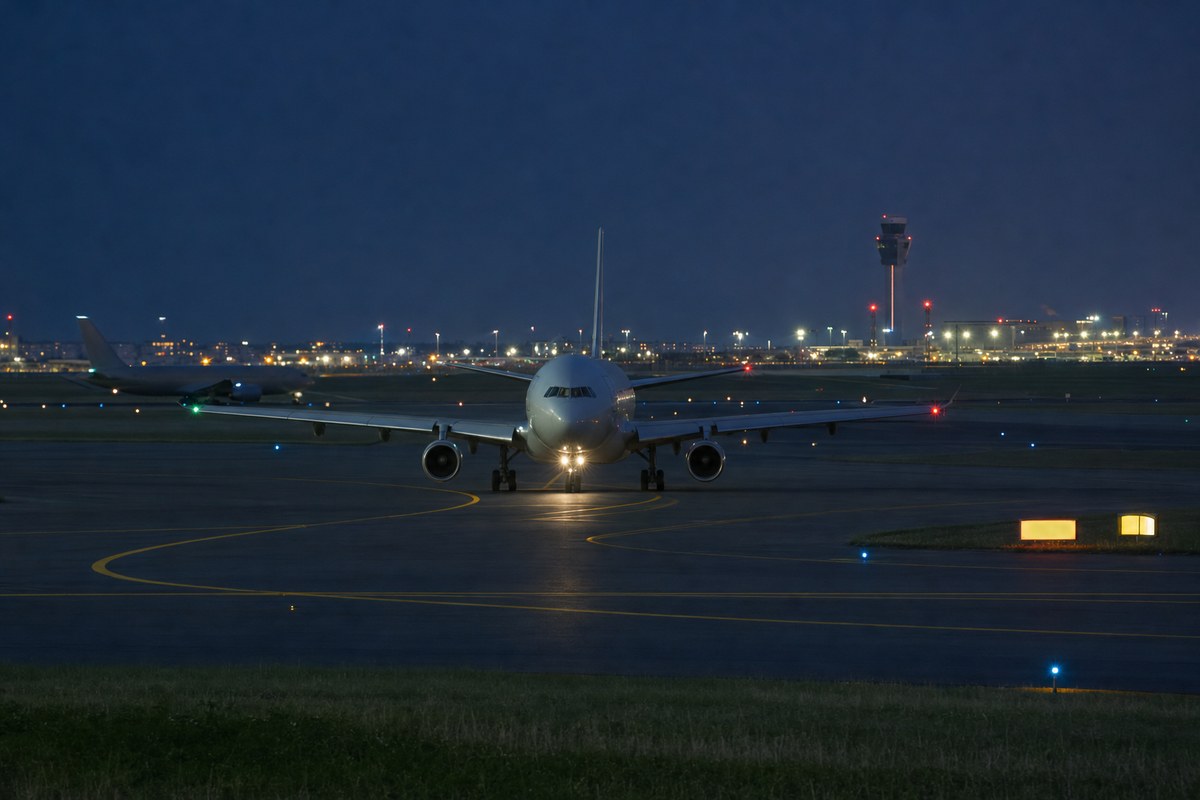
All 31 airports operate large numbers of night flights. Per-airport totals for 23:00 to 07:00 in 2025 ranged from 7,578 to 48,563, with an average of 24,634 and a combined total of 763,645. Paris CDG has the lowest figure listed, at 7,578. Figures for Paris and Lisbon were adjusted upwards by 10%, and the total for Athens was adjusted up from 16,051 because of missing data. The Palma de Mallorca figure is the one reported by the airport rather than the OPDI data. The report uses Automatic dependent surveillance – broadcast (ADS-B) data from the OpenSky Network.
On restrictions, 14 airports apply only operational procedures, one uses a quota system, eight set limits on flight numbers and eight have a curfew period. Heathrow, Gatwick and Stansted use both a quota and a flight limit. None of the airports operates a full 8-hour night ban; the closest is Luxembourg's ban from 23:00 to 06:00. Leipzig bans passenger aircraft from 23:30 to 05:30 but operates largely as a cargo airport. Lisbon announced a ban on flights between 01:00 and 05:00 in November 2024, with the implementation date yet to be confirmed.
At EU27+EFTA airports there were approximately 210,000 more night arrivals and 140,000 more night departures in 2023 than in 2005, and night flights made up 5.5% of total traffic in 2023. Much of the growth came in the shoulder periods near the start and end of the night. The WHO recommends keeping aircraft noise at night below 40 dB Lnight, above which adverse effects on sleep are associated. The report cites recent health studies linking night-time aircraft noise exposure to worse heart structure and function, cardiovascular hospitalisations, hypertension and greater sleep disruption.