Netherlands AIP GEN 1.5 Sets Radio, RNAV, RVSM and Transponder Carriage Requirements for Amsterdam FIR
Why It MattersEquipment mandates enforced by the Dutch authority raise the avionics bar for business jets and other non-state aircraft routing through Amsterdam FIR and the Schiphol TMAs.
The Netherlands Aeronautical Information Publication section GEN 1.5 sets out mandatory aircraft instruments, equipment and flight documents for operations in Dutch airspace.
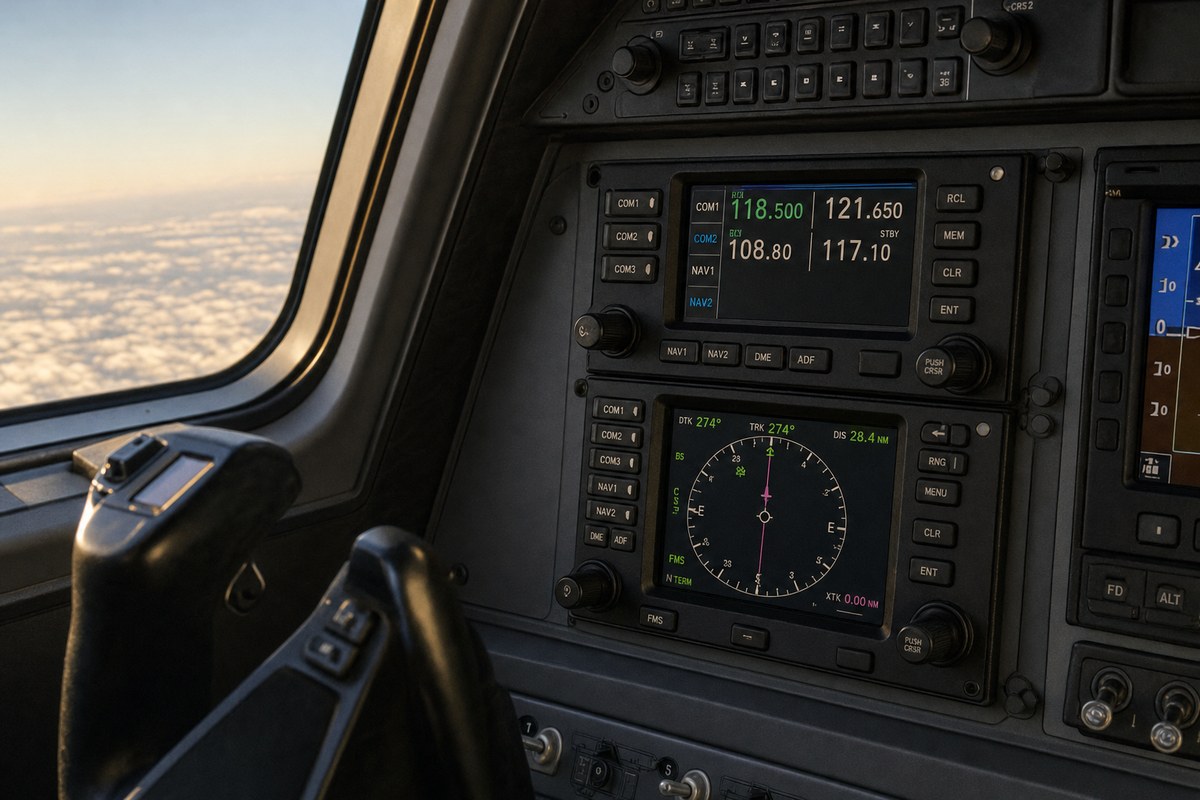
VHF radio equipment enabling continuous two-way radiotelephony with ATC is mandatory for IFR flights in airspace classes A to G, and for VFR flights in classes A to D, as well as in classes E to G within a radio mandatory zone (RMZ). Where radio equipment is required, only equipment capable of 8.33/25 kHz channel spacing may be used. Carriage is strongly recommended in North Sea area V, and exemptions are described in ENR 1.8.
CAA The Netherlands actively enforces RNAV 1 requirements, and violations may lead to administrative and criminal penalties. Non-state aircraft on ATS routes above FL 095 in the Amsterdam FIR and on the EHAM STARs must carry at least RNAV 5 equipment, and RNAV 1 is required on certain SIDs and STARs. An RNAV 1 approval is required for all IFR aircraft in the Schiphol TMAs, with state aircraft exempt and VFR and helicopter operations unaffected. Pilots of aircraft without working RNAV must say "UNABLE RNAV" immediately after the call sign on initial contact. Only RVSM-approved aircraft and non-RVSM-approved state aircraft may operate in EUR RVSM airspace, including within the Amsterdam FIR, apart from designated transition airspace.
Aircraft must carry a Mode S transponder with elementary surveillance (ELS), and activating Mode A/C transponders is prohibited in the Amsterdam FIR. Exemptions cover motorised VFR flights in class G airspace below 1200 ft AMSL within UDP and non-motorised aircraft and paramotors outside transponder mandatory zones. Fixed-wing GAT flights at or above FL 245 with a maximum take-off mass above 5700 kg or a maximum cruising true airspeed above 250 kt must have Mode S with enhanced surveillance (EHS), meeting EUROCAE ED-73B with at least a Level 2 transponder.