Michigan Funds 12 Advanced Air Mobility Projects, Including UTM Service and Drone Delivery Trials
Why It MattersState-funded UTM, radar and weather infrastructure shows drone and advanced air mobility groundwork moving from isolated pilots toward shared low-altitude airspace systems at statewide scale.
Michigan's Department of Labor and Economic Opportunity, through its Office of Future Mobility and Electrification (OFME), has funded 12 projects that support more complex drone operations. They include a UAS traffic management (UTM) system, surveillance radar to enhance beyond visual line of sight (BVLOS) operations, and weather forecasting and monitoring for low-level airspace activity.
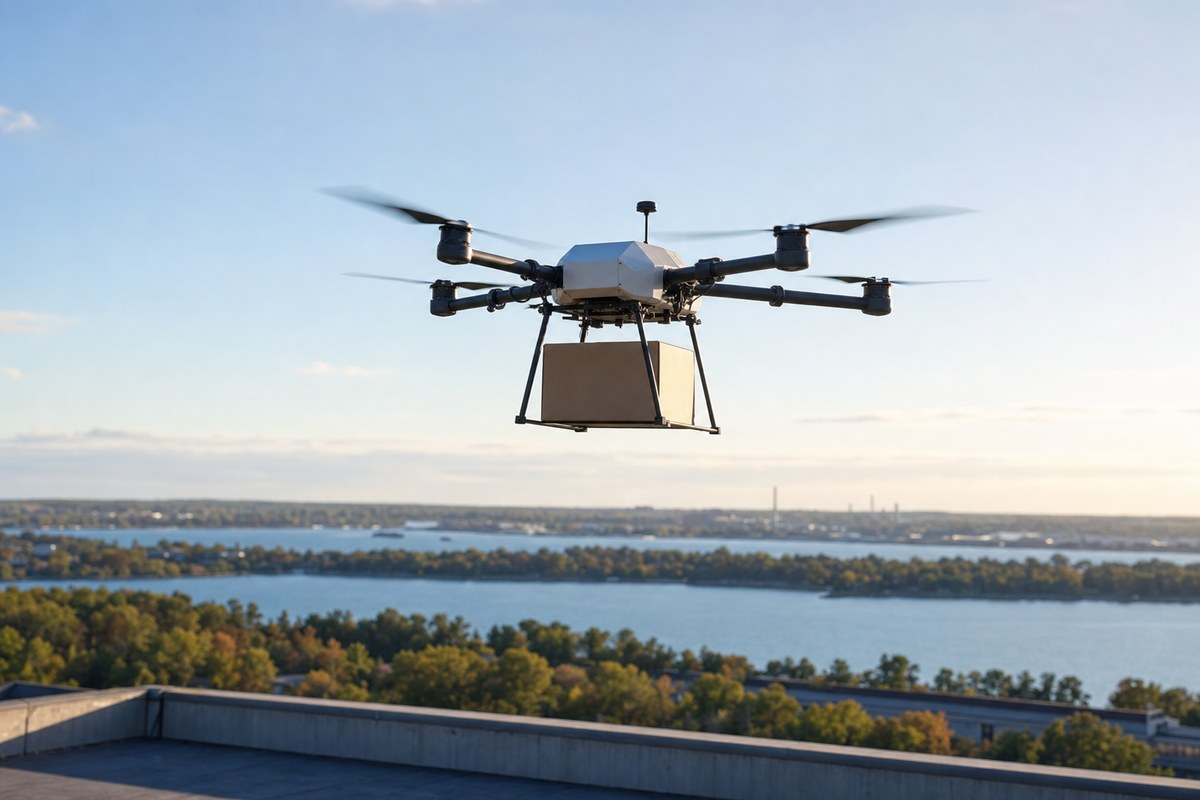
The projects were selected through a competitive process under the Michigan Mobility Funding Platform, which is administered and managed by NextEnergy, and will deploy statewide, building on Michigan's network of real-world testing infrastructure.
Among the selected projects, Airspace Link receives $80,000 in Detroit to deploy a UTM service as the city's low-altitude airspace becomes more active. Birdstop receives $110,000 in Detroit to monitor truck parking availability with autonomous drones operating from self-charging perches. Blueflite receives $70,000 in Detroit to test Tubular Network's automated vertical tube system, which moves packages from rooftop drone drop-off points to their intended floors within the Detroit Smart Parking Lab. A second Blueflite award of $245,000 in Ann Arbor will see it partner with M-Air to pilot drone-enabled operations.