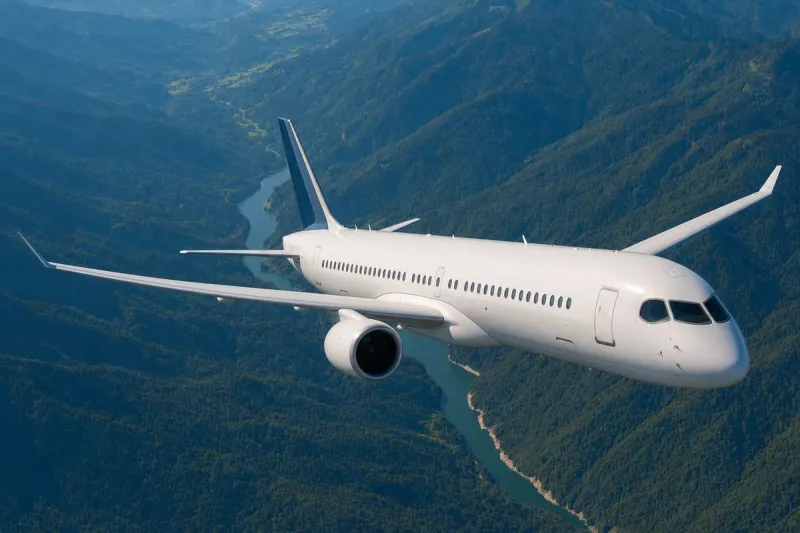
Boeing 787 Dreamliner Holds Cabin at 6,000 Feet With Higher Humidity and No Engine Bleed Air
Why It MattersComposite airframes let manufacturers treat cabin environment as a design variable rather than a regulatory minimum, raising the comfort baseline that rival long-haul widebodies are measured against.
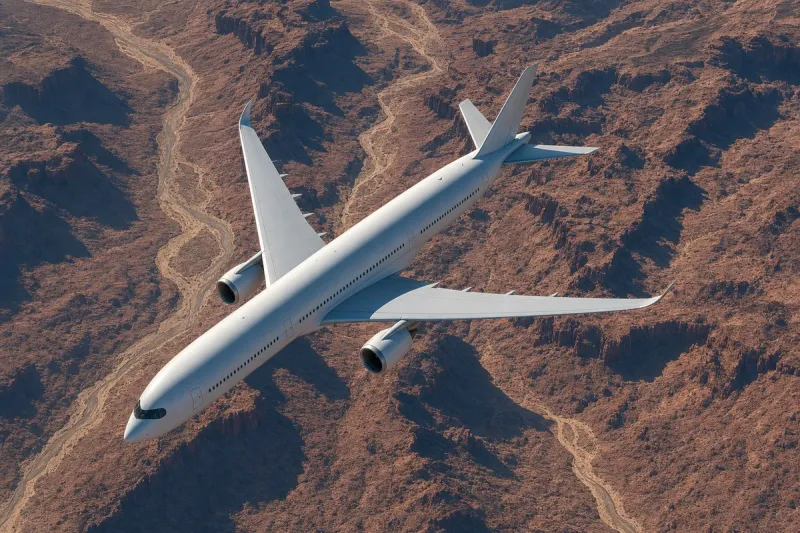
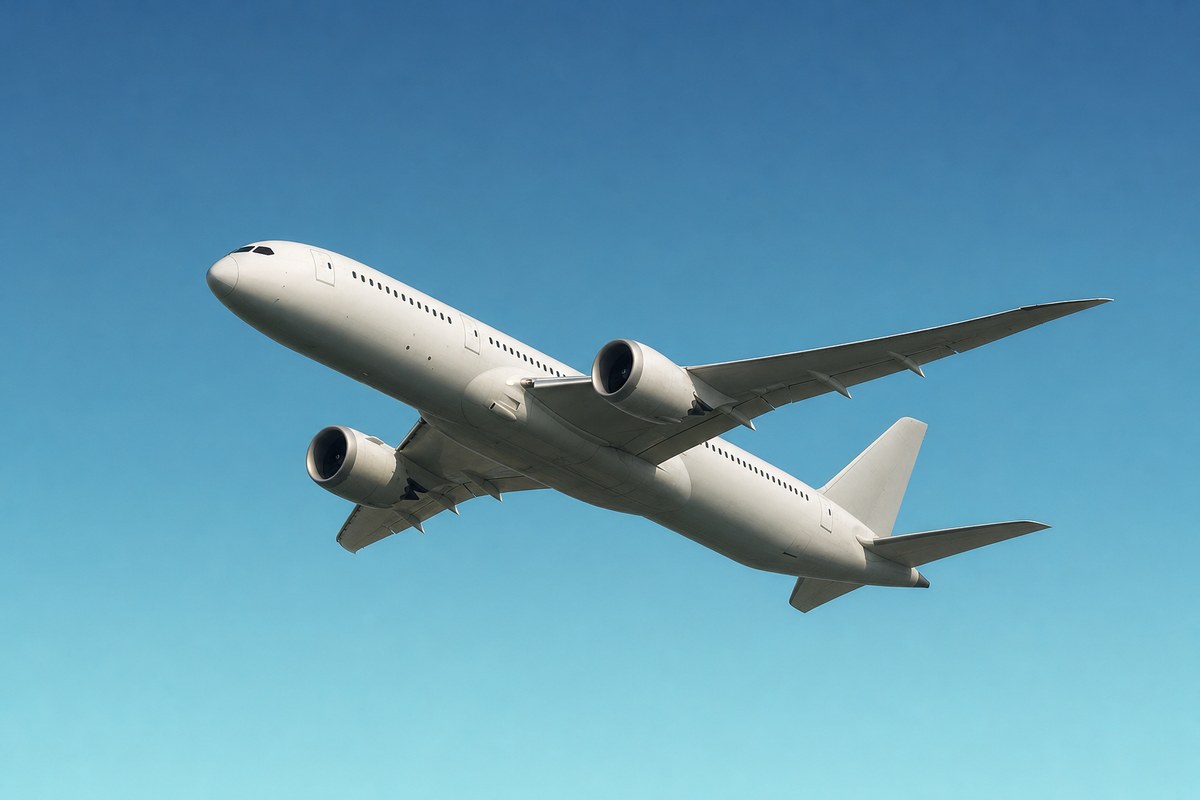
Federal regulations require commercial aircraft to maintain a cabin altitude of 8,000 feet (2,438 meters) or lower, which is a legal ceiling rather than a target. Boeing materials from the 787's development describe a typical aircraft as pressurized to 6,500 to 7,000 feet, with 8,000 feet as the maximum certification limit. The 787 holds its cabin at 6,000 feet (1,829 meters). Boeing states that the composite materials used on the 787 are stronger than aluminum, allowing a lower cabin altitude without fatiguing the fuselage structure. An aluminum fuselage pressurized to 6,000 feet would carry a larger pressure differential over tens of thousands of cycles in a 25- to 30-year service life, and aluminum is particularly sensitive to the resulting fatigue cracking. The 787 carries roughly 7.5% higher cabin pressure than a conventionally built aircraft, which Simple Flying described as a 25% lower-feeling altitude. The Airbus A350, which also has a composite fuselage, pressurizes to 6,000 feet.
Research published in the New England Journal of Medicine, titled "Effect of Aircraft-Cabin Altitude on Passenger Discomfort," placed subjects in a hypobaric chamber simulating 20 hours of flight at pressures equivalent to altitudes from 650 to 8,000 feet. Subjects felt progressively worse as cabin altitude rose, and the effect compounded over the duration of exposure. Research cited by Simple Flying found a maximum decrease in mean oxygen saturation of 4.4 percentage points at the higher altitude.
Composite construction also allows higher cabin humidity. Conventional airliner cabins run at roughly 4 to 7% relative humidity in cruise, while the 787 operates considerably wetter; published figures vary, with Simple Flying giving 15 to 25%. Boeing worked with Denmark Technical University, challenging the assumption that raising humidity alone would resolve dryness complaints, and paired higher humidity with additional filtration to remove odors and contaminants.
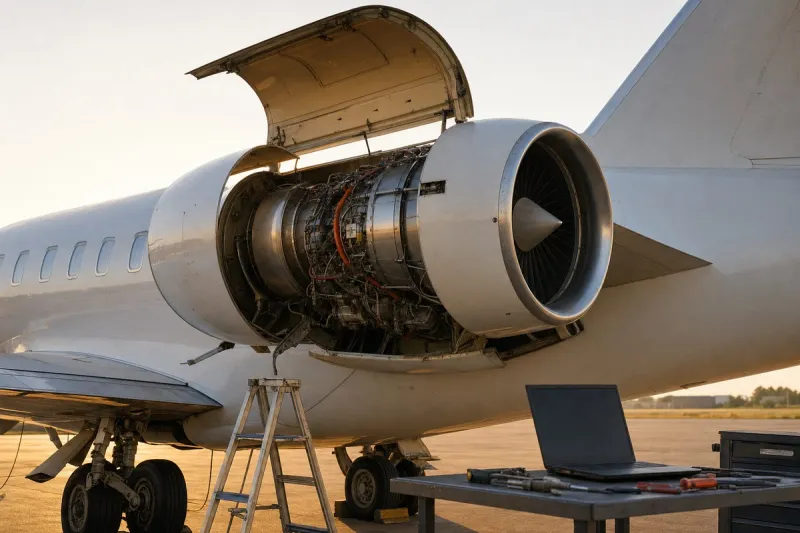
The 787 also abandoned engine bleed air. It draws fresh air from outside through two dedicated inlets and uses electrically driven cabin air compressors, eliminating the large pneumatic architecture conventional aircraft use for cabin air conditioning and engine starting. Because bleed air passes through the engine before reaching the cabin, it creates a potential pathway for contamination, and an FAA-funded study found fume events occur on roughly 1 in 5,000 flights. The Airbus A350 matches the 787 on cabin altitude and improved humidity but retains conventional bleed air for cabin pressurization.