Independent Review by Imperial College London's Prof. Nigel Brandon Finds Syntholene's Iceland Demonstration Facility Achieved Proof-of-Performance at 95.5% Electrical Efficiency
Why It MattersIndependently reviewed efficiency data for geothermally integrated electrolysis gives green aviation fuel developers a performance benchmark, though cost competitiveness still depends on site-specific conditions and scale-up.
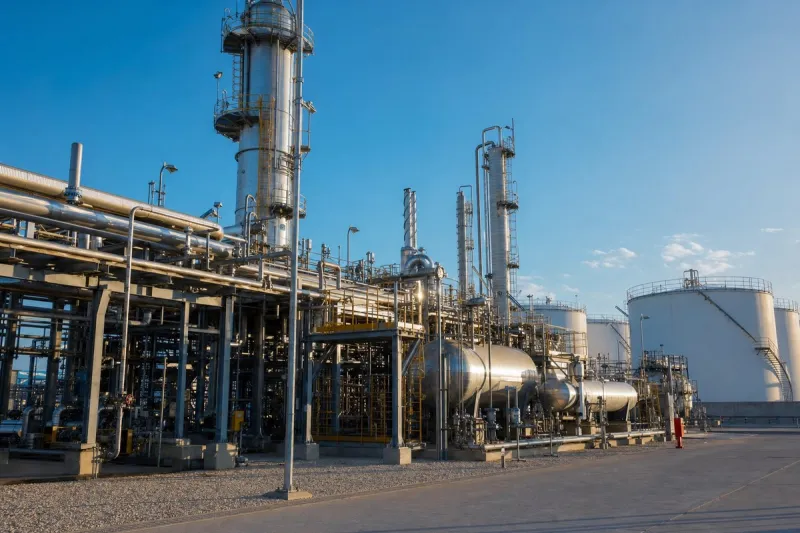
Syntholene Energy Corp. announced on October 20, 2026 the results of an independent technical review by Prof. Nigel Brandon of Imperial College London of operating data from its geothermally integrated solid oxide electrolyzer cell (SOEC) demonstration facility in Húsavík, Iceland. The written report is dated October 19, 2026. The review was carried out through Imperial Consultants, a wholly owned subsidiary of Imperial College London, for a fixed cash fee of £27,500, and was funded by Syntholene. It examined stack and system data, concept design reports, virtual meetings with management and a virtual inspection of the facility.
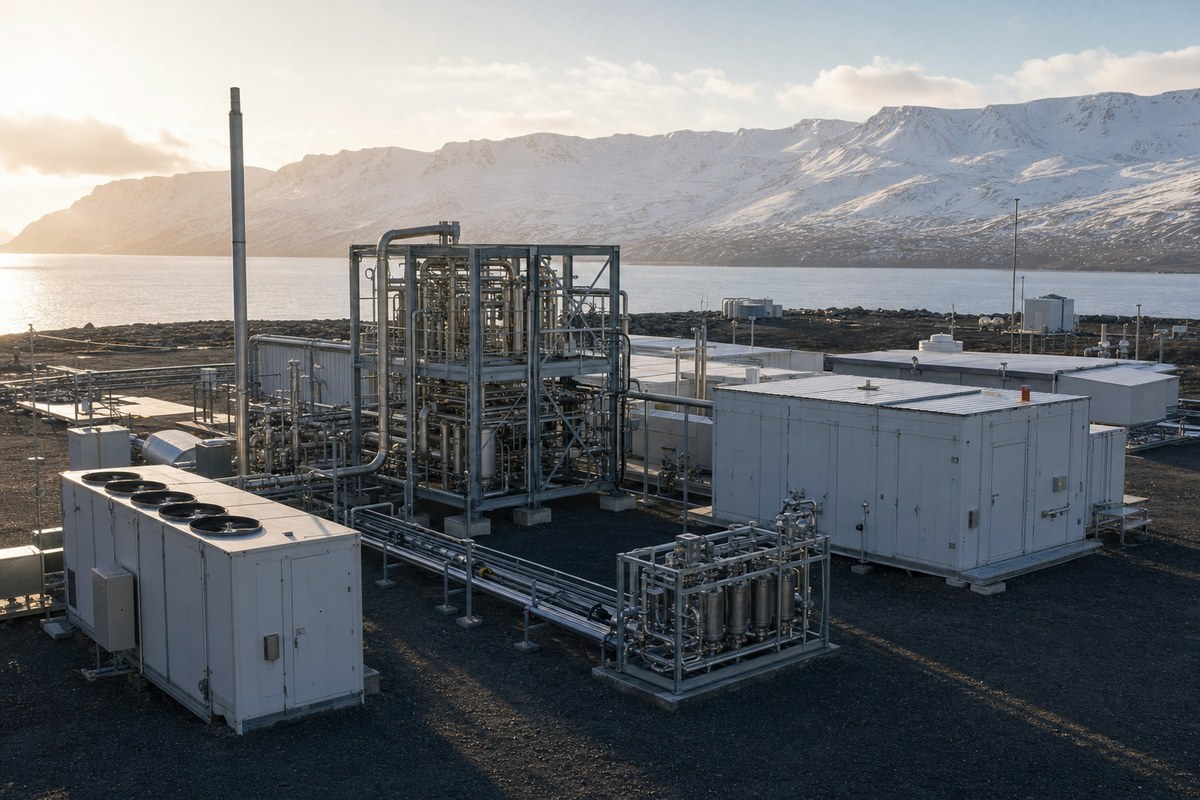
The report concluded that the facility has achieved proof-of-performance for its geothermally integrated SOEC, with world-class efficiency, operation on fully green power and heat, and the opportunity to produce cost-competitive green aviation fuel under favourable commercial operating conditions. Average stack electrical consumption was 34.90 kWh per kilogram of hydrogen, equivalent to 95.5% electrical efficiency on a lower heating value (LHV) basis, achieved over 713 Phase Two high-load hours; the text also cites 95.4% in one passage. Stack and SOEC auxiliary consumption excluding steam generation was 38.60 kWh/kg H2. The wider campaign comprises 2,520 hourly records, a longest uninterrupted selected-load run of 795 hours and a total selected-load runtime of 1,478 hours.
Hydrogen production exceeded 90% of the defined high-load reference output during 97.7% of the 732-hour Phase Two observation period. The coefficient of variation in hourly mean voltage across the nine active stacks was 0.248%. Phase Two delivered about 60% higher hydrogen output and 10.5% lower system electricity consumption per kilogram of hydrogen than Phase One. The review found no degradation in stack voltage data and no evidence of fouling or material performance loss in the geothermal heat exchanger.
The review noted that hydrogen production was calculated from recorded net current assuming 100% Faradaic efficiency rather than independently metered product flow, that efficiency is on an LHV basis and excludes thermal energy inputs, and that the 38.60 kWh/kg figure excludes steam generation and geothermal circulation requirements, which are not anticipated for commercial deployment. Syntholene says the results support a structural cost advantage from integrating geothermal heat and electricity, but how far this translates into lower capital costs and improved unit economics will depend on site-specific conditions, commercial arrangements and successful scale-up. CEO Dan Sutton said the company's focus now shifts to commercial operations.