Airbus Built A350 Fuselage From Four Carbon Panels While Boeing Used Wound Barrels on 787
Why It MattersThe two fuselage architectures commit each manufacturer to different tooling, production tolerances and family-stretch routes, shaping how readily future widebody variants can be developed.
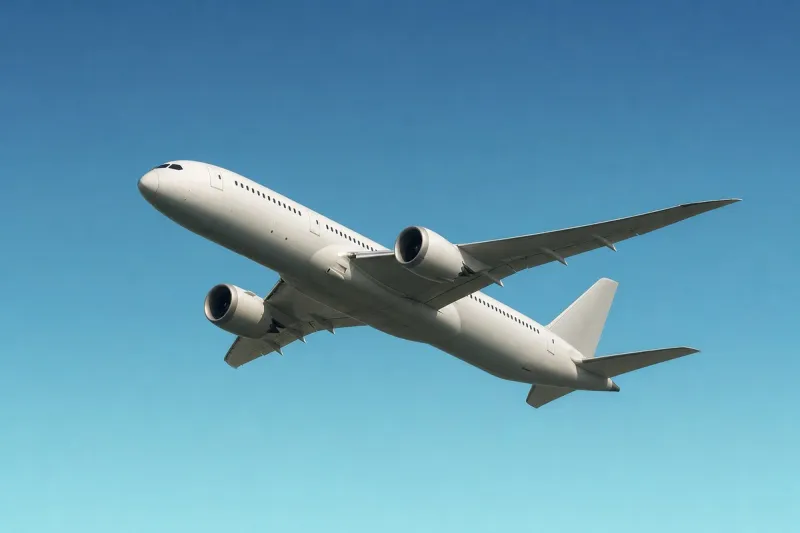
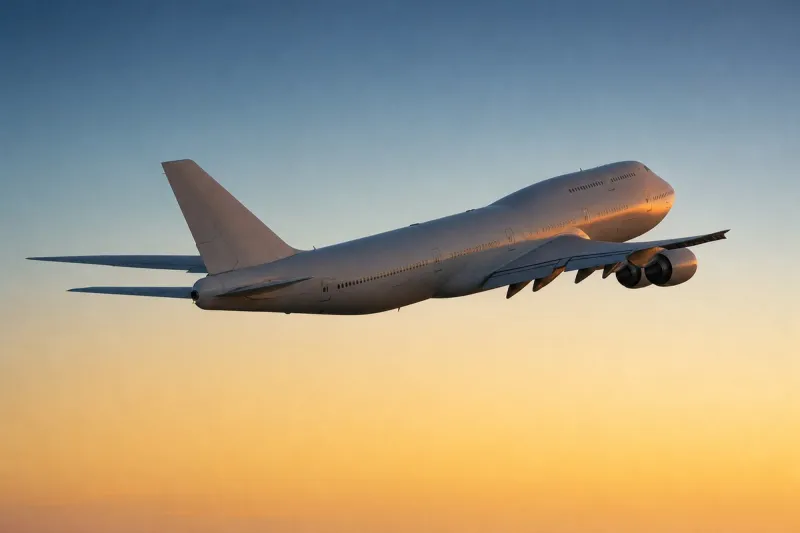
Both the Boeing 787 and the Airbus A350 rely on carbon-fiber-reinforced polymers, but the two manufacturers built their fuselages in different ways. Boeing formed the 787 hull from continuous cylindrical barrels, while Airbus assembled the A350 from four longitudinal panels — a crown, a keel and two side walls — fastened to a metallic frame grid.
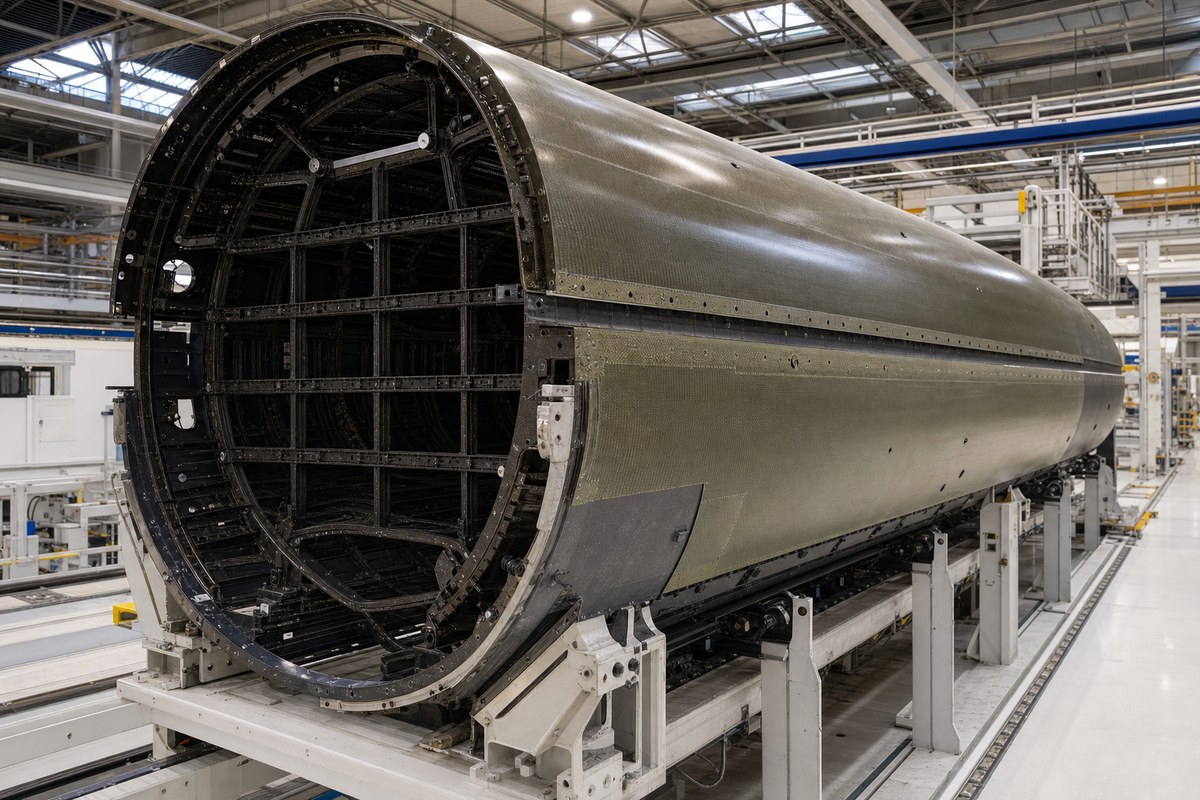
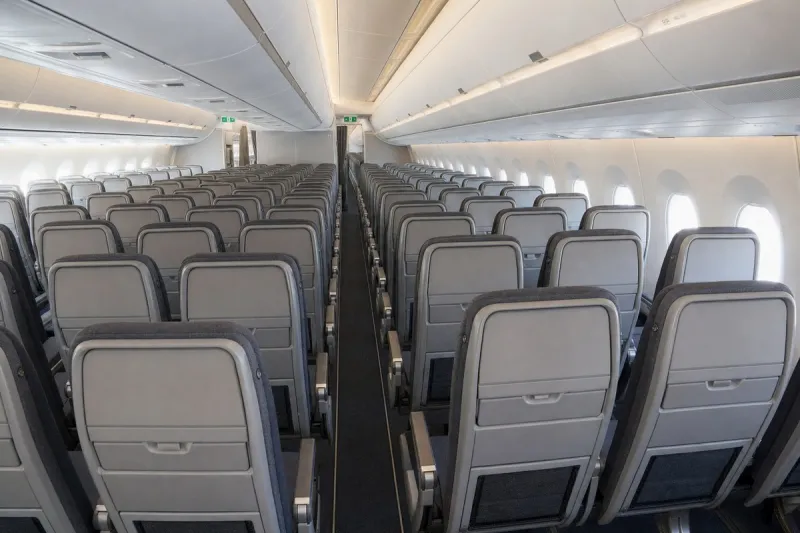
The divergence stems from tooling. A rotating mandrel used to wind carbon-fiber tape produces a perfectly circular cross-section. Airbus wanted more passenger space at shoulder level and therefore an egg-shaped, non-circular cross-section, which cannot be made on a barrel mandrel. The ovoid shape gives the A350 cabin an extra five inches (12.7 cm) of lateral clearance compared with its circular competitor and allows nine-abreast economy seating.
The panel approach also lets engineers vary composite ply depth by zone. The crown panel mainly carries longitudinal tension, while the keel panel handles compression, debris impacts and landing gear stresses. A wound barrel distributes layers relatively uniformly around its circumference, which adds unnecessary weight in low-stress areas. Airbus pairs the carbon panels with an internal frame of aluminum-lithium alloys, which resists corrosion and fatigue and allows major structural maintenance intervals of up to 12 years.
Airbus's decision also drew on early production problems with the 787. When completed barrel sections reached the assembly line, small out-of-spec gaps at the circular joints required manual installation of thousands of customized carbon shims, which slowed the line and delayed deliveries for months. The A350's four panels instead overlap in adjustable longitudinal lap joints over the internal frames, so variations can be absorbed and the skin segments riveted together without halting production.
The design also affects aircraft family growth. Stretching the 787 from the 787-8 to the 787-9 and 787-10 meant dealing with the rigidity of monolithic mandrels and large autoclaves, with retooling or replacing expensive spinning molds. To move from the A350-900 to the longer A350-1000, Airbus lengthened the longitudinal side panels and added constant-section frame bays, using the same jigs and automated fiber placement infrastructure with some modification.