Lufthansa Technik Study Finds Hydrogen Combustion Thermodynamically Feasible in Retrofitted APS3200 Auxiliary Power Unit
Why It MattersThe study points to hydrogen use in aircraft auxiliary power units through targeted modification of existing turbines rather than new engine designs, though physical validation is still outstanding.
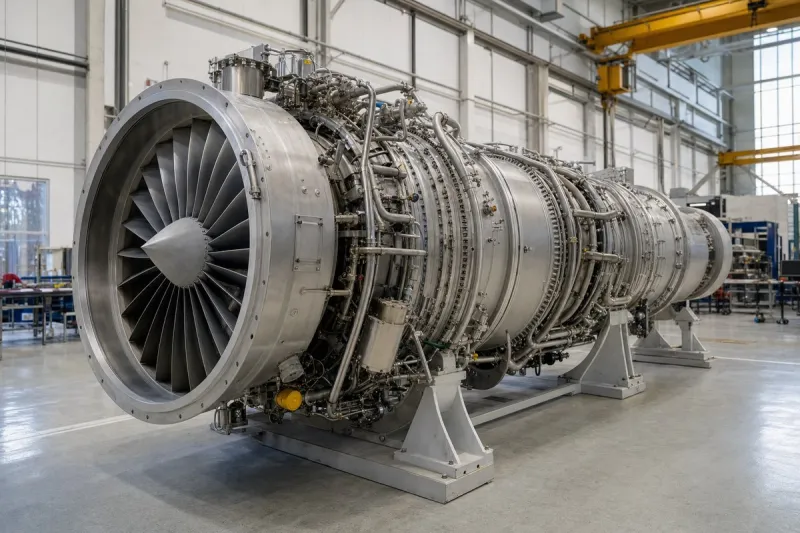
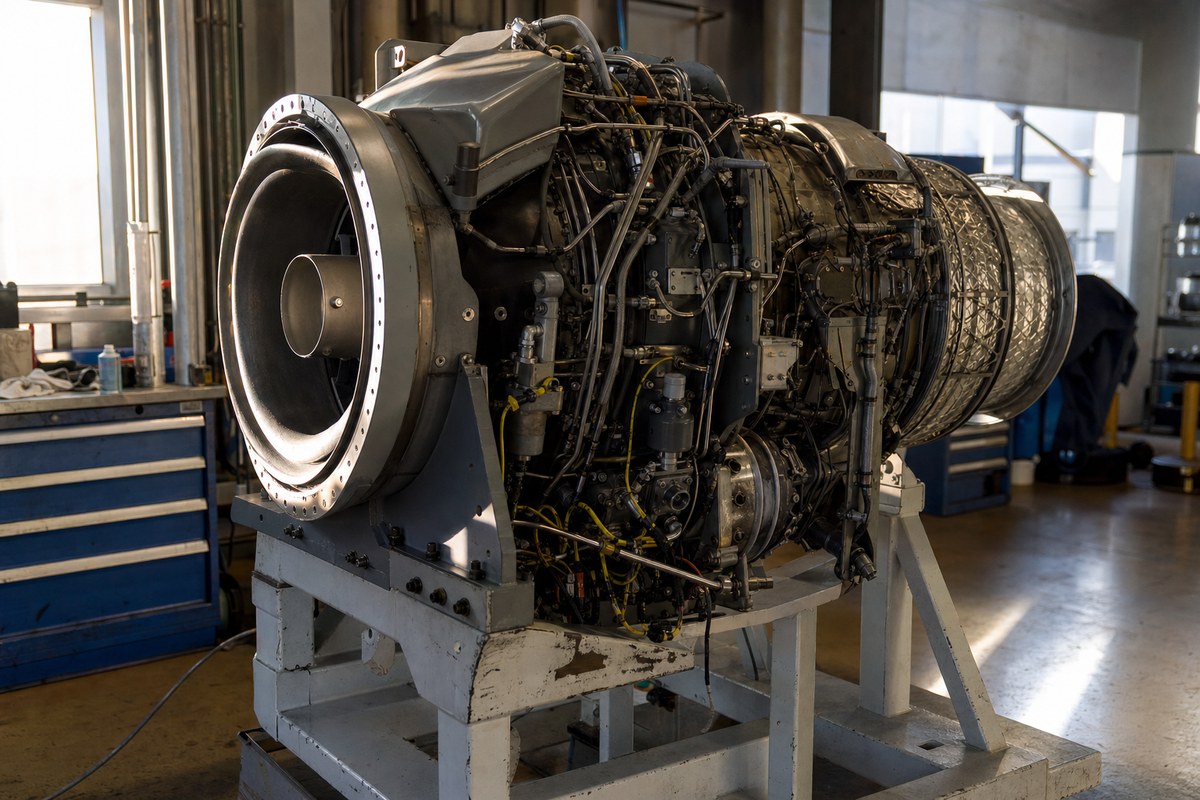
Lufthansa Technik researchers Lucia Menke and Lothar Kerschgens, of its Corporate Research and Innovation division in Hamburg, have published a feasibility study in Frontiers in Mechanical Engineering on converting an existing, serially produced gas turbine to burn hydrogen with minimal hardware changes. The work uses a zero-dimensional thermodynamic model, built in MATLAB 2021a, of an APS3200 auxiliary power unit, originally developed by Hamilton Sundstand and used on the Airbus A320. It is embedded in the Hydrogen Aviation Lab, a test facility for system-level hydrogen utilization in aircraft. The lab's boundary conditions are a fuel consumption rate supported by a 14-kilogram storage tank, a fuel system pressure of about 10 bar, and gaseous hydrogen at about 100 K. The model was based on maintenance test records from a serial APS3200 without additional instrumentation.
The kerosene baseline used a compressor pressure ratio of 8, a compressor outlet temperature of 623.15 K, an air mass flow of 2.2 kg/s, a kerosene flow of 0.0412 kg/s at a fuel-to-air ratio (FAR) of 0.02222, and a turbine entry temperature target of 1,293.15 K. For hydrogen, the study found that a FAR of 0.016173, equal to a hydrogen mass flow of 0.016006 kg/s and an equivalence ratio of 0.24737, enables safe and stable combustion. This sits just above the lean blowout limit of 0.24. Because primary-zone combustion reaches about 2,765 K, the dilution air fraction rises to 55.012 percent, or 1.21 kg/s within the 2.2 kg/s total. The authors report that a hydrogen flow of 0.047048 kg/s would not exceed the gas turbine design point, leaving a margin below the surge limit.
The authors state that the retrofit is not a drop-in replacement and requires targeted changes to combustor design, fuel metering, cooling management and control strategy. Nitrogen oxide emissions were excluded as outside the system boundary. The model could not be fully validated quantitatively because of limited test data, so outputs were checked against manufacturer data and literature for plausibility. Computational fluid dynamics analysis and experimental validation are identified as next steps.