Wisk opens 100-by-100-foot vertiport at Hollister Municipal Airport to test autonomous Generation 6 eVTOL
Why It MattersFAA-standard vertiport hardware tested against autonomous, low-visibility operations ties infrastructure rules to pilotless eVTOL, a gap the current interim guidance leaves open for passenger service.
Wisk Aero has opened a vertiport at Hollister Municipal Airport in California and put it into service for flight testing of its sixth-generation autonomous eVTOL aircraft, the Generation 6. The company cut the ribbon last Thursday (29) alongside local, state and federal authorities and announced the commissioning the following day. The 100-by-100-foot site (about 30 by 30 metres) sits next to test facilities Wisk already operated at the airfield in San Benito County. It was built to standards the FAA has published for vertiports, with elevated steel structures, integrated solar panels, energy banks and taxiway connectors, and the design is modular and relocatable so it can be reassembled at another airfield. Transceivers on the pad allow high-precision navigation to be tested in reduced or zero visibility, with the Generation 6, helicopters and other eVTOL aircraft.

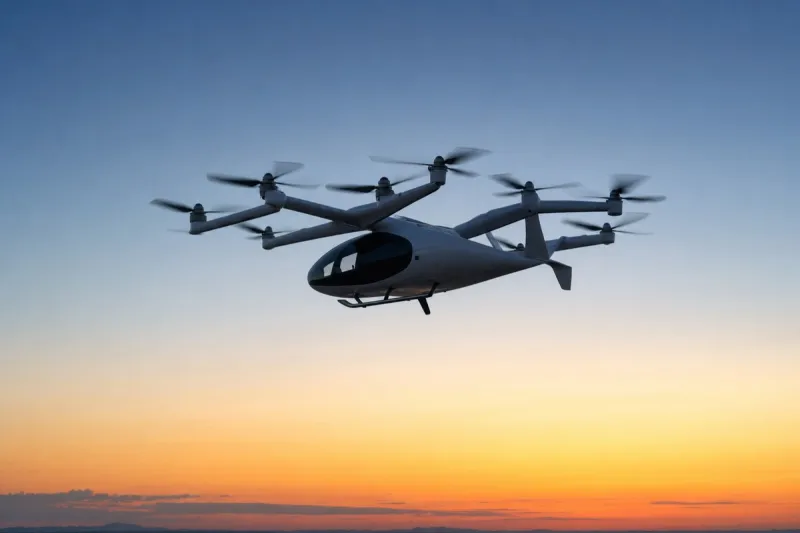
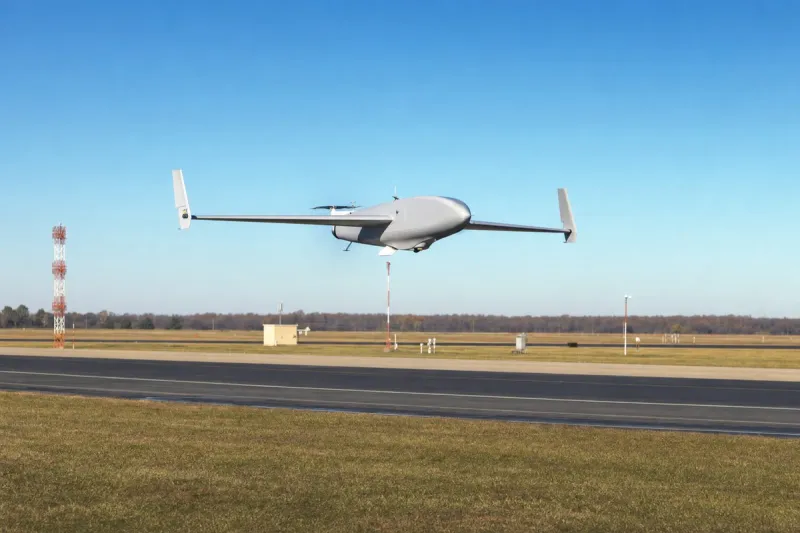
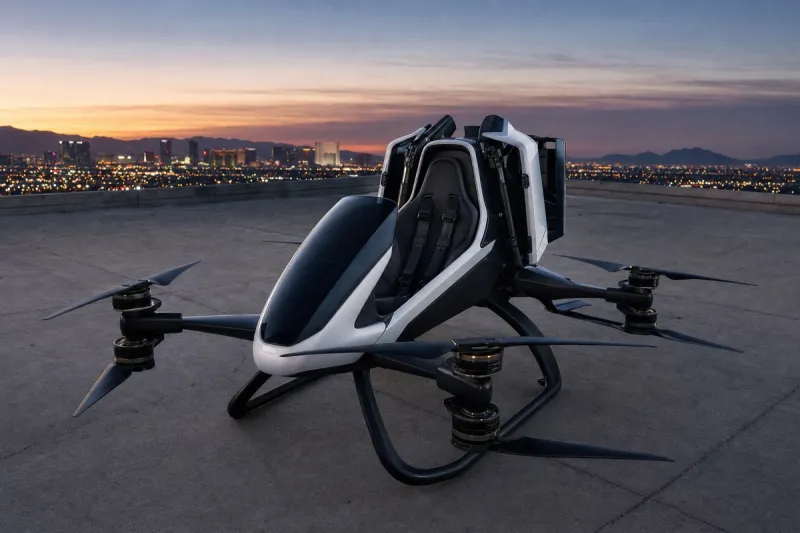
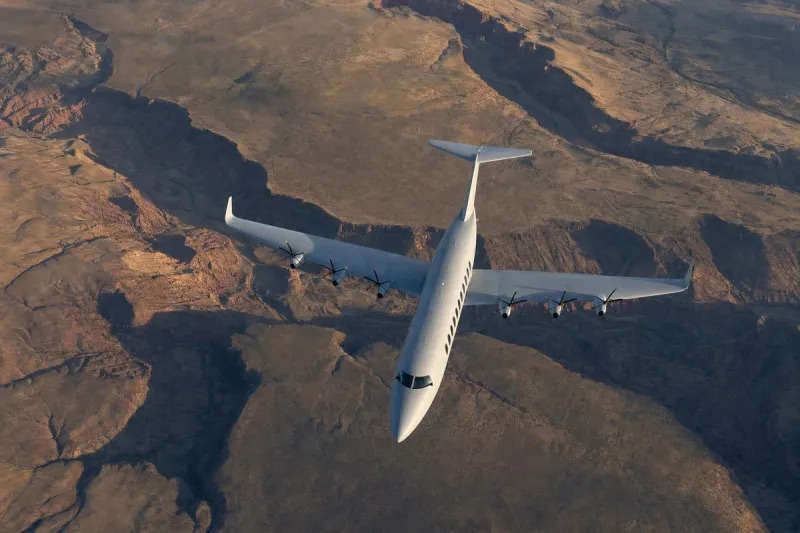
The Generation 6 is a fixed-wing eVTOL for four passengers with twelve propellers and supervision from the ground. Wisk quotes a range of 90 miles (144 km), a top speed of 120 knots (222 km/h) and a ceiling of 4,000 feet. It first flew on December 16, 2025 at Hollister, and two aircraft are in the test campaign. Wisk has accumulated more than 1,750 test flights across six generations of aircraft. A study released this year concluded that one ground supervisor can handle three autonomous aircraft simultaneously.
The FAA currently uses Engineering Brief 105A, an interim, voluntary guide limited to aircraft with three or more propulsors, a pilot on board, visual meteorological conditions and a maximum take-off weight of 12,500 pounds (5,670 kg), so it does not cover autonomous passenger operations. On October 22 the FAA published draft advisory circular AC 150/5390-4, which would replace it: the draft removes the aircraft limits, sets the touchdown area at the rotor diameter plus 10 feet, and sets an approach surface slope of 15 to 1 or shallower. Comments close on January 11, 2027.
Data from Hollister will feed the FAA's eVTOL Integration Pilot Program (eIPP), under which eight projects in 26 states were selected last March. Wisk participates through the Texas Department of Transportation project connecting Dallas, Austin, San Antonio and later Houston; the programme runs three years from first operation and requires every aircraft to be in an active type certification project.
Boeing agreed to sell Wisk, SkyGrid and Insitu to Archer Aviation in exchange for an equity stake of close to 19.75% (about 16.5% after new share issuance); the transaction, announced August 10, is pending closing. Wisk needs type, production and operations certifications, names Houston, Los Angeles and Miami as launch markets, and declares a cost target of 3 dollars per passenger per mile.