UAE-based Prometheus Medical International logs about 1,000 flying hours in three to four months, triple last year's level
Why It MattersMedical evacuation providers in the Gulf are logging far more flying hours than a year ago, with security-linked missions and multi-country coordination now central to how they operate.
Prometheus Medical International, a UAE-based provider of medical evacuation, emergency medical support and specialist trauma training, said its operations have involved approximately 1,000 flying hours over the preceding three to four months, covering both security work and medical evacuations. Chief executive Steven Wines said this was three times the number recorded during the same period last year. He made the remarks in an interview with Khaleej Times on the sidelines of Adipec 2026 in Abu Dhabi.

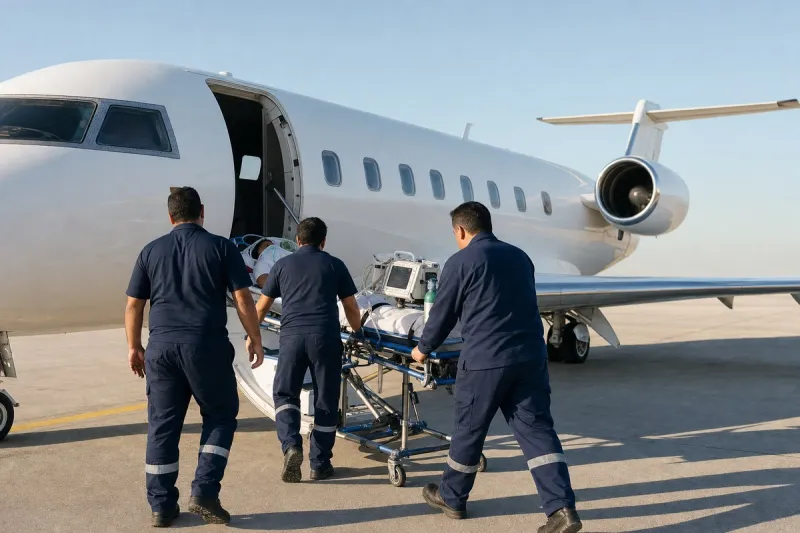
Wines described one evacuation in which a patient had to be moved from an area where aircraft could not fly. The team arranged ground transport in an armoured vehicle accompanied by a security team, coordinated the journey to a border where an aircraft could reach the patient, and helped arrange the necessary visas. After the patient crossed into the neighbouring country, an aircraft equipped with a mobile intensive care unit arrived with a doctor, a specialist paramedic and a nurse on board. The patient was flown to the UAE, where onward transfer to hospital was arranged.
Wines said coordinating every stage of an evacuation within one organisation, from case management, medics, land transport and security to air evacuation, in-flight medics, receiving the patient in the home country and hospital transfer, is critical, particularly when missions span several countries and shifting security conditions. He stressed that local networks and operational arrangements must be established before a crisis, saying mobilising after the event is impossible.
The company also works with major oil and gas and renewable energy producers, running regular simulations and drills whose findings feed into revised training and operational plans. For offshore operations, where helicopters may be grounded by bad weather or rough seas, Wines said experience with sea ambulances in Norway could inform alternative evacuation arrangements in the region.