Cirrus SR22 Pilot Survives In-Flight Engine Fire After Deploying CAPS Parachute in Brazil
Why It MattersThe case illustrates how whole-airframe parachute systems can convert an in-flight engine fire into a survivable outcome even when the aircraft itself is not recoverable.
What happened
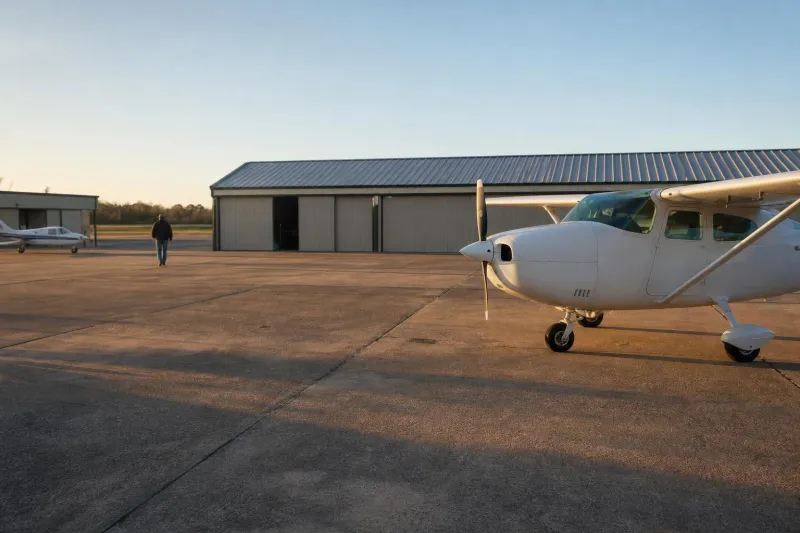
A pilot in Serra Azul, Brazil, survived an in-flight engine fire aboard a Cirrus SR22 on Tuesday after deploying the aircraft's Cirrus Airframe Parachute System (CAPS). The 29-year-old pilot was treated for smoke inhalation but suffered no other injuries.

An explosion and fire broke out in the engine compartment shortly after takeoff. Video footage showed the engine compartment in flames and smoke billowing from the aircraft as it descended under the parachute. The aircraft touched down in a field, and the pilot escaped before the plane was completely consumed by fire.
Industry impact & what to watch
This case belongs to a category of Cirrus SR22 incidents in which the CAPS parachute has been deployed after an in-flight emergency, giving the pilot a way down that does not depend on finding a runway or a suitable off-airport landing surface. An engine-compartment fire shortly after takeoff is among the more time-critical emergencies a single-engine pilot can face, since altitude and options are both limited at that phase of flight.
For the single-engine piston segment, the presence of a certified parachute system changes the calculus of what counts as a survivable failure: an engine fire that would otherwise force a forced landing into unknown terrain instead becomes a controlled descent to a field. The aircraft itself was not saved, since it was consumed by fire on the ground after the pilot got clear.
Brazilian authorities' investigation into the cause of the fire is the next thing to watch, since the ignition source in the engine compartment has not been determined.