Ukraine's Civil Aviation Faces Existential Crisis After 52 Months of Shutdown; Airport Reopening Plans Stall
Why It MattersProlonged airspace closure erodes an aviation sector's workforce, fleet and airport infrastructure faster than any phased reopening plan can rebuild it, turning wartime caution into a survival risk of its own.
What happened
Ukraine's civil aviation sector faces potential collapse after more than 52 months of shutdown since Russia's full-scale invasion began on 24 February 2022, according to a ZN.UA investigation based on interviews with representatives of the State Aviation Service, UkSATSE, Ukrainian airports, military officers and Israeli industry experts. Plans to reopen airspace are advancing slowly despite working groups, Israeli expertise reviews and a phased blueprint.

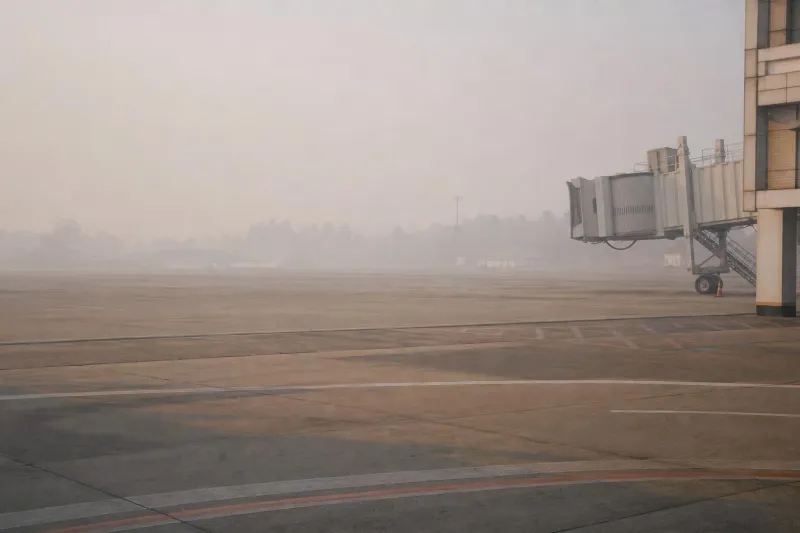
Before the invasion, Ukraine operated 14 active airports, six of which — Boryspil, Lviv, Odesa, Zhuliany, Kharkiv and Zaporizhzhia — handled 98 percent of passenger traffic and generated approximately €2.5 billion in revenue. Of those, only Boryspil and Lviv retain working infrastructure. Kharkiv and Zhuliany have sustained partial damage; Odesa and Zaporizhzhia have suffered serious destruction. Boryspil and Lviv have also taken strikes but, being state-owned, have received continuous partial funding and have been able to carry out immediate repairs.
UIA has been declared bankrupt and its aircraft will not fly again for want of maintenance. Windrose and SkyUp each have around two aircraft operating abroad. Skyline has kept approximately ten aircraft in active service on charter routes in other countries but is not positioned to take on a national-carrier role. Antonov Airlines operates only as a cargo carrier. Zhuliany, Kharkiv, Odesa, Zaporizhzhia and Lviv have lost between half and two-thirds of their personnel; at Boryspil, a partnership with the Kyiv Aviation Institute that advertised nearly 200 vacancies resulted in only eight hires.
How it unfolded
Investment requirements for restoring damaged airports are calculated, adjusted against the 2023 Report on the State of the Airport Sector.
After eight months of preparation, the stranded Turkish aircraft depart back to Türkiye.
Turkish military transport aircraft delivering humanitarian aid become stranded in Ukraine as the invasion begins.
Industry impact & what to watch
This case shows how a prolonged shutdown compounds rather than pauses damage: aircraft that cannot be maintained fall out of service permanently, staff who leave do not return in the numbers advertised, and infrastructure that once handled the bulk of a country's traffic requires new capital just to reach the readiness state it had before the war. Reopening in phases, starting with technical evacuation flights and moving to UN and humanitarian-flagged medevac operations, is designed to rebuild risk-management and insurance confidence gradually rather than in a single reopening of full commercial service.
The airport sector illustrates how ownership structure shapes recovery speed: state-owned Boryspil and Lviv received continuous partial funding and could begin immediate repairs, while Zhuliany, Kharkiv and Odesa now carry itemised airfield and terminal restoration costs in the tens to hundreds of millions of hryvnia before they can resume any operations. Officials themselves acknowledge that security standards cannot be fully relaxed even after any formal end to hostilities, given the persistence of the security threat from Russia.
Whether Lviv becomes the first airport to host technical evacuation flights, and how quickly the second-stage medevac phase advances under UN or humanitarian flags, will indicate whether the phased blueprint can outpace the continuing loss of aircraft, staff and airport readiness that the authors warn already threatens the sector's survival.