Study: Rising SAF Demand Could Open Market for Miscanthus and Switchgrass Grown in Southern U.S.
Why It MattersPerennial grasses could widen the feedstock base for sustainable aviation fuel beyond cooking oil and fats, but commercial-scale conversion technology and biorefineries still have to be built.
Sustainable aviation fuel (SAF) is produced from renewable resources such as animal fats, vegetable oils, grasses, food waste or agricultural residues, and can be blended with conventional jet fuel for use in existing aircraft. Demand is being driven by tighter environmental rules in Europe and from the International Civil Aviation Organization. The EU's ReFuelEU Aviation Regulation requires fuel suppliers at EU airports to supply SAF shares rising from 2% in 2025 to 70% in 2050, which also affects U.S. airlines flying international routes from European airports.
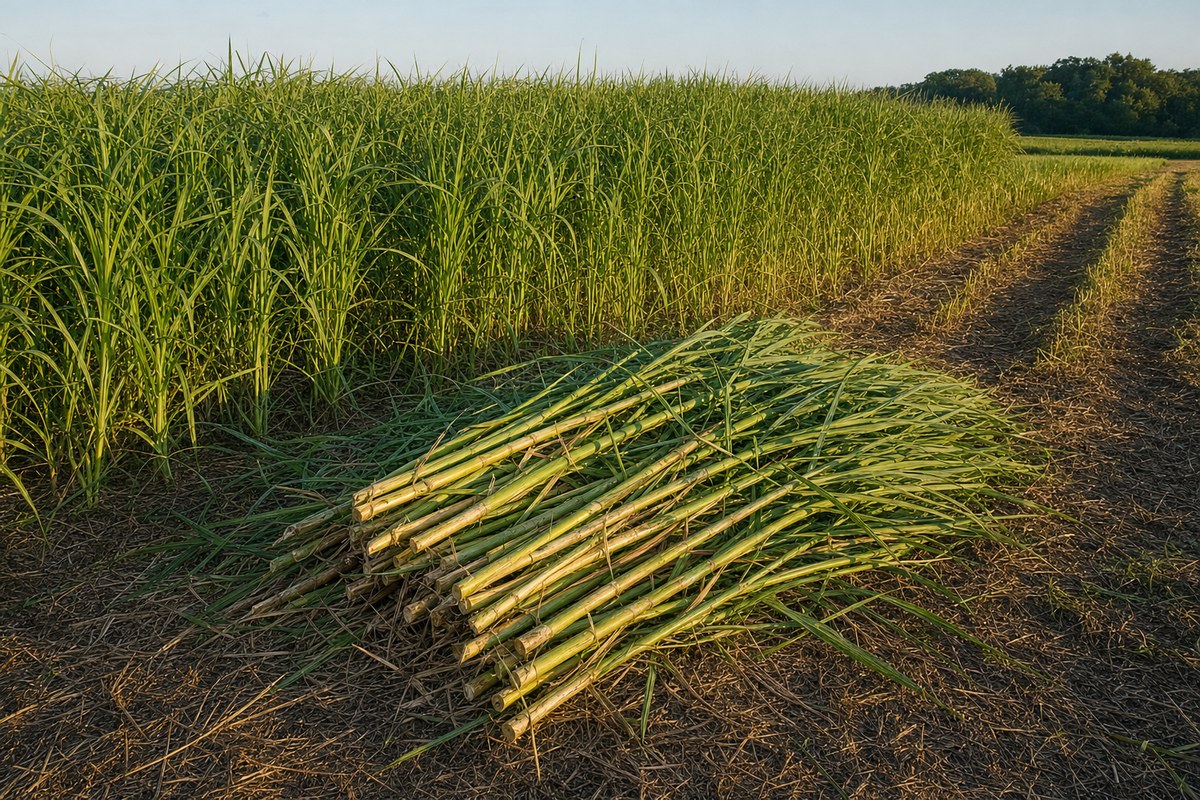
In the United States, the SAF Grand Challenge Roadmap Implementation Framework, created by the Departments of Energy, Transportation and Agriculture, sets goals of 3 billion gallons of SAF per year by 2030 and 35 billion gallons per year by 2050. The One Big Beautiful Bill Act extended the $1-per-gallon SAF tax credit to December 31, 2029. U.S. SAF production rose from about 5 million gallons in 2021 to 240 million gallons in 2025. Most of it is made from used cooking oil, animal fats or vegetable oils, but the Department of Energy identifies high-yielding perennial grasses such as miscanthus and switchgrass as promising feedstocks for large-scale production. Yields in the South are about 11 short tons per acre for miscanthus and about 6 for switchgrass, roughly 10-20% higher than in other regions, with relatively low land rent.
The study by Miao et al. (2026) estimates that at a biomass price of around $80 per short ton, U.S. farmers, particularly in the South, would find it profitable to supply enough feedstock for 3 billion gallons of SAF per year, which requires about 65 million tons of biomass annually. Production costs, including establishment, fixed and variable costs, are around $45 per ton per year, and farmers who switch from conventional crops could be better off by up to 7%. Projected miscanthus production is concentrated in Oklahoma, Kansas, Missouri, Kentucky, Tennessee, North Carolina and Virginia. Earlier expectations of a cellulosic biofuel market for these grasses in the late 2000s and early 2010s did not materialize because of high conversion costs, and technologies for converting switchgrass and miscanthus into SAF at commercial scale remain exploratory.