Private Jet Cabin Attendants Earn Median $106,000, With Pay, Schedules and Job Security Varying by Operator Type
Why It MattersLarge fleet operators and Part 91 owner-operators run fundamentally different cabin-crew models, so headline pay figures mask large differences in schedule control, duties and job security across the private aviation workforce.
What happened
Private jet cabin attendants work under very different conditions depending on their employer and the operator type, according to interviews with industry attendants and operators published by Private Jet Card Comparisons.
Large fleet operators such as NetJets, Flexjet and VistaJet use a floating-fleet model in which attendants commute to a crew base or domicile, paying their own way home while the operator covers positioning flights back to base. Attendants working for corporate flight departments and based private jets have no formal residence structure but tend to live near the aircraft.
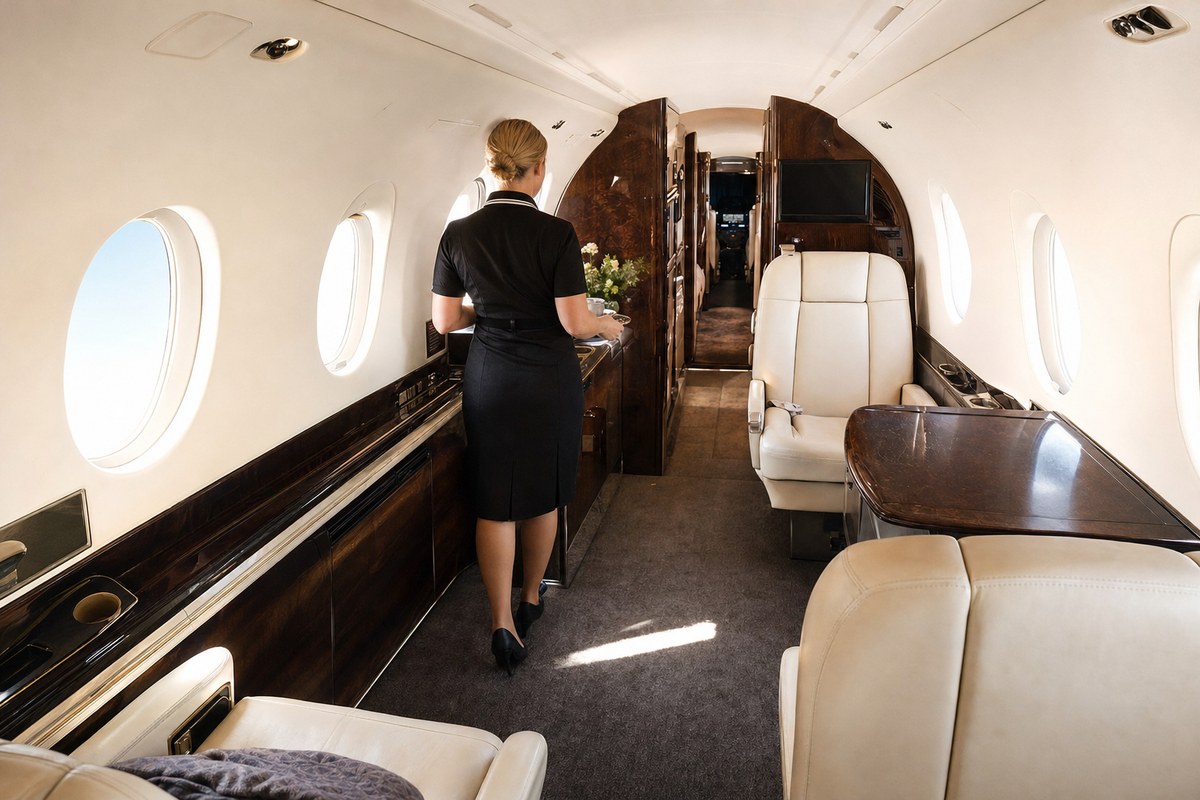
Before a flight, attendants assist pilots with pre-flight inspections, stock the pantry and prepare menus that vary by customer request. Marcey Decker, a private flight attendant with Solairus Aviation, said safety standards are more meticulous because the attendant is the only cabin crew member besides the pilots. A Flexjet spokesperson said anticipatory service, the ability to interpret an owner's unspoken cues, is the hardest quality to teach.
Jamie Gibson, a corporate flight attendant and founder of the networking platform Flightess, identified four main differences between roles: schedule predictability, scope, role creep and job stability. Large fleet operators give schedules in advance and have separate departments for catering and cleaning, while attendants for smaller owners may handle catering, provisioning, inventory and cabin standards, and may be asked to do work outside flying. Part 91 owners can sell aircraft and end a crew member's job suddenly.
Pay and labor market figures
The U.S. has about 131,000 flight attendants with a median salary of $67,000, and employment is projected to grow 9% against a 3% national average, with about 19,800 openings per year.
An industry survey puts the median private aviation attendant salary at $106,000, while the NBAA's 2026 Compensation Survey reported an average of $120,000 and an average base salary of $161,000 for senior attendants. Private attendants are typically paid a day rate when contracting, whereas airline attendants are paid by flight hours.
Industry impact & what to watch
The gap between a $106,000 median and a $120,000 average, and between those figures and the $161,000 senior base salary, shows that private cabin crew compensation is not a single market. Seniority, employer type and pay structure, day rate versus hours, all move the number, so a headline salary describes few individual jobs accurately.
The operator model shapes the job as much as the pay. Fleet operators offer advance schedules and separate catering and cleaning departments but require commuting to a domicile. Owner-operated Part 91 flying shifts provisioning, inventory and cabin standards onto the attendant and ties job continuity to the owner's decision to keep or sell the aircraft. That trade of predictability for scope is the main structural choice a candidate faces.
The 9% projected employment growth against a 3% national average, with about 19,800 openings per year, points to continued demand for cabin crew generally. How much of that demand reaches private aviation is the figure to look for in future compensation and workforce surveys.