Four Gulf Subsea Cable Projects Stall With the Conflict as Iran Threatens Cables Under Hormuz
Why It MattersStalled Gulf cable builds and threats to the Hormuz routes expose how exposed the region's connectivity is, with business aviation's digital operations among the services that depend on it.
Work on four new subsea cable systems in the Gulf has stalled with the conflict, even as construction continues on more than USD 100 bn of the region's major AI projects. Doug Madory, head of internet analysis at Infoblox, said installation is on hold for 2Africa Pearls, the Gulf extension of SeaMeWe-6, Ooredoo's Fibre in Gulf and the WorldLink Transit Cable. None of the cables already in service have been damaged so far. With the projects delayed indefinitely, he warned, growth in the region's IT sector could be held back for years.
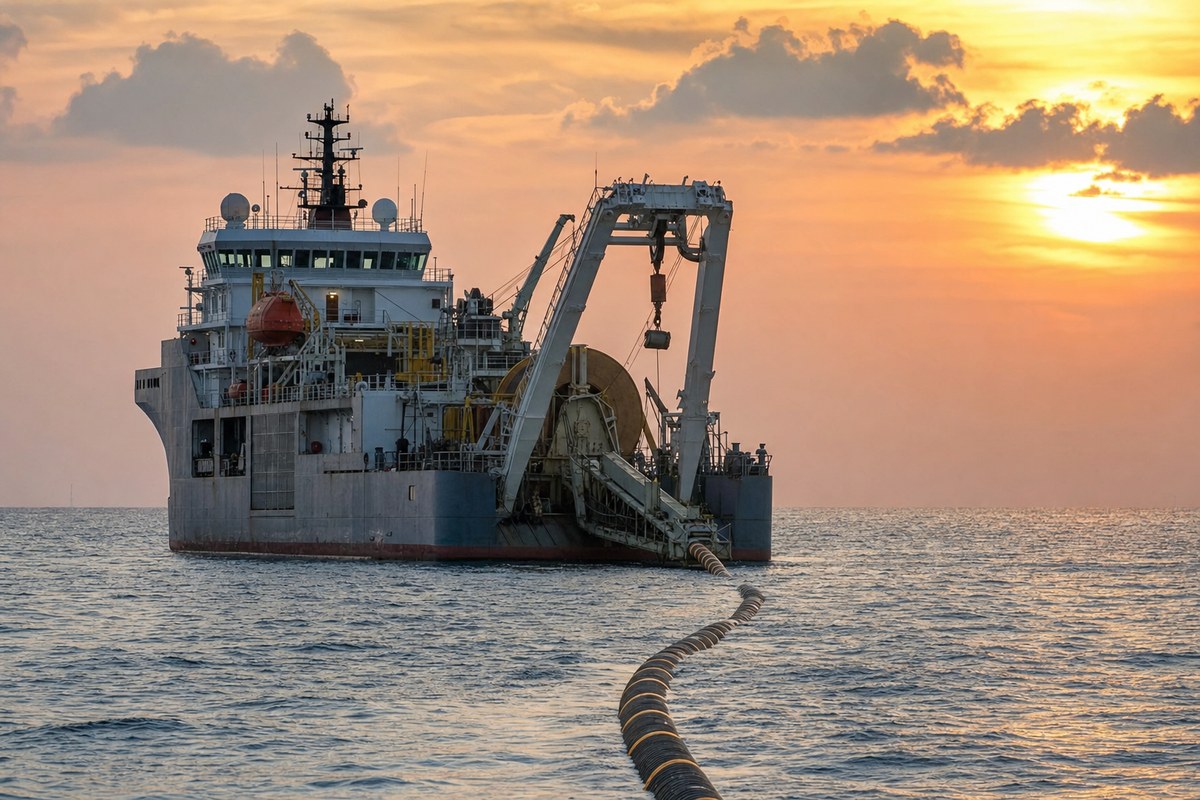
Iranian officials have threatened the cables running beneath the Strait of Hormuz. Two senior Iranian officials told Reuters last month that Tehran has drawn up plans to target the cables if attacks resume, and one said Iran would also try to block repairs. Islamic Revolutionary Guard Corps spokesperson Hossein Mohebbi referred to seven major internet cables beneath Hormuz. The Financial Times, citing Windward tracking data, reported that at least four Iranian-linked vessels made unusual movements around cable routes in the Gulf of Oman last month.
Less than 1% of global international bandwidth crosses Hormuz, according to the International Cable Protection Committee, citing TeleGeography. Iraq, Bahrain, Qatar and Kuwait depend on Hormuz for their direct submarine routes, though Bahrain, Qatar and Kuwait also have terrestrial links through Saudi Arabia, and Kuwait connects through Iraq as well. Iraq has signed agreements with the UAE's e& and Bahrain's Alliance to carry internet capacity across Iraqi territory toward Europe, following a similar agreement with Qatar's Ooredoo in September. Separately, Iranian drone strikes in March knocked out two of three availability zones in Amazon Web Services' UAE region and one zone in Bahrain's ME-SOUTH-1, according to Madory.