Whisper Aero Completes First Crewed Flights of Electric Swift 3 Glider in Tennessee
Why It MattersElectric propulsion validation for defense-linked logistics aircraft depends on incremental airborne testing that converts ground and acoustic data into government evaluation milestones.
What happened
Whisper Aero completed the first crewed flights of its eQ250 electric ducted fan propulsion system aboard a modified Swift 3 glider in Crossville, Tennessee. Test pilot Zac Majors flew three planned flights totaling more than 130 minutes.
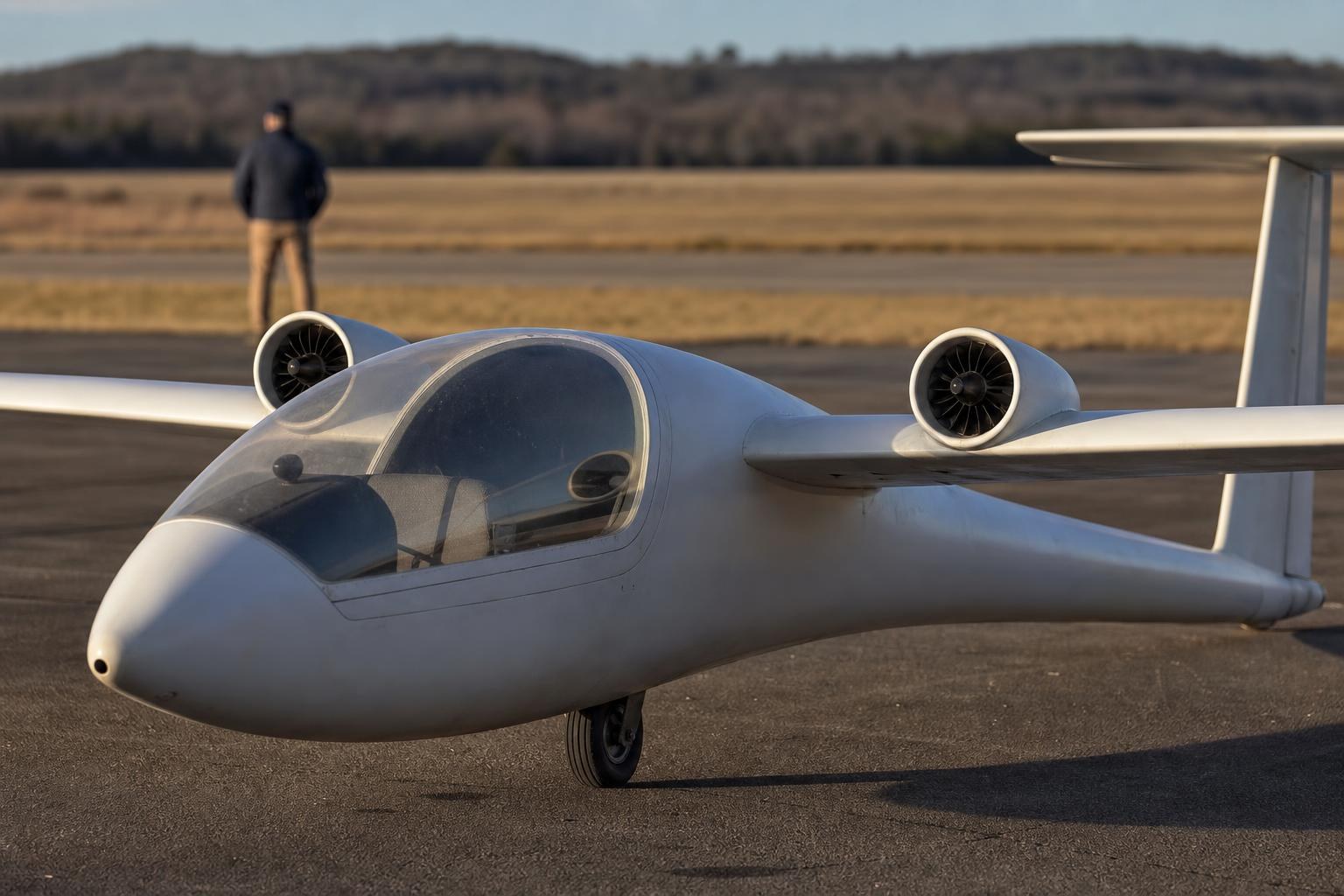
The aircraft carried two eQ250 electric propulsors, each capable of producing up to 85 pounds of static thrust, powered by five Electric Power Systems Epic 1.0 Energy modules. The Swift 3 glider was chosen in part for its 26-to-1 lift-to-drag ratio, and testing was conducted under FAA special airworthiness conditions. During early morning testing at 100 feet altitude, Whisper Aero recorded an aircraft noise level of 52 dB(A), compared with an ambient level of 34 dB(A).
The flight campaign followed progressively ballasted glider flights, aircraft integration work, formal readiness reviews, and 1,000 hours of propulsion life testing. Once airborne, engineers examined performance, handling, propulsion efficiency, thermal behavior, reliability, and acoustic characteristics.
How it unfolded
Whisper Aero announced completion of the first crewed flights, totaling more than 130 minutes across three flights.
Zac Majors flew three planned flights at 100 feet altitude, recording 52 dB(A) against a 34 dB(A) ambient level.
The eQ250 propulsion system underwent 1,000 hours of propulsion life testing.
Whisper Aero conducted progressively ballasted glider flights, aircraft integration work, and formal readiness reviews.
Industry impact & what to watch
This flight campaign belongs to the broader pattern of electric propulsion developers moving from static ground rigs to airborne demonstrators before pursuing government evaluation contracts. Using an existing high-efficiency glider airframe lets a propulsion company isolate performance, thermal and acoustic questions without also having to certify a new airframe.
Acoustic and thermal data of the kind gathered here typically become part of the technical package presented to potential government customers, since noise and reliability figures are what distinguish an electric ducted fan system from a conventional one for logistics or defense applications. The stated link to the Collaborative Logistics Aircraft program signals where this data is headed next.
Additional testing in Tennessee is planned before flight test and evaluation activities move to government customers; the pace and outcome of those evaluations will indicate whether the propulsion system advances toward an operational logistics or defense platform.