Skyway Aviation revenue rises 8.2% to N34.26bn in nine months as ground-handling expands
Why It MattersGround-handling growth that outpaces cost control shows how thin margins stay in volume-driven airport services, where heavy asset investment must be funded before revenue converts into profit.
What happened
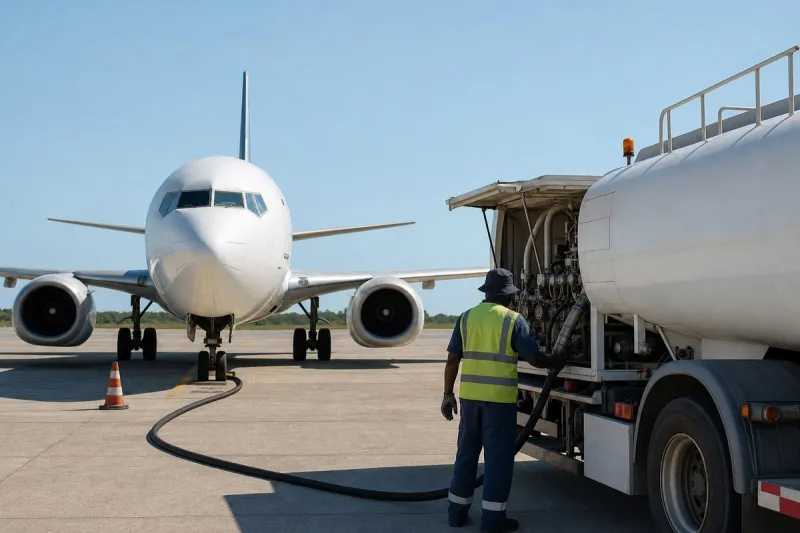
Skyway Aviation reported revenue of N34.26bn for the nine months ended 30 September 2026, against N31.68bn in the same period of 2025, an increase of N2.58bn or 8.2%. The company put the growth down to an expansion of its aviation ground-handling business, supported by increased business activity. The figures come from unaudited financial statements filed with the Nigerian Exchange Limited.

Direct costs climbed 16.54% to N16.37bn from N14.04bn, so gross profit moved up only 1.48%, to N17.89bn from N17.63bn. Other operating income rose to N515.96m from N304.38m, finance income to N264.58m from N81.25m, and finance expenses to N500.73m from N219.98m.
For the third quarter of 2026 alone, revenue was N11.23bn, up 5.83% from N10.61bn a year earlier. Direct costs fell to N5.63bn from N7.45bn, which lifted gross profit to N5.60bn from N3.16bn. Administrative expenses stood at N3.40bn against N2.76bn, other operating income at N166.99m against N87.06m, finance income at N130.57m against N15.31m, and finance expenses at N169.62m against N87.10m.
Balance sheet and cash flow
Total assets reached N87.79bn at 30 September 2026, compared with N82.69bn at the end of December 2025 and N53.02bn in September 2025, an increase of about 65.6% year-on-year. Non-current assets were N64.01bn versus N27.45bn, with property, plant and equipment at N57.25bn versus N21.88bn. Current assets stood at N23.78bn versus N25.58bn: trade and other receivables declined to N16.07bn from N19.39bn, inventories rose to N2.22bn from N1.82bn, and cash and cash equivalents were N5.50bn versus N4.37bn.
Shareholders' funds rose to N65.37bn from N36.98bn in September 2025 and N62.21bn at the end of December 2025. They include retained earnings of N23.46bn and a revaluation reserve of N33bn, with share capital at N676.79m and share premium at N4.78bn. Long-term borrowings increased to N2.57bn from N2.28bn and short-term borrowings to N1.40bn from N699.40m. Total current liabilities were N14.26bn against N9.82bn, and non-current liabilities N8.17bn against N6.22bn.
Net cash from operating activities rose 43% to N13.74bn from N9.61bn, with cash generated from operations at N15.47bn versus N11.20bn. Net cash outflow from investing activities increased to N11.63bn from N7.70bn, driven largely by N11.60bn of purchases of property, plant and equipment, against N7.65bn a year earlier. Financing activities produced a net outflow of N1.50bn versus N570.48m, including dividend payments of N1.62bn (N812.15m a year earlier), additional loans of N1bn and borrowing repayments of N877.54m. Cash and cash equivalents rose by N611.41m to N5.50bn.
Industry impact & what to watch
Ground handling is a volume business: revenue follows aircraft movements and the activity of the airlines and operators served, while labour, equipment and fuel-related inputs sit in direct costs. When direct costs grow at roughly twice the pace of revenue, as they did over the nine months, most of the added turnover is absorbed before it reaches gross profit. The third quarter points the other way, with direct costs falling and gross profit rising, so the nine-month picture is a mix of two quite different periods.
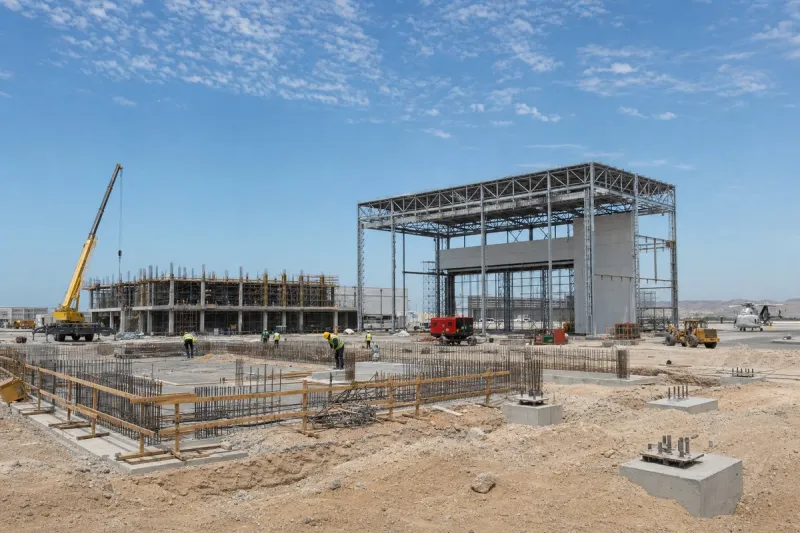
The balance sheet shows where the money is going. Property, plant and equipment more than doubled over the year, and N11.60bn of purchases of property, plant and equipment went through investing cash flow in the period. For handlers, capacity is capital-intensive and has to be in place ahead of the traffic that fills it, so the return on that spending lands in later periods rather than the one in which it is made.
The next filings are the test: whether the third-quarter fall in direct costs holds, and whether revenue growth starts to convert into gross profit at something closer to its own pace now that the asset base is larger.