Embraer EMB 110 Bandeirante, First Flown in 1968, Led to Embraer's Founding and 498 Deliveries
Why It MattersThe Bandeirante shows how a government-specified aircraft for rough, thinly served airfields can seed a national manufacturer whose export reach comes from a niche that larger established builders had left open.
What happened
The Embraer EMB 110 Bandeirante, a twin-turboprop transport, made its first flight on 22 October 1968 from an unpaved runway at the Aerospace Technical Center in São José dos Campos, Brazil. Major José Mariotto Ferreira and flight engineer Michel Cury flew the 50-minute sortie, and the prototype was presented to officials and the press on 26 October.
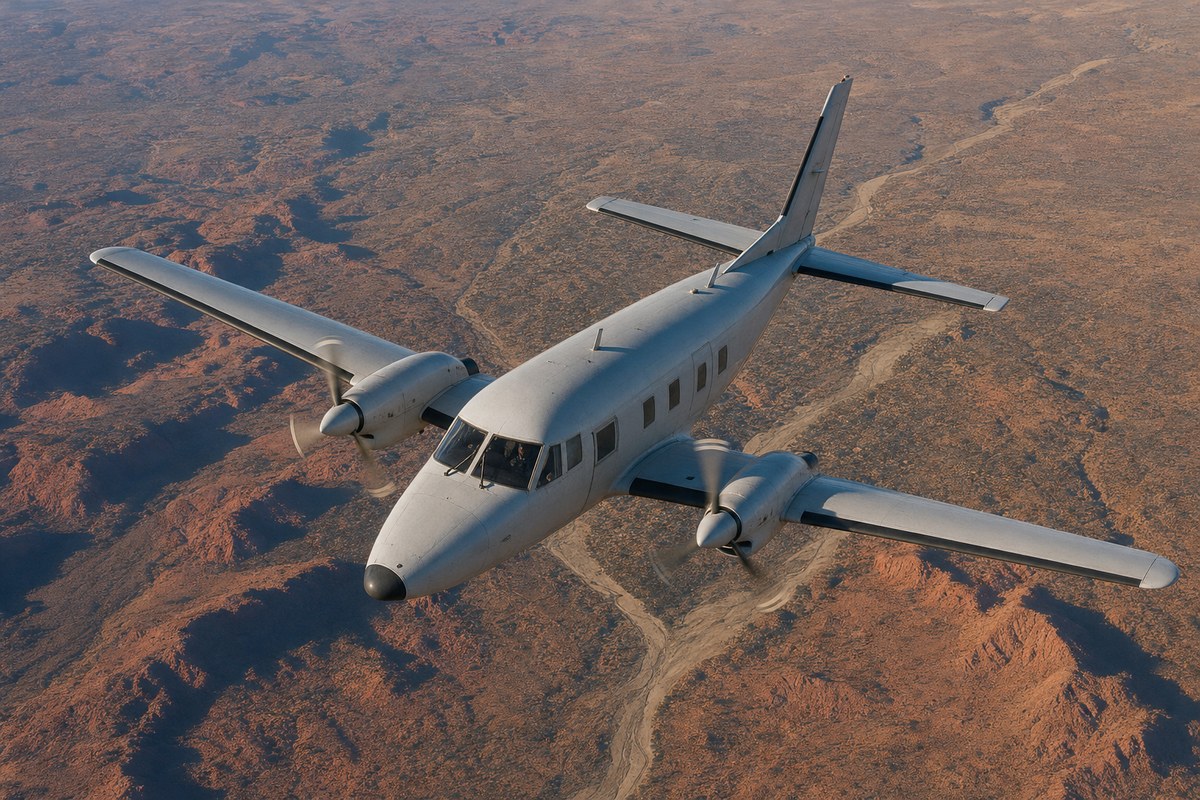
The aircraft answered a 1965 Brazilian Ministry of Aeronautics call for a cheap, reliable turboprop for small, rough airfields. Airlines served 45 Brazilian communities in the 1960s, down from 360 a decade earlier. The project, numbered IPD-6504, was designed by French engineer Max Holste and led for the CTA by Ozires Silva, and it was named Bandeirante after 17th-century pioneers of Brazil's interior. The first prototypes, later called EMB 100 and YC-95, had eight seats, round windows and two Pratt & Whitney Canada PT6A-20 turboprops.
On 19 August 1969, Decree 770 created Empresa Brasileira de Aeronáutica (Embraer), with Silva as first managing director and an initial order for 80 Bandeirantes for the Brazilian Air Force. The aircraft was redesigned as the EMB 110 with a longer fuselage, square windows and 680 shp PT6A-27 engines. The Brazilian Air Force received its first C-95 on 9 February 1973, and Transbrasil took the first airline example two months later.
The Uruguayan Air Force became the first export customer in 1975, and Air Littoral of France the first foreign airline customer in 1977. On 8 July 1985, a 15-seat Bandeirante flew from Waterford to London Gatwick on the first Ryanair flight. Embraer delivered 498 Bandeirantes to customers in 36 countries before production ended around 1990, and the pressurised, 30-seat EMB 120 Brasilia was the successor.
In October 2018, about 150 Bandeirantes were still flying with airlines, air taxis, government agencies and air forces worldwide. TAG Airlines in Guatemala has kept them in regular service into the 2020s.
How it unfolded
Production ends after 498 deliveries; the EMB 120 Brasilia succeeds it.
A 15-seat Bandeirante flies Waterford to London Gatwick on the first Ryanair flight.
Air Littoral of France becomes the first foreign airline customer.
Uruguayan Air Force becomes the first export customer.
Brazilian Air Force receives its first C-95; Transbrasil takes the first airline example two months later.
Decree 770 creates Embraer, with an initial order for 80 aircraft for the Brazilian Air Force.
Prototype presented to officials and the press.
First flight from an unpaved runway at São José dos Campos, a 50-minute sortie.
Brazilian Ministry of Aeronautics calls for a cheap, reliable turboprop for small, rough airfields.
Industry impact & what to watch
The Bandeirante's origin is a requirement written around operating conditions rather than around an existing product: small communities, rough airstrips, and a fall from 360 served communities to 45 over a decade. The airframe came after the problem was defined, and a state-created manufacturer followed the airframe, with the Air Force order for 80 aircraft supplying the initial demand that a new company needed.
That sequence explains why regional turboprop markets have historically rewarded builders who design for austere operations first and passenger comfort second. The redesign from round to square windows, a longer fuselage and more powerful engines shows the usual path: a proving prototype, then a production aircraft sized to what customers would actually buy. Exports then came in stages, from an air force customer to a foreign airline, and the 498 deliveries across 36 countries came from that gradual widening.
The long service life is the other lesson for the segment. An airframe type still in regular airline service decades after production ended, as at TAG Airlines in Guatemala, keeps a support and spares market alive well beyond its sales window, which matters to anyone pricing older turboprops. The count of about 150 aircraft flying in October 2018 is the most recent fleet figure on record here, and any newer census would show how much of that tail remains.