Embraer posts record Q3 revenue of $2.3 billion, raises 2026 revenue and free cash flow guidance
Why It MattersEmbraer's results show executive jets and aftermarket services lifting margins while commercial aviation stays thin, and capacity spending to reach 200 executive units by 2028 signals sustained demand.
What happened
Embraer S.A. reported record third-quarter revenue of $2.3 billion, up 17% year over year, with revenue and margin expansion in all four business units. Adjusted EBIT was $255 million, a 10.9% margin versus 8.6% a year earlier (9.4% excluding U.S. import tariffs). Adjusted net income was $74 million, a 3.1% margin versus 4.2% a year ago, affected by higher financial expenses from the mark-to-market of the long-term incentive plan and higher taxes. Free cash flow was $628 million in the quarter, excluding Eve, and backlog reached an all-time high of $35.7 billion, up 14% year over year.

The company raised its 2026 revenue guidance to $8.4–$8.6 billion and its adjusted free cash flow guidance to $700 million or higher, while keeping its adjusted EBIT margin target at 10%–10.6%. Delivery targets of 80–85 commercial and 160–170 executive aircraft were maintained.
Embraer delivered 22 commercial and 41 executive jets in the quarter. Year to date, it has delivered 52 commercial jets (63% of the guidance midpoint) and 115 executive jets (70% of the midpoint), both above five-year averages. Orders included 28 firm E2 orders at Farnborough, eight additional aircraft from ANA, and a new E2 customer in Japan Airlines. The Phenom 300EV was launched. In defense, Colombia ordered two KC-390s, Greece ordered three with an option for three more, and Embraer agreed a partnership with Mahindra for a local assembly line in India.
Segment results
Commercial Aviation revenue rose 13% to $696 million with an adjusted EBIT of $70 million (2.4% margin), supported by supplier compensation that management said was in the single-digit millions.
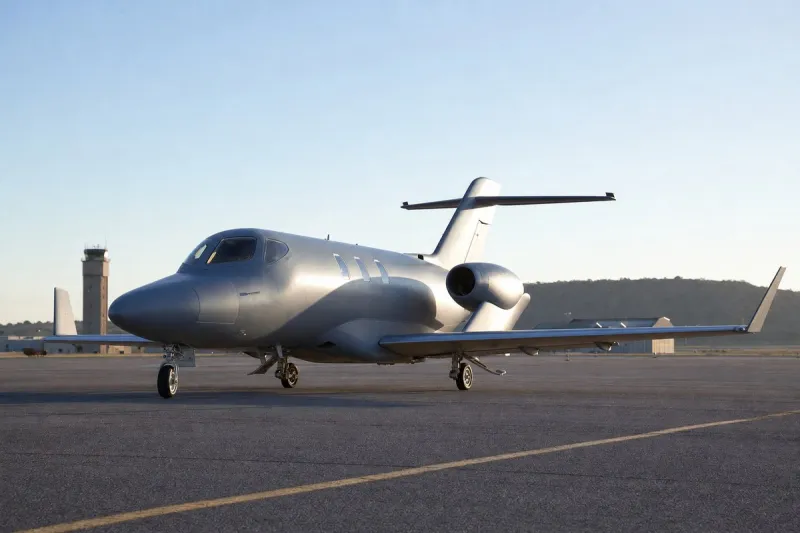
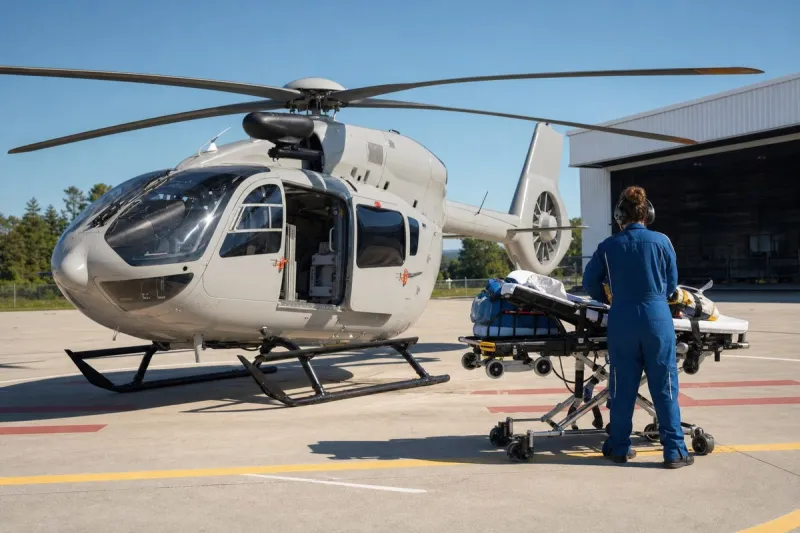
Executive Aviation revenue rose 12% to $655 million with a 16% margin, on higher prices and product mix; its record backlog is $8.2 billion, up 12%. Defense & Security revenue rose 22% to $341 million with a 15.7% margin on higher KC-390 volumes. Service & Support revenue rose 30% to $638 million with a 17% margin and about 330 basis points of operating leverage.
Outlook and spending plans
For the fourth quarter, management expects Commercial Aviation margins in line with last year's average, with a better customer mix, and targets mid-single-digit Commercial Aviation margins by 2028.
Defense margins are not expected to stay at Q2/Q3 levels because of contract adjustments tied to cost inflation in Brazil, but should still be around double digits for the year. Capital expenditure is projected to rise temporarily to $500–$550 million in 2027–2028 to expand executive aircraft production toward 200 units a year by 2028, before returning to about $400 million.
Industry impact & what to watch
The mix of Embraer's earnings is the structural point. Executive Aviation at a 16% margin and Service & Support at 17% carry profitability, while Commercial Aviation at 2.4% remains thin. For a manufacturer with a record $35.7 billion backlog, margin quality depends less on airliner volume than on pricing, product mix and aftermarket work, which is how the higher-margin segments are earning their place in the results.
The planned step-up in capital spending to $500–$550 million across 2027–2028, aimed at roughly 200 executive aircraft a year by 2028, shows the company committing production capacity to business-jet demand it expects to persist. Backlog of $8.2 billion in Executive Aviation alone gives that expansion a visible order base, and the defense orders from Colombia and Greece add to a second source of volume.
The next markers are concrete: whether the Commercial Aviation margin lands in line with last year's average in the fourth quarter, and whether defense margins settle around double digits for the year once the Brazil cost-inflation contract adjustments take effect. The mid-single-digit commercial margin target for 2028 is the longer test of the mix argument.