New US Commercial Runways Cost From $100 Million to Over $1.1 Billion, With Federal Grants Carrying Much of the Load
Why It MattersRunway economics are dominated by land, environmental work and site conditions rather than paving, so federal grants and years of lead time, not construction price alone, determine which capacity projects get built.
What happened
Building a new commercial airport runway in the United States typically costs between $100 million and more than $1.1 billion, depending on site conditions, land acquisition and project scale.
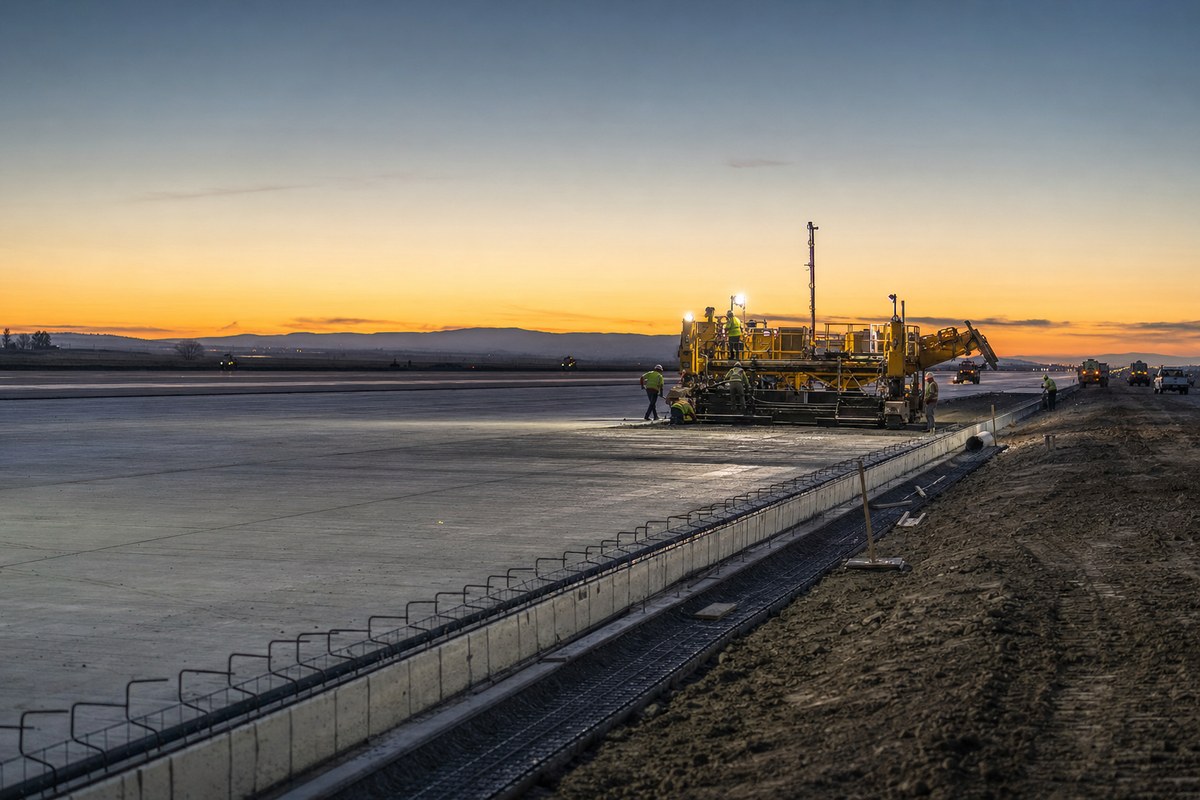
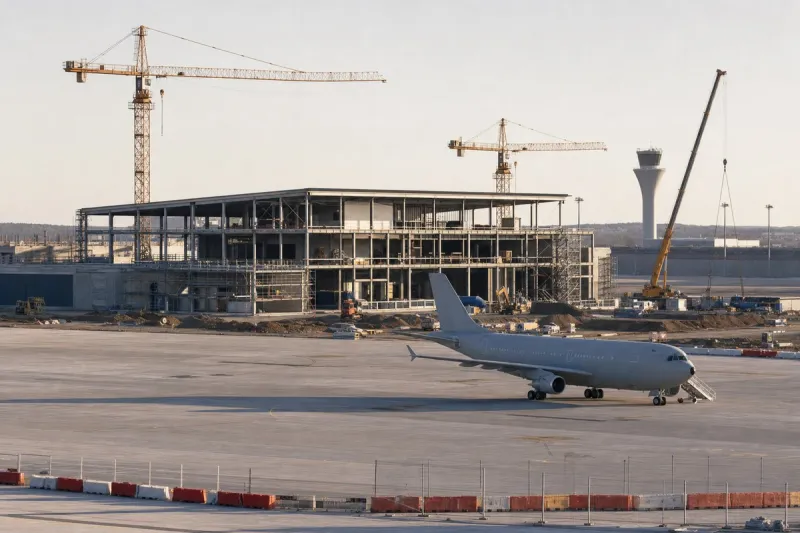
Raleigh–Durham International Airport (RDU) is building a new 10,639-foot (3,242-meter) Runway 5L-23R with a total program budget of about $1.1 billion. Aspen/Pitkin County Airport (ASE) has budgeted about $269 million for a wider airfield and terminal modernization program and recently received a $37 million Airport Improvement Program (AIP) grant.
Basic airfield paving contracts run from roughly $26 million to more than $42 million per mile, depending on pavement thickness, shoulder requirements and lighting complexity. Paving is only a fraction of the total: greenfield projects also need large outlays for land acquisition, environmental mitigation and the relocation of roads and utilities. Soil composition, drainage, topography and environmental mandates are major cost drivers, and earthwork and site grading often take a large share of the initial budget. Commercial runways require P-501 concrete or deep-section P-401 asphalt.
Many operators rely on federal support such as the FAA's AIP and Airport Infrastructure Grants funded through the Bipartisan Infrastructure Law. Airlines and airport bodies disagree over when to build: carriers press for cost-benefit analyses to guard against higher landing fees, while ACI North America argues long-term investment prevents regional delays. Ryanair CEO Michael O'Leary publicly criticized the €5.6 billion investment in Dublin Airport (DUB), citing a lack of growth.
Alternatives to new construction
Alternatives include full-depth pavement rehabilitation, high-speed exit taxiway optimization and airspace redesigns. Mill-and-overlay rehabilitation costs a fraction of new construction and can be done during short closures, but it cannot add movement capacity once slots are full.
A parallel runway is the only permanent fix for simultaneous arrival and departure delays. Land acquisition, road relocation and environmental review can add five to ten years of pre-construction lead time. Phased construction can temporarily reduce capacity, and supply-chain problems for lighting and asphalt binder add further pressure.
Industry impact & what to watch
The wide spread between $100 million and $1.1 billion shows that a runway's price is set less by the pavement than by everything around it. When paving is only a fraction of the budget, land, environmental mitigation, utility and road relocation, and earthwork decide where a project lands in that range. Two airports building similar-looking runways can face very different bills for reasons that have little to do with the runway itself.
That structure explains why federal grant programs carry so much weight. A $37 million AIP award against a $269 million program, or Bipartisan Infrastructure Law funding behind a $1.1 billion build, changes whether a project is feasible at all. It also feeds the airline–airport dispute over timing: carriers worry about landing fees funding the debt, while airport bodies argue that waiting prolongs delay.
The decision between rehabilitating and building is then largely a question of whether slots are already full. Overlay work is cheap and quick but adds no movements once capacity is saturated, while a parallel runway solves the delay problem permanently at the price of a pre-construction timeline that can run five to ten years. Capacity-constrained airports are effectively committing to a decade-scale horizon the moment they choose to build.