Aviation Safety Assurance Confronts AI: Formal Verification and ASTM F3269-21 Runtime Assurance Seen as Bridge to Certification
Why It MattersCertification for AI avionics is likely to hinge less on proving the model itself than on bounding it with a certified deterministic monitor, shifting the assurance burden onto architecture and verification tooling.
What happened
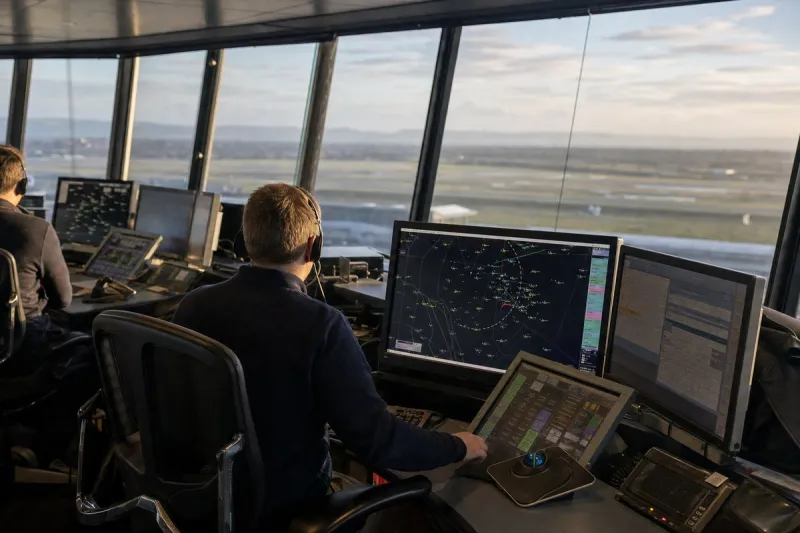
Adnan Masood, PhD, has published an article examining how artificial intelligence is reshaping aviation safety assurance, the engineering discipline of showing that airborne and ground systems will not cause a catastrophic failure more than once in a billion flight hours (10⁻⁹).

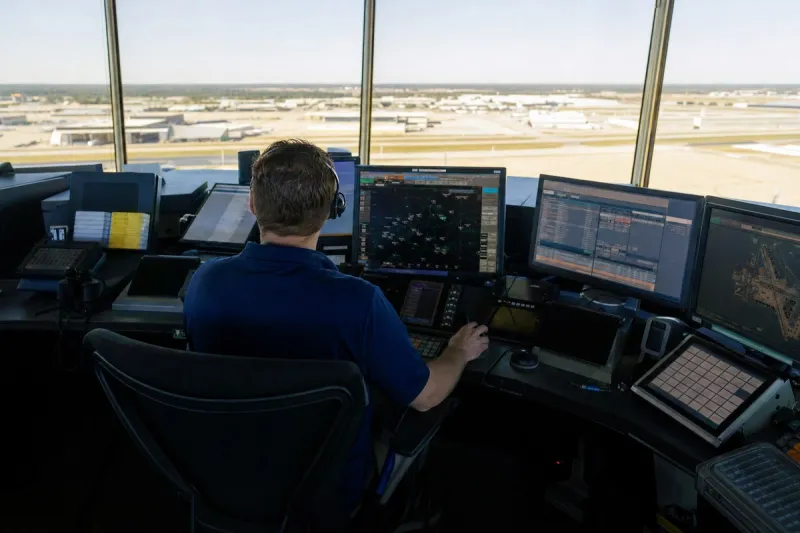
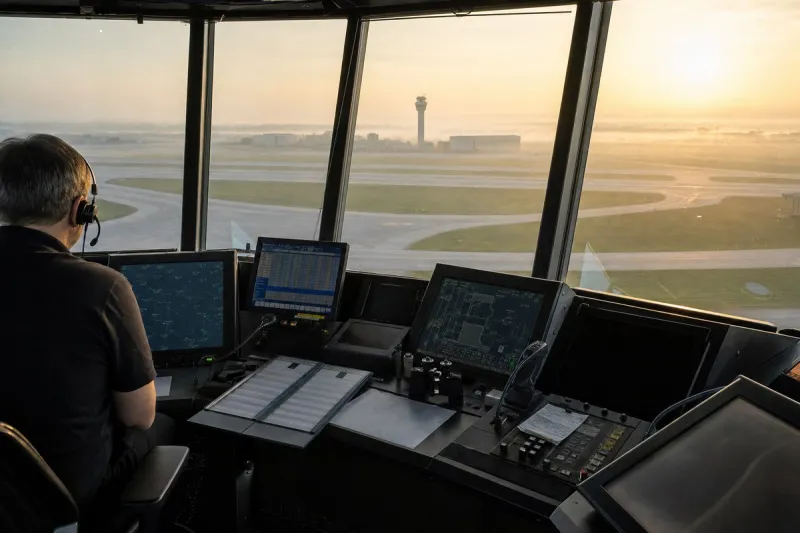
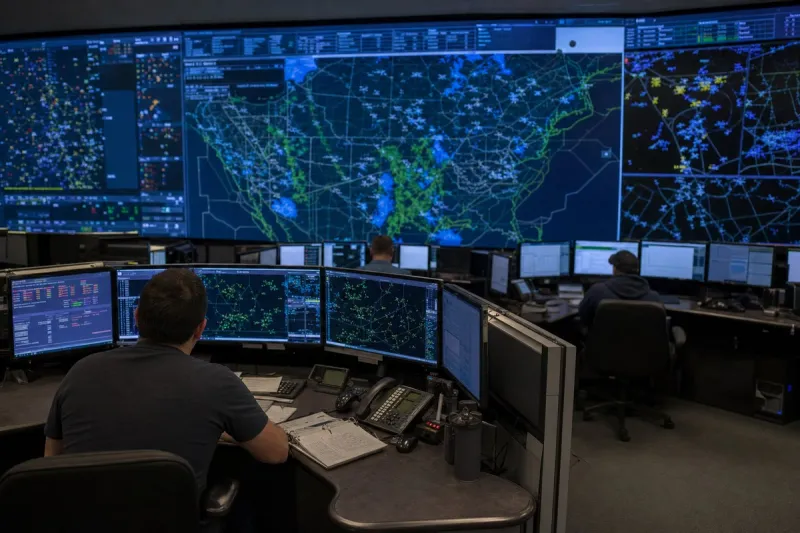
The piece lists AI applications spreading across the airspace stack: the FAA's cloud-based SMART flow planner and Graph Neural Networks; HAAWAII's acoustic readback-error detectors, which achieve 82 percent detection; and Airbus DragonFly's vision-guided landing tests.
Masood argues these systems collide with deterministic certification standards. RTCA DO-178C Level A requires Modified Condition/Decision Coverage (MC/DC) to verify every Boolean code branch, a test that fails when system behavior is implicitly encoded across millions of floating-point neural weights.
To bridge the gap, the article describes pairing formal mathematical verification solvers, namely Reluplex, Marabou and α,β-CROWN, which prove exact reachability bounds on compact ReLU networks, with ASTM F3269-21 Runtime Assurance. Under that approach, complex AI models are caged inside a DO-178C-certified Simplex safety monitor.
Industry impact & what to watch
The argument points at a structural split in how AI can reach certified aviation systems. Coverage-based testing of the kind DO-178C Level A demands was built for software whose logic can be read branch by branch, and a trained network does not expose its behavior that way. The proposed answer does not try to make the network itself pass MC/DC. It leaves the model uncertified in the traditional sense and moves the safety case onto a surrounding monitor that is.
That has consequences for how suppliers and integrators would plan certification work. Effort shifts toward defining the safe envelope the Simplex monitor enforces, toward demonstrating that the monitor can always take over, and toward solver-based proofs such as Reluplex, Marabou and α,β-CROWN, which the article describes as proving reachability bounds on compact ReLU networks. Proof on compact networks is a narrower claim than proof on any AI model, so the size and type of network placed inside the cage will shape how far this route extends.
The items to track are concrete ones: whether certification authorities accept ASTM F3269-21 runtime assurance as the basis for approving AI-driven functions, and whether the verification tools named in the piece can be applied to the models behind the SMART planner, HAAWAII's readback detection and DragonFly's vision-guided landing work.