FAA Proposes Expanding Class C Airspace at President Donald J. Trump Airport in West Palm Beach
Why It MattersAirspace redesigns around busy commercial airports pull general aviation traffic into closer coordination with ATC, and the rulemaking comment window is where operators' operational data can shape the final boundaries.
What happened
The FAA issued a notice of proposed rulemaking (Docket No. FAA-2026-AWA-1 series, 26-AWA-1) to amend the Class C airspace at President Donald J. Trump Airport (DJT) in West Palm Beach, Florida. The agency says the proposal is intended to improve the management of air traffic operations and reduce the potential for midair collisions in the West Palm Beach terminal area. The document is scheduled to be published in the Federal Register on 2026-11-13.
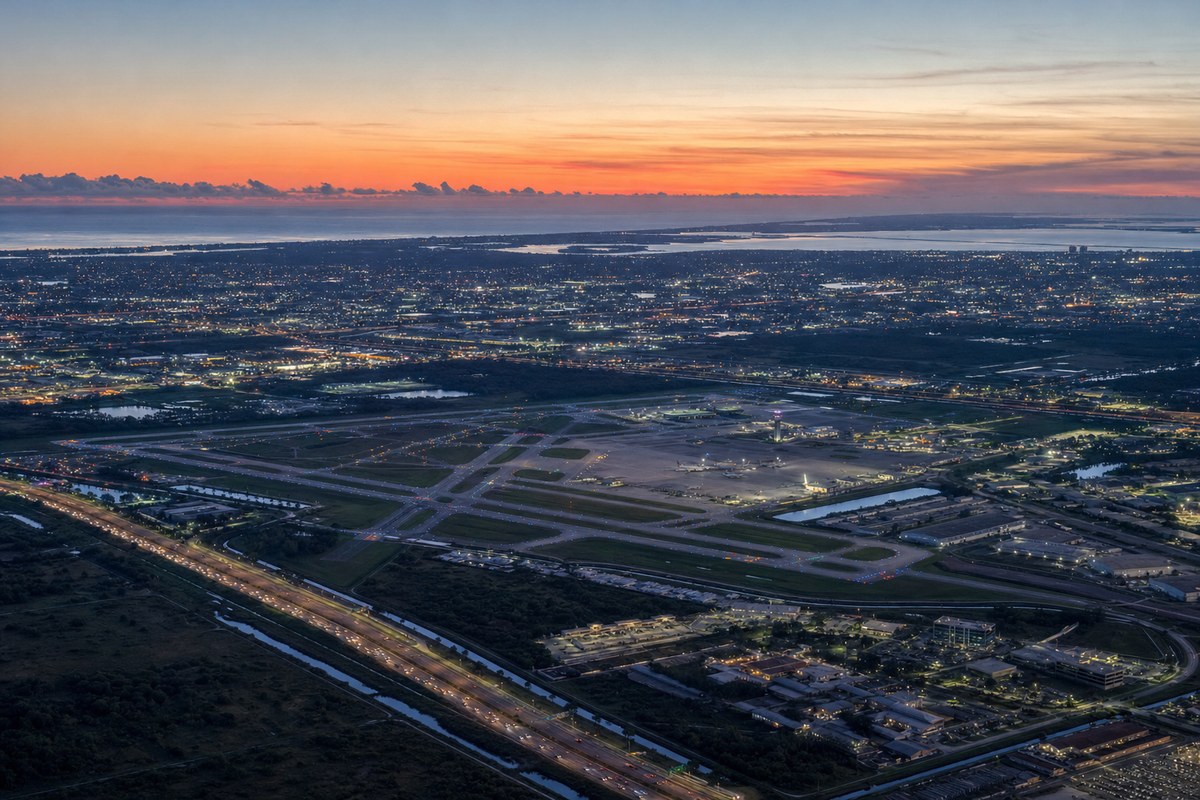
The airport's name changed under a May 14, 2026 final rule (Docket No. FAA-2026-4532, 91 FR 27198), which renamed Palm Beach International Airport (PBI) as President Donald J. Trump Airport; the information gathered under the former name is unchanged. DJT lies three miles west of the city of West Palm Beach, and Palm Beach County Park Airport (LNA), a non-towered reliever airport, sits about five miles to the south. DJT ATC manages 6 airports with operational control towers and 19 non-towered satellite airports in the area.
The FAA's rationale rests on traffic growth and observed conflicts. Operations at DJT peaked at 20,500 in March 2023, up from 13,900 in March 2020, and general aviation activity at nearby airports has also increased. An FAA staff study in August 2023 identified a need to modify the existing Class C airspace. A sampling from February 16 to March 23, 2023 (36 days) recorded over 115 instances in which an aircraft receiving ATC services to or from DJT had to be given a nonstandard climb, descent, or vector to avoid nonparticipating aircraft.
DJT continues to qualify for Class C airspace: its annual instrument operations count for calendar year 2025 was 142,912, and its enplaned passenger count for calendar year 2024 was 4,127,211. The FAA also states that a separate NPRM proposing Special Air Traffic Rules under 14 CFR part 93 near DJT (Docket No. FAA-2026-10827), and changes to DJT departure and arrival procedures implemented in October 2025 and January 2026, do not affect the proposed Class C changes, which concern airspace farther out than the inner ring (Area A).
The proposal would amend FAA Order JO 7400.11M (dated July 30, 2026, effective September 15, 2026). The FAA invites written comments, data or views on the regulatory, aeronautical, economic, environmental and energy-related aspects of the proposal, and will consider all comments received by the closing date. Comments may be submitted through the Federal eRulemaking Portal, by fax to Docket Operations at (202) 493-2251, or in person at the docket office.
Industry impact & what to watch
Class C expansions follow a familiar logic: when a commercial airport's traffic grows and nearby general aviation grows with it, the volume of unmanaged VFR traffic beside arrival and departure flows becomes a coordination problem. The figures the FAA cites here, 142,912 instrument operations and 4,127,211 enplanements, show DJT sits well within Class C qualification, and the 115-plus nonstandard maneuvers in 36 days are the kind of evidence that tends to anchor a redesign. For the segment, the practical effect of Class C is two-way radio contact and transponder requirements for aircraft entering the enlarged area.
For business aviation, South Florida is a dense mix of corporate jets, charter, flight training and recreational flying across 6 towered and 19 non-towered airports under DJT ATC. Where the boundaries land will decide which of those airports' arrivals, departures and practice areas fall inside the controlled volume and which stay outside it. The comment process is the one stage where operators, flight schools and airport sponsors can put their own traffic data into the record on the aeronautical, economic and environmental questions the FAA has listed.
The next milestone is the comment period tied to the November 13 Federal Register publication, after which the FAA will weigh the submissions before any final rule. The related Special Air Traffic Rules NPRM under 14 CFR part 93 (Docket No. FAA-2026-10827) is a separate track, so the two dockets are worth reading side by side even though the FAA says one does not affect the other.