Gulf Airspace Open but Conditional as Hormuz Attacks Continue; EASA Advises Against Flying Jordanian Airspace at Any Altitude
Why It MattersOpen-but-conditional airspace shifts the burden of judgement from regulators to flight departments and charter brokers, so route viability becomes an operator-by-operator risk call that scheduled carriers are already reading unevenly.
What happened
Very little airspace relevant to business aviation is closed outright; most of it is open subject to operator risk assessment. The risk is concentrated on an axis running from the Red Sea through the Arabian Peninsula to the Strait of Hormuz.
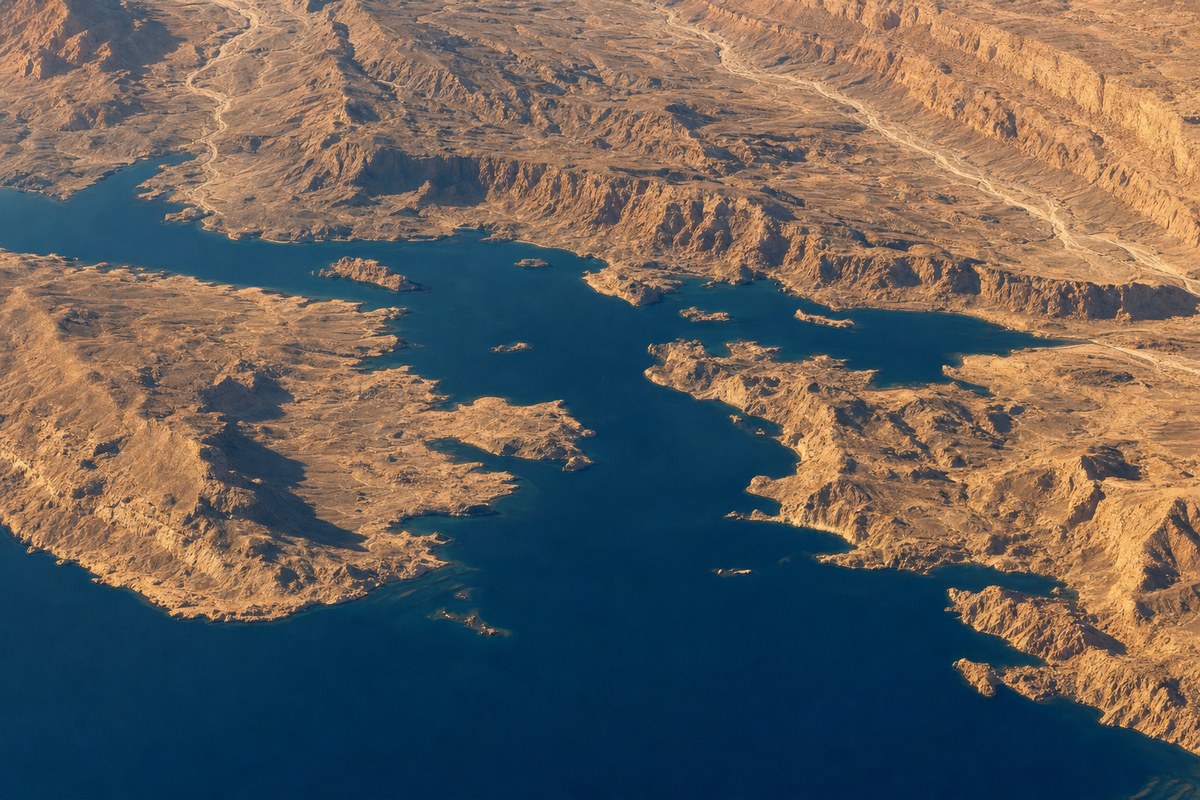
EASA maintains active conflict zone information bulletins covering Iran, the UAE, Bahrain, Kuwait, Qatar and Oman. The Persian Gulf and Gulf of Oman bulletin and the Iran bulletin are valid until November 16 unless reviewed earlier. These bulletins are advisory and do not close airspace, and Gulf traffic continues to move. EASA's current bulletin for Jordan recommends that operators do not fly within Jordanian airspace at any altitude. Iraq imposed airspace restrictions covering November 7 to 11.
On the conflict itself, one account cites a ceasefire on April 8 and a memorandum of understanding signed on June 18 on ending the war on all fronts, with Iran's foreign ministry saying a two-day plan to reopen the Strait of Hormuz remains on the table. Other reporting describes continued attacks on vessels in the Strait of Hormuz and the Persian Gulf, US strikes on Iranian targets in the Strait, tanker attacks near Oman that killed one seafarer, and a third US carrier strike group en route to the region.
Scheduled carriers have responded unevenly. British Airways has resumed London Heathrow-Dubai International after an eight-month suspension, but its Abu Dhabi services remain suspended with no resumption expected before the winter 2027-2028 season. Air France and ITA Airways have extended suspensions. The Incheon-Dubai route is suspended until further notice because of limited airspace capacity, and Wizz Air reports Amman services affected by the Jordanian advisory. Emirates reported a pre-tax profit of one billion dollars for the six months to September 2026, down 68 percent year on year.
The US State Department has told Americans in the Middle East to exercise heightened vigilance over an increased threat of armed attacks by Iran-backed Houthis and Iranian efforts to target US government officials, warning of possible flight cancellations and airspace closures. Its October 23 advisory places the UAE at Level 3, reconsider travel. Australia's Smartraveller warns that military conflict could lead to airspace closures affecting Dubai and Abu Dhabi airports.
Beyond the Gulf
Oil prices fell after the US midterm elections and rebounded slightly as attacks on shipping continued, and US diesel has risen past six dollars a gallon for the first time. US government funding expires on December 11, and a congressional war powers push is not expected to take effect before January.
In Japan, a magnitude 5.7 earthquake struck Shizuoka Prefecture early on Sunday, November 8, injuring at least 24 people, damaging commercial property and halting Shinkansen services. No airport closure was reported.
Climate centres expect strong El Niño conditions to persist into early 2027, with peak anomalies around October to December 2026 and below-normal rainfall forecast across much of the Philippines this month. The World Meteorological Organization expects 2026 to be the hottest year on record.
Industry impact & what to watch
When airspace is advisory rather than closed, no authority makes the go/no-go call for the operator. Flight departments and charter brokers carry it, and the same corridor can look acceptable to one carrier and unacceptable to another. The split between British Airways restoring Dubai while holding Abu Dhabi suspended shows that two airports a short distance apart can sit on opposite sides of an individual risk line.
The Jordan bulletin matters for planning in a specific way: it removes a Levant corridor from Europe-Gulf and Europe-Red Sea routings and forces longer paths. Longer routings change fuel, range and crew-duty arithmetic, so a trip that is feasible on paper can fail on aircraft fit or slot availability. A sound check ties qualification, slot and aircraft fit together rather than treating airspace status alone as the answer.
The next dated milestone is November 16, when the EASA Gulf and Iran bulletins expire or are reviewed earlier. Whether they are renewed unchanged, tightened or relaxed will indicate how EASA reads the Hormuz attacks against the stated ceasefire and memorandum of understanding.