EASA and EUROCONTROL Publish 22-Action Plan on GNSS Interference; IFALPA Urges Keeping VOR, DME and ILS
Why It MattersTreating GNSS jamming and spoofing as a routine operating condition shifts resilience from pilot awareness toward procedures, avionics design and retained ground-based navigation, spreading the burden across regulators, manufacturers and operators.
What happened
EASA and EUROCONTROL published a joint Action Plan on 26 March 2026 aimed at strengthening the safety and resilience of European aviation against GNSS interference, which includes jamming and spoofing. It follows a joint letter to the European Commission submitted on 6 June 2025 by ministers from 13 EU Member States calling for coordinated action.

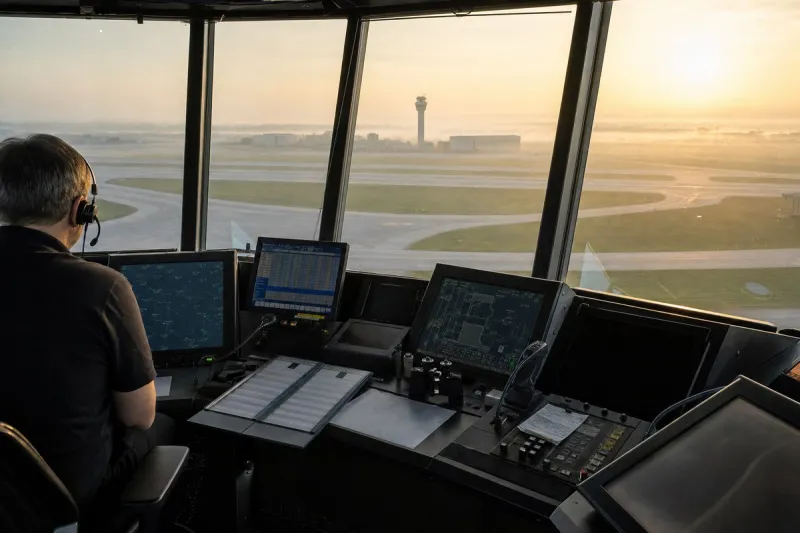
The plan contains 22 actions in four workstreams covering human performance, organisational management, aircraft design and infrastructure, with most deadlines falling between 2026 and 2028. Measures are set out across short, mid and longer-term horizons and include harmonised operational procedures and phraseologies for controllers and crews. In the longer term, EASA and EUROCONTROL envisage working with aircraft manufacturers and the avionics industry to develop more interference-resilient avionics.
Both agencies have confirmed that GNSS interference near conflict zones has become routine. Documented consequences include incoherent navigation positions, re-routing or diversions, corrupted Terrain Awareness and Warning System (TAWS) outputs and degraded Airborne Collision Avoidance System (ACAS) functions. EASA Executive Director Florian Guillermet said the threat has so far been mitigated by short-term actions such as raising pilot awareness, but that more needs to be done. EUROCONTROL Director-General Raúl Medina called GNSS interference a significant and evolving challenge.
Separately, the 2026 IFALPA Conference in Istanbul issued a statement on 26 April 2026 on GNSS radio frequency interference. IFALPA said such events are increasing in frequency, geographic spread and operational impact, and noted that corrupted GNSS inputs can propagate through interconnected aircraft systems in ways that may not be fully transparent to flight crews. The federation called for conventional ground-based navigation aids, such as VOR, DME and ILS, to be retained to the maximum extent practicable until robust alternative resilience measures are globally implemented.
IATA's Flight Data eXchange programme has processed data from over 300 operators covering approximately 18.4 million flights.
Industry impact & what to watch
The plan's structure shows how the problem is now being framed. Once interference near conflict zones is described as routine, awareness training alone stops being an adequate answer, and the response spreads across crew procedures, organisational management, aircraft design and ground infrastructure. For business aviation, which routinely flies point-to-point routings that skirt affected regions, the practical exposure is the same set of effects the agencies list: unreliable position data, diversions and degraded TAWS and ACAS outputs.
The IFALPA position and the agencies' avionics ambitions pull on the same timeline from opposite ends. Resilient avionics are a longer-term project involving manufacturers, while pilots are asking that VOR, DME and ILS stay in service in the meantime. Decisions about decommissioning conventional aids therefore sit directly against how quickly interference-resilient equipment can actually reach the fleet.
The dated markers are the plan's own: most of its 22 actions fall due between 2026 and 2028. Delivery of the harmonised procedures and phraseologies, the earliest-horizon item, will show how fast the plan moves from publication to cockpit and control-room practice.