NATO Energy Security Centre of Excellence Study Warns of Jet Fuel Shortfall of Up to 4.7 Million Tonnes by 2035 in Major European War
Why It MattersRefinery closures driven by decarbonization are turning kerosene supply into a strategic constraint, tying military readiness to the same fuel pipelines that civil aviation depends on.
What happened
A study by the NATO Energy Security Centre of Excellence warns that NATO could face a severe aviation fuel shortage if a full-scale war breaks out in Europe. By the mid-2030s, the alliance may lack enough jet fuel to sustain major military operations, even if all supplies intended for civilian aviation were diverted to the armed forces.
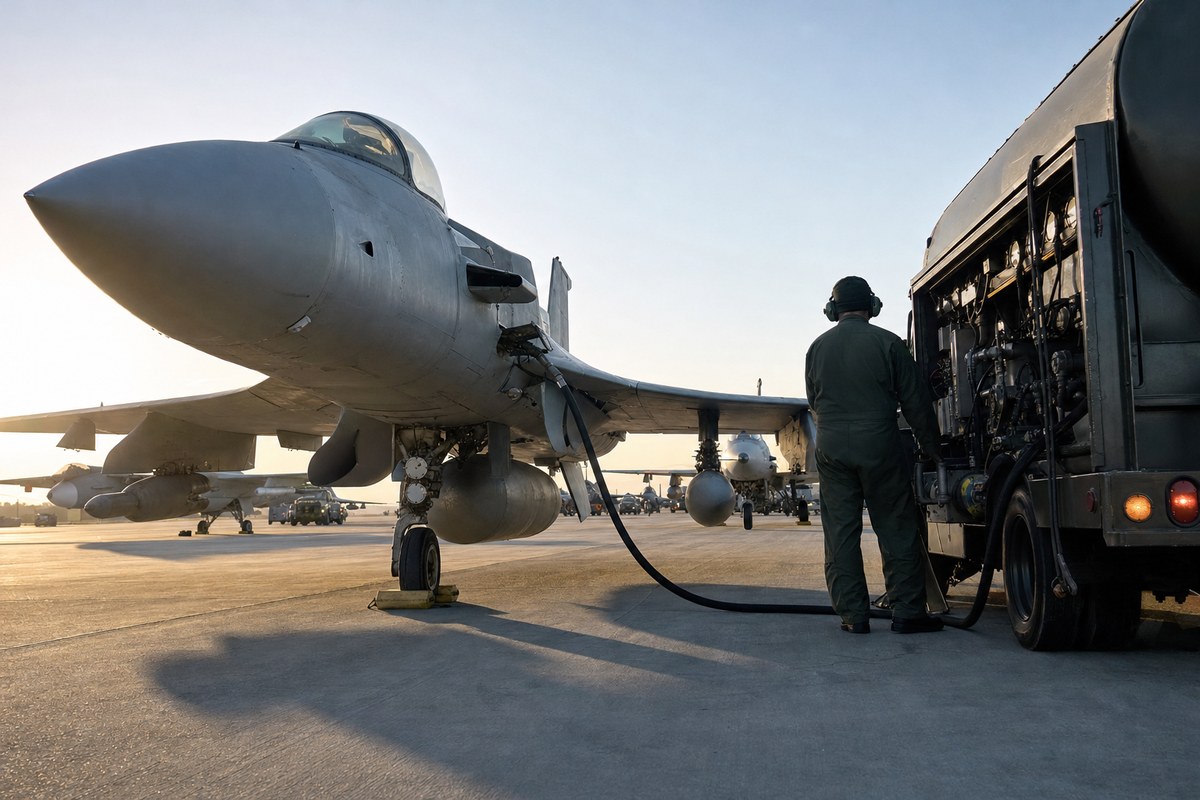
The most serious problems would arise in a conflict involving the activation of Article 5 and the large-scale deployment of North American forces to Europe. Under the study's worst-case scenario, the shortfall of aviation kerosene could reach 4.7 million tonnes in 2035 and climb to nearly 50 million tonnes by 2050. Transferring the entire civilian jet fuel supply to military use would not close the gap.
The study links the risk to Europe's energy transition: as decarbonization reduces demand for road transport fuels, oil refining capacity is shrinking, while aircraft still depend on kerosene. European NATO members have lost approximately 16% of their oil refineries since 2015 and already import part of their aviation fuel needs.
Reserves are also limited. Existing jet fuel stocks in European NATO countries would last approximately 49 days, compared with 120 days for petroleum products overall. In wartime, aviation kerosene could account for 75–80% of all fuel consumed by the armed forces.
The researchers recommend protecting strategically important refining facilities, building larger fuel reserves, expanding alternative fuel production and diversifying imports.
Why kerosene is the weak point
The study's logic runs through refinery economics. A refinery produces a spread of products from each barrel of crude, so when road fuel demand falls under decarbonization, the commercial case for keeping capacity open weakens, even though kerosene demand from aircraft does not fall with it. The 16% loss of European NATO refineries since 2015 is the concrete measure the study uses for that erosion.
The gap between 49 days of jet fuel stocks and 120 days for petroleum products overall shows that aviation fuel is the thinnest part of the reserve picture. Combined with kerosene's 75–80% share of wartime military fuel consumption, a modest absolute shortfall in jet fuel translates into a disproportionate operational limit on air power.
The study's recommendations are protective and structural: safeguarding strategically important refineries, enlarging reserves, expanding alternative fuel production and diversifying import sources.
Industry impact & what to watch
For civil and business aviation, the study is a reminder that jet fuel availability is a shared infrastructure question. The same refineries, pipelines and import terminals that supply airlines, charter operators and FBOs would be the ones governments look to first in a mobilization scenario, and the study's own worst case assumes civilian supply being redirected to the armed forces. Fuel that is secure in peacetime can become the first allocation priority in a crisis.
The broader pattern is a tension between climate policy and defence planning. Decarbonization shrinks the refining base that kerosene production depends on, while alternative fuel production, one of the study's recommended remedies, is also the lever civil aviation is pursuing for emissions reasons. Policy that scales sustainable aviation fuel therefore carries a security argument as well as an environmental one, and that overlap tends to shape where capacity gets funded.
The study's 2035 and 2050 figures are scenario outputs under a worst case, not forecasts of actual supply. The next signals worth tracking are whether NATO members move on the recommendations, in particular reserve targets and protection of refining sites, since those decisions would show how seriously the findings are being absorbed.