FAA Proposes Airworthiness Directive Requiring New Airworthiness Limitations for Dassault Falcon 6X Airplanes
Why It MattersEarly-service limitations on a new business-jet type arrive through mandatory program revisions, which means fleet maintenance planning for a young type stays tied to continuing regulatory updates rather than a fixed baseline.
What happened
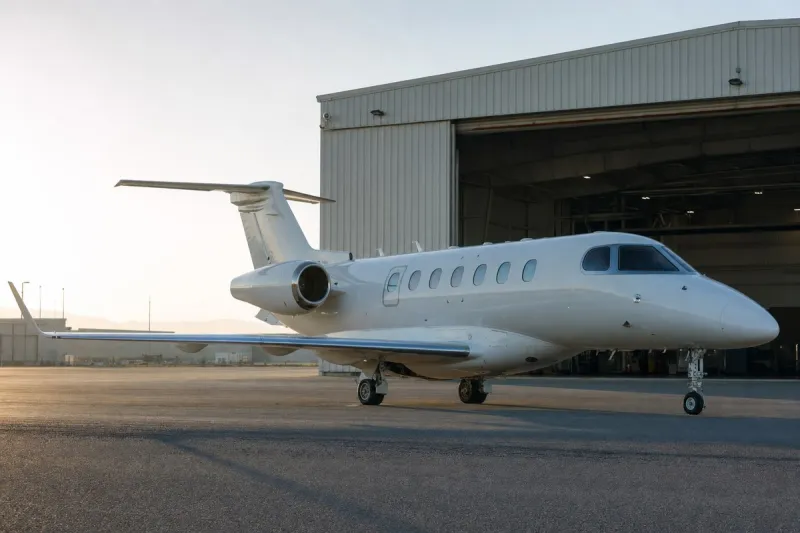
The U.S. Federal Aviation Administration has issued a notice of proposed rulemaking for a new airworthiness directive covering certain Dassault Aviation Model FALCON 6X airplanes. The proposal follows a determination that new or more restrictive airworthiness limitations are necessary. It would require operators to revise their existing maintenance or inspection program, as applicable, to incorporate those limitations.

The FAA is proposing the directive to address reduced structural integrity and reduced control of the airplane due to the failure of system components. It is based on EASA AD 2026-0002, dated January 12, 2026, issued by the European Union Aviation Safety Agency as the Technical Agent for the Member States of the European Union. That directive specifies new or more restrictive airworthiness limitations for airplane structures and safe life limits. The FAA proposes to incorporate it by reference, with any differences identified as exceptions in the proposed AD's regulatory text.
Operators of airplanes that have been modified, altered, or repaired in the affected areas and cannot accomplish the required actions would need to request an alternative method of compliance. Compliance with the airworthiness limitations is required under 14 CFR 91.403(c) and 91.409(e).
The FAA estimates the directive would affect 5 airplanes of U.S. registry. Revising the maintenance or inspection program is estimated to take an average of 90 work-hours per operator, at an average cost of $7,650 per operator, calculated as 90 work-hours at $85 per work-hour. Comments may be submitted under docket number FAA-2026-13815 (Project Identifier MCAI-2026-00009-T) through the Federal eRulemaking Portal or by hand delivery. Submissions containing Confidential Business Information must be clearly marked as such.
Industry impact & what to watch
Airworthiness limitations are a standing part of how a type's maintenance baseline is defined, and directives of this kind show that baseline being tightened through revisions to the maintenance or inspection program rather than through a one-off repair campaign. For a type with only five U.S.-registered airplanes affected, the burden falls on a small group of operators, and the stated cost is a documentation and planning exercise, measured in work-hours of program revision.
The structure of the proposal also shows how transatlantic oversight works in practice. The FAA's text is built on an EASA directive issued in January 2026, with differences carried as exceptions, so owners and maintenance providers on both sides of the Atlantic end up working from largely the same limitation set. Operators with modified, altered or repaired areas are the ones most exposed to the alternative-method-of-compliance route, since the standard actions may not fit their airplanes as built.
The next milestone is the comment period under docket FAA-2026-13815. Whatever the FAA changes after reviewing comments, and whether the final directive keeps the proposed exceptions to the EASA text, will settle the final compliance requirements.