FAA Fiber-Optic Upgrade Blamed for Nationwide Ground Stop as U.S. Weighs Air Traffic Control Modernization
Why It MattersThe outage shows how a single routine hardware swap can cascade across a network still dependent on legacy equipment, turning infrastructure funding and phased migration into operational questions.
What happened
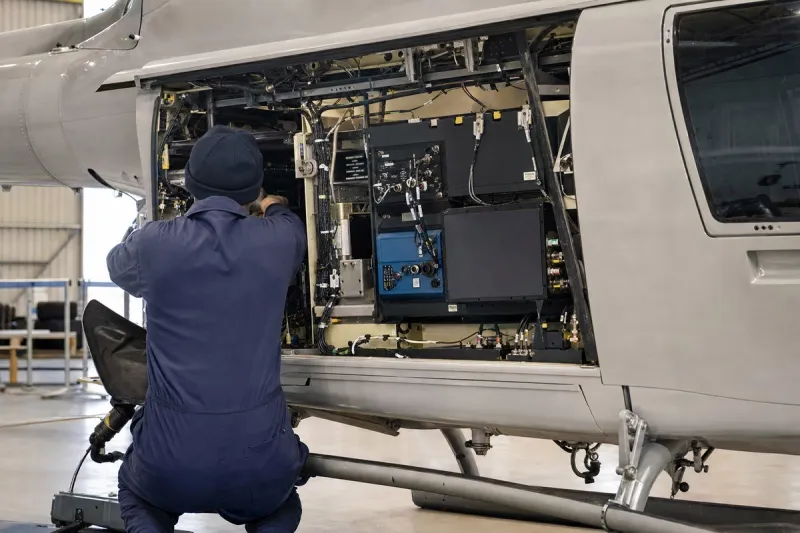
Transportation Secretary Sean Duffy said on Saturday that the previous day's nationwide ground stop was caused by the replacement of copper wires at a "remote" Federal Aviation Administration (FAA) facility. Installing new fiber-optic lines led to critical communication breakdowns, he said.
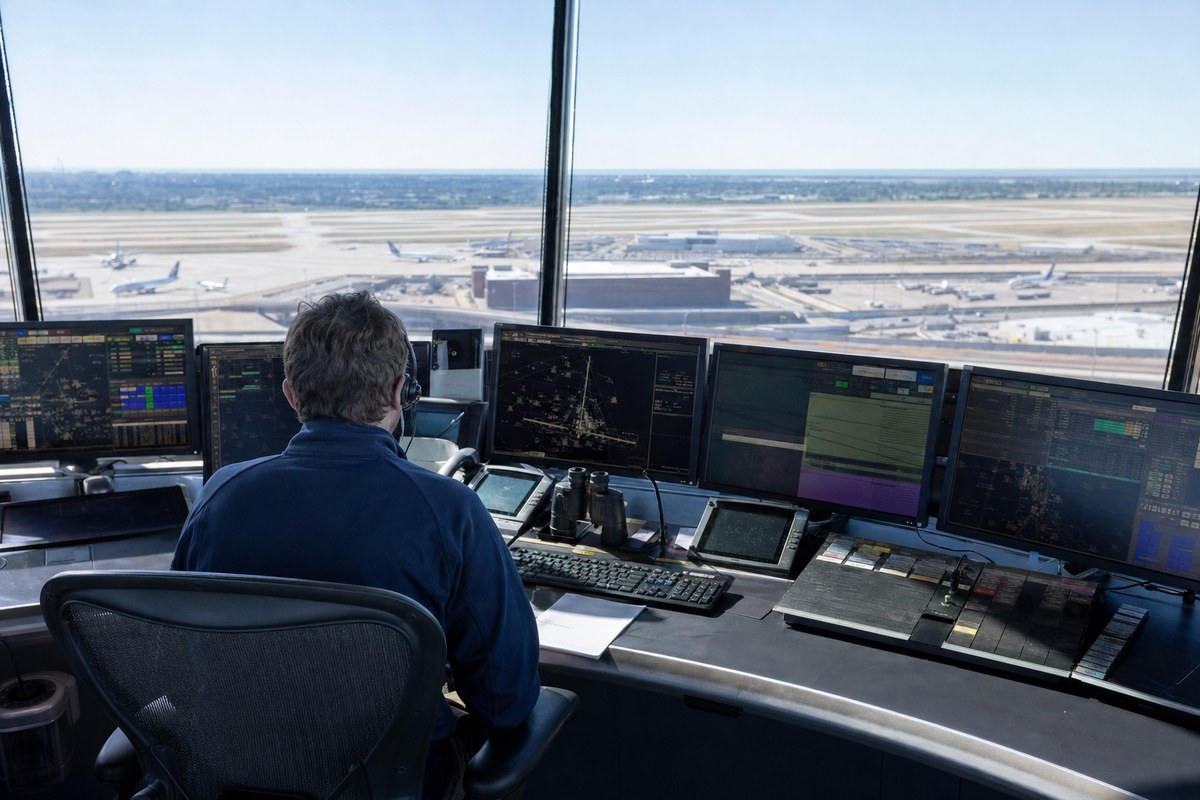
According to FlightAware, about 7,500 flights were delayed and more than 9,000 canceled on Friday, and nearly 6,000 additional flights were canceled on Saturday. Some 1.5 million passengers were scheduled to take off from U.S. airports after 4 p.m. Eastern, shortly after the ground stop began.
Duffy said a router being replaced during the switch from copper to fiber began flooding other routers with more than 1,000 connection attempts every four to five seconds, disrupting communications and some radar feeds. Systems came back online after officials isolated the work at the remote location. Duffy said investigators were working to determine whether the cause was incompetence or the installation of a faulty router. Homeland Security Secretary Markwayne Mullin said new equipment had overwhelmed the older system, though the precise cause remained under investigation.
FAA Administrator Bryan Bedford said disrupted flight schedules were expected to return to normal by the end of Sunday and that the "worst is behind us." Duffy warned that the incident was not isolated and that legacy equipment would continue to fail until communications gear across the air traffic control network is updated. He called on Congress to provide $50 billion before the end of the year to upgrade air traffic control and airport infrastructure, up from the administration's recent $30.1 billion request, which included $10.1 billion for air traffic control modernization.
The modernization record so far
The FAA has worked for more than two decades to modernize the National Airspace System; its NextGen initiative dates to 2003 and has included satellite-based tracking, digital communications and more efficient routing. In July 2025 Congress approved $12.5 billion to upgrade radar, software, hardware and telecommunications at more than 4,600 sites through December 2028.
As of Nov. 5, the FAA said it had replaced 69% of copper wires, installed Surface Awareness Initiative systems at 143 towers, moved 26 towers to electronic flight strips and installed 226 IP Voice Switches.
The FAA Reauthorization Act of 2024 required an audit of pre-2000 legacy systems, including their vulnerability to single-point failures. The FAA said the nonprofit MITRE completed it in August 2025 but did not disclose the findings. Aviation attorney and pilot Edward Booth said the system needs to avoid single-point failures, while Acre Security CEO Kumar Sokka said upgrades can be phased, modernizing software and data first and hardware later. Beyond funding, the FAA also faces shortages of fully certified air traffic controllers, weaknesses in modernization planning and coordination, and cybersecurity challenges.
Industry impact & what to watch
For business aviation, a ground stop of this kind is felt differently than by the airlines. Charter, fractional and private operators run on short-notice schedules with limited slack, so a nationwide halt followed by days of cascading cancellations lands directly on repositioning legs, crew duty limits and customer commitments. The episode illustrates a broader structural point: the modernization work meant to reduce fragility can itself introduce it, because migrating a live network piece by piece creates transition moments when old and new equipment must coexist.
The account Duffy gave, in which one router under replacement flooded others with connection attempts, is the kind of failure that phased migration is designed to contain. Whether it was contained well enough is exactly what investigators are still determining. Duffy himself framed the cause as either incompetence or a faulty router, and Mullin said the precise cause remained under investigation, so the root cause is still open.
The next concrete markers are the investigation's findings and whether Congress acts on the $50 billion request before the end of the year. The MITRE audit of pre-2000 systems, completed but undisclosed, would show how widely single-point failures exist; its release would test whether the problem is as broad as Duffy's warning suggests.